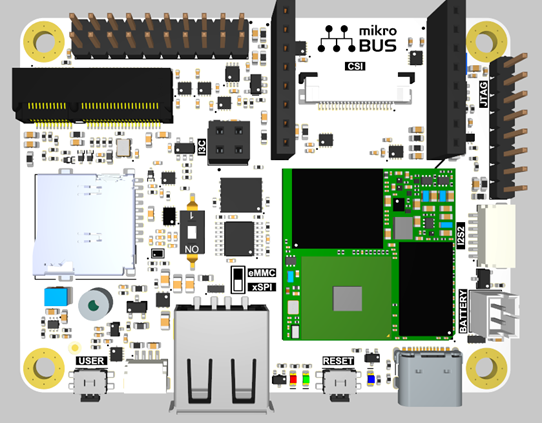
The Coral Board Initiative
According to a preview by the Google developer cell, Google is collaborating with partners like Synaptics. Together, they will launch the Coral Board computing platform this summer. This compact hardware integrates a specialized neural processing unit. Crucially, this NPU delivers 1 TOPS of local computational power. Google asserts the board runs the open-source Gemma3-270M model locally. Consequently, it facilitates diverse workflows like text generation and real-time voice interactions.
Headless Interface Flexibility
The hardware achieves powerful operational efficacy within a standard headless configuration. In this monitor-free setup, developers connect seamlessly from a host machine. Subsequently, they can program and govern the system entirely via the command-line interface. Alternatively, creators can attach a MIPI display panel for graphical outputs. For instance, engineers can enclose the screen and board inside a 3D-printed chassis. Thereby, they can forge a bespoke smart appliance.
Comprehensive Hardware Specifications
Core Micro-Architecture Parameters
Currently, the Coral Board features a 2GB memory allocation alongside its native NPU. Furthermore, Google bundles a sensory HAT board and a CSI camera module. The package also includes a flexible ribbon interface circuit. However, developers must supply a screwdriver and a USB-C data link. Additionally, technicians must utilize an external power adapter. Of course, innovators can modify the hardware to leverage untethered lithium-ion batteries.
Network Connectivity and Form Factor Divergence
Although the platform executes its model logic locally, wireless networking remains essential for orchestration. Therefore, the architecture incorporates integrated Wi-Fi and Bluetooth chipsets. Yet, official product renders showcase only USB-A and USB-C IO ports. The board completely lacks an RJ45 Ethernet port. This design choice represents a sharp structural divergence from the traditional Raspberry Pi layout.
Economic Factors and Performance Projections
Regrettably, modern semiconductor supply constraints indicate a high retail cost. This financial ceiling likely explains why Google opted for a restricted 2GB memory capacity. Nonetheless, initializing a local artificial intelligence model within this tight boundary is highly impressive. Ultimately, verifying the exact system responsiveness requires empirical physical validation following the formal product debut.
Support Our Threat Intelligence
If you find our technology report and cybersecurity news helpful, consider supporting our work.
 Buy Me a Coffee
PayPal
Buy Me a Coffee
PayPal