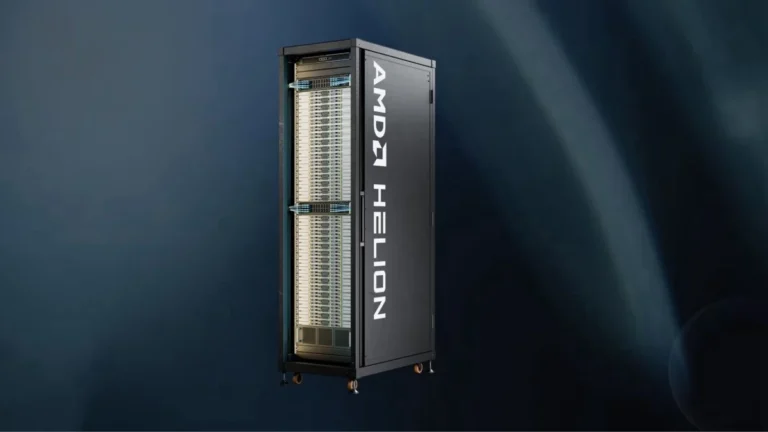
At the 2026 Open Compute Project (OCP) Global Summit, while NVIDIA and Microsoft furiously dueled over monolithic, extreme liquid-cooled behemoths demanding 160 kW or even 250 kW per rack, Intel deliberately selected a radically divergent path to breakthrough.
Intel officially unveiled the intricate technical specifications of its novel Intel GPU D-Series (codenamed Crescent Island). Simultaneously, it showcased a revolutionary Xeon rack design predicated strictly upon the OCP Open Rack v3 (ORv3) standard.
Intel’s strategic trajectory is exceptionally lucid: as the era of Agentic AI rapidly approaches its explosive zenith, enterprises do not necessitate participation in an exorbitantly expensive, logistically complex computational arms race. Rather, they desperately require a highly cost-effective inference infrastructure capable of massive scalability entirely within the physical constraints of their existing air-cooled data centers.
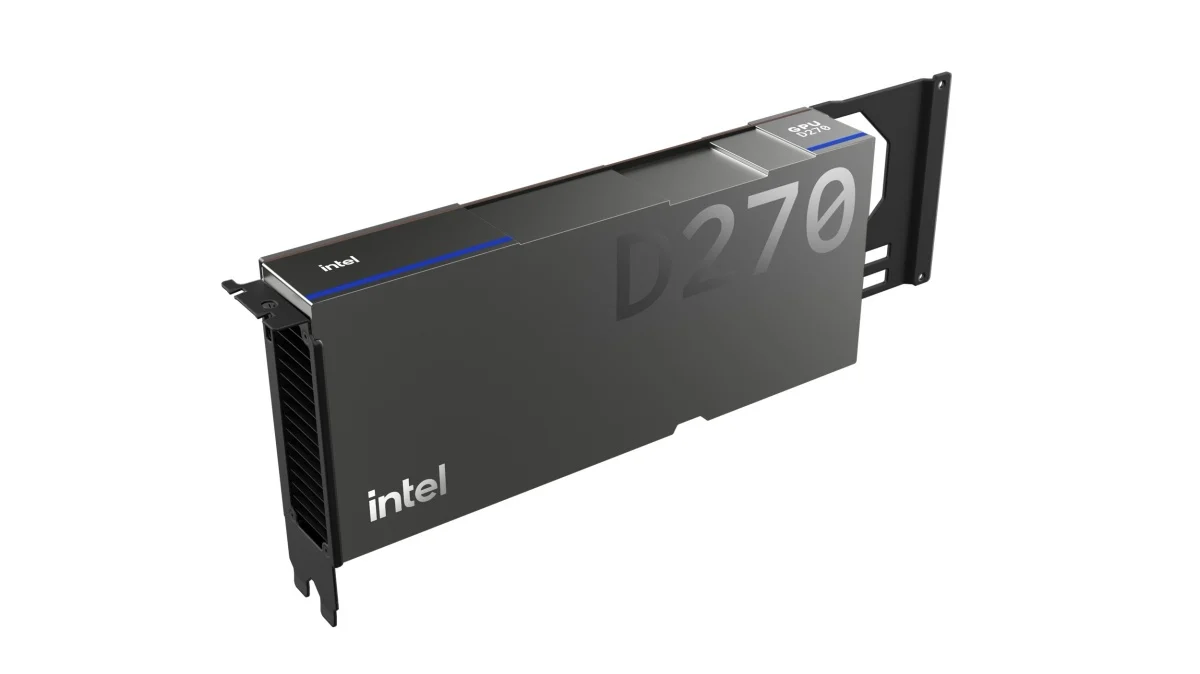
Intel GPU D-Series: A “Massive Memory” Masterstroke at 350W
The Intel GPU D-Series, bearing the codename Crescent Island, is Intel’s clandestine weapon meticulously forged for protracted, memory-intensive Large Language Model inference operations.
Architecturally, it shuns the relentless pursuit of absolute peak single-point computational prowess. Instead, it concentrates its entire engineering focus relentlessly upon “memory capacity” and “energy efficiency.” Utilizing the cutting-edge Xe3P architecture, the GPU D-Series operates within a remarkably constrained 350W thermal envelope. Despite this, it delivers an astonishing 480GB of LPDDR5X memory (Note: While the baseline Intel-manufactured card provides 160GB, open ODM partners are authorized to customize up to a staggering 480GB) alongside a formidable 1.5 TB/s of memory bandwidth.
For the execution of inference tasks particularly those involving Agentic AI demanding extensive context windows “memory capacity” frequently emerges as the critical bottleneck far sooner than raw computational power. A solitary GPU D-Series card effortlessly supports model parameters scaling up to 300 billion. By deploying a synchronized eight-card system architecture, it can seamlessly ingest and process colossal models exceeding 1 trillion parameters.
Crucially, the Intel GPU D-Series exclusively utilizes standard PCIe interfaces and conventional air-cooled thermal designs. This signifies that clients are entirely liberated from the crippling financial burden of retrofitting their facilities with complex liquid cooling infrastructure. They can simply install the cards into their existing server chassis and immediately commence scaling their inference operations, drastically reducing both the barrier to entry and the Total Cost of Ownership (TCO).
Xeon as the Neural Nexus: 46,000 Cores Dominating the Rack
Within the intricate workflow of Agentic AI, artificial intelligence transcends mere text generation. It actively engages in sophisticated information retrieval, tool invocation (API calls), complex logical deduction, and intricate task orchestration. Throughout these critical phases, the versatile CPU serves as the indispensable central “commander.”
At the OCP summit, Intel exhibited an ORv3 standard rack empowered by its advanced Xeon 6+ processors. To flawlessly manage the overwhelming volume of concurrent Agentic AI operations, this rack pushes CPU computational density to its absolute zenith. A single rack boasts an astonishing core count exceeding 46,000, while meticulously restricting the total rack power consumption to a highly manageable 133.45 kW.
Through the seamless, heterogeneous synergy of Xeon CPUs and GPU D-Series accelerators, the Xeon processor masterfully handles the intricate scheduling and management of I/O throughput. This ensures that the GPUs receive an uninterrupted, torrential flow of requisite data, thereby completely eliminating the severe financial penalty of leaving exorbitantly expensive accelerators idle.
Open-Source Ecosystem: Day-Zero Support for Novel Models
Beyond the realm of pure hardware, Intel possesses a profound understanding of the software ecosystem’s immense power. Intel’s strategy hinges upon natively integrating support for its CPUs and GPUs directly into industry-standard AI frameworks. This empowers developers to seamlessly migrate their operations without the arduous necessity of rewriting established codebases.
For instance, Intel’s ubiquitous Xe software foundation guarantees flawless application portability across its entire portfolio of GPU platforms. Furthermore, concerning nascent open-source models, Intel demonstrates extraordinary agility. On the very day Meta debuted its groundbreaking Muse Glimmer model, Intel achieved immediate, flawless “Day-zero support” across both its GPU D-Series and Xeon CPU platforms.
Additionally, Intel has officially launched the highly anticipated AI Agent Toolkit, explicitly designed for enterprise environments. This robust toolkit flawlessly orchestrates complex computational tasks across heterogeneous CPU and GPU resources.
Carving an Air-Cooled Path Through “Liquid-Cooling Anxiety”
Surveying the entirety of this year’s OCP summit, from NVIDIA and AMD to Microsoft, virtually every technological titan loudly proclaimed the absolute dawn of the “liquid-cooling era.” However, for traditional enterprises, tier-two cloud providers (Neoclouds), and localized on-premises data centers which collectively represent the overwhelming majority of the global market, the staggering costs and profound risks associated with a comprehensive liquid-cooling infrastructure overhaul remain paralyzingly prohibitive.
Intel has surgically targeted this pervasive “liquid-cooling anxiety.” Consequently, the GPU D-Series’s 350W air-cooled architecture, standard PCIe interface configuration, and absurdly massive 480GB maximum memory capacity coalesce into the perfect solution. It is exquisitely tailored for clients desperate to rapidly deploy massive AI services without enduring the catastrophic financial hemorrhaging of fundamentally rebuilding their server rooms.
With NVIDIA maintaining an almost impenetrable monopoly over the AI training market, Intel has pragmatically chosen to avoid a direct, frontal assault. Instead, it is massing its formidable resources within the “inference” market, a sector undeniably poised for an impending, explosive boom. Through the powerful heterogeneous synergy of high C/P value air-cooled GPUs and high-core-density Xeon CPUs, Intel intends to definitively prove to the industry: mastering Agentic AI does not universally require the hottest, most exorbitantly priced liquid-cooled leviathans. An open, easily deployable, and fundamentally cost-effective standard rack remains the preeminent, pragmatic choice for massive enterprise adoption.
Support Our Threat Intelligence
If you find our technology report and cybersecurity news helpful, consider supporting our work.
 Buy Me a Coffee
PayPal
Buy Me a Coffee
PayPal