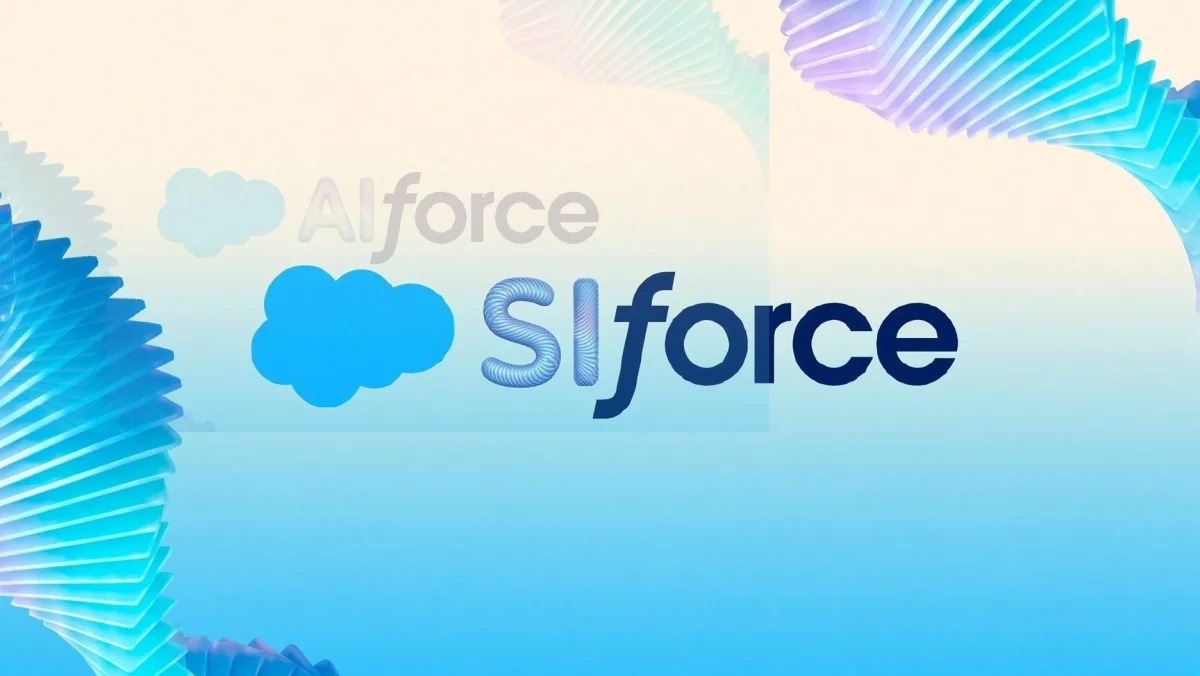
On September 29, United States President Donald Trump issued Executive Order 14434. This unprecedented directive mandates all federal administrative agencies to comprehensively abandon the term “Artificial Intelligence” (AI) in favor of “Super Intelligence” (SI). This intense political tempest is now rapidly sweeping through the corporate corridors of Silicon Valley.
Salesforce Swiftly Rebrands New Product
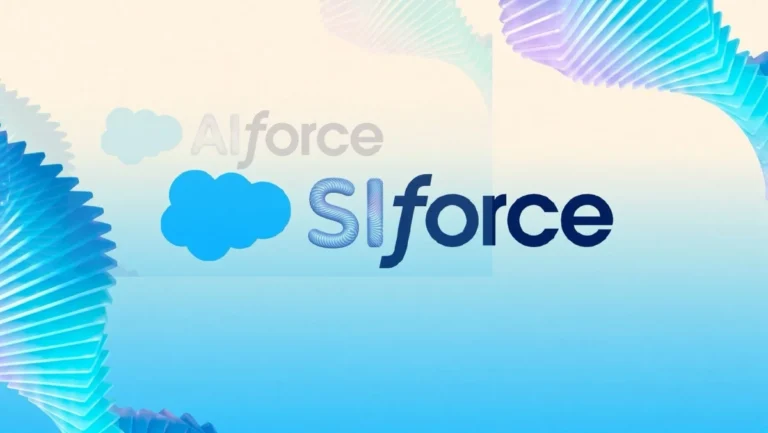
On October 9, Salesforce Chairman and CEO Marc Benioff announced a significant pivot on the X platform. He declared that “AIforce,” a product unveiled merely weeks prior at the mid-September Dreamforce conference, would immediately rebrand as “SIForce.”
In his post, Benioff proclaimed, “The era of Super Intelligence has arrived; AIForce is officially SIForce.” Consequently, a product that debuted a mere 24 days ago underwent an abrupt corporate rebranding to strictly align with the new governmental nomenclature.
Salesforce strategically positions the nascent “former AIforce, current SIForce” as an enterprise-grade “live interface layer.” Its paramount function is to seamlessly integrate Salesforce’s colossal customer databases, complex workflows, and intricate business logic directly into diverse SI interfaces.
The initial rollout prominently features “Claudeforce,” developed in collaboration with Anthropic, “Slackforce” for seamless office software integration, and “Agentforce Coworker,” which allows direct invocation of enterprise agents.
Notably, this particular rebranding initiative by Salesforce remains exclusively confined to the singular “AIforce” product. The overarching corporate identity and other established services, such as Agentforce and Slack, remain entirely unaffected.
The Vanguard of Corporate Compliance
Salesforce is certainly not the first technology behemoth to capitulate to the “Super Intelligence” lexicon.
Just days earlier on October 4, SpaceX CEO Elon Musk confirmed that “SpaceXAI” the division formed following the recent xAI merger will be formally renamed “SpaceXSI.” Intriguingly, this represents the division’s third distinct nomenclature change within this calendar year. Furthermore, Amazon founder Jeff Bezos publicly expressed his strong affinity for the SI acronym during a recent interview. He articulated that the original term, “Artificial,” possesses a counterfeit connotation and is fundamentally unappealing.
Additionally, social media titan Meta has recently begun explicitly intertwining its ultimate technological ambitions with the phrase “Super Intelligence” during public communications. While each corporation adopts a unique approach, it is undeniably clear that, propelled by the Trump administration’s aggressive mandate, “SI” has rapidly solidified as the prevailing political correctness within the American technology sector.
Extreme Rhetoric and Corporate Dilemmas
Although the statutory jurisdiction of Executive Order 14434 is strictly limited to federal administrative departments and lacks the legal authority to mandate private sector compliance, subsequent rhetoric from the President has injected a profound chill into the movement.
On October 8, Trump posted on his Truth Social platform, “The White House considers anyone who still uses ‘Artificial Intelligence’ instead of ‘Super Intelligence’ to be an ‘enemy’.” While he refrained from specifying any substantive punitive measures against private enterprises employing the legacy terminology, this extreme pronouncement undeniably triggered a chilling effect across Silicon Valley.
According to Reuters, even the historically independent United States Department of Justice has formally instructed internal personnel to adopt the new terminology in official court documentation whenever feasible.
However, this “SI Rebranding Movement” plunges specific enterprises into an extraordinarily precarious predicament. For corporations like Salesforce or SpaceX, where the alteration merely involves renaming a specific product line or division, the associated costs remain manageable. Conversely, startups whose very corporate identities intrinsically incorporate the “AI” designation such as OpenAI or the data annotation unicorn Scale AI cannot simply execute a superficial name change overnight.
Political Hijacking of Technological Terminology
Analyzing this phenomenon through the historical context of technological evolution reveals a stark discrepancy. “Superintelligence” traditionally possessed a remarkably precise and rigorous definition within academic and technological spheres. It fundamentally denotes “an intellect that is much smarter than the best human brains in practically every field, including scientific creativity, general wisdom, and social skills.” This concept is universally regarded as the ultimate, and often dystopic, apex of technological development.
The current administration’s executive order brusquely misappropriates this profound terminology, forcefully attaching the “Super Intelligence” label to nascent technologies currently languishing in the “narrow AI” and “generative AI” phases. Fundamentally, this is a populist political maneuver, a semantic game designed to artificially project America’s absolute dominion over the global technology sector by wielding a vastly more powerful, science-fiction-infused vocabulary.
The rapid capitulation observed by Salesforce and SpaceX is less an endorsement of this semantic game and more a pragmatic display of loyalty and risk aversion. Navigating a labyrinthine political and commercial landscape, these titans are preemptively maneuvering to secure lucrative future government contracts and avoid unwarranted political retribution. Yet, for the vanguard engineers actually forging this technology, the nomenclature whether AI or SI is profoundly irrelevant. The underlying architecture remains a neural network demanding monumental computational resources, perpetually prone to hallucination, and fundamentally distant from genuine “Superintelligence.” Changing the name entirely fails to diminish the profound technical limitations and monumental challenges that still must be surmounted.
Support Our Threat Intelligence
If you find our technology report and cybersecurity news helpful, consider supporting our work.
 Buy Me a Coffee
PayPal
Buy Me a Coffee
PayPal