During the 2026 Open Compute Project Global Summit, NVIDIA unequivocally demonstrated its fierce ambition to scale global artificial intelligence infrastructure. Departing from its historically cloistered system strategies, NVIDIA is currently embracing the open-source community with unprecedented vigor, releasing a multitude of pivotal innovations encompassing computational architecture, optical networking, foundational infrastructure design, and sophisticated software tools. By uniting with global ecological partners, they intend to relentlessly accelerate the construction and proliferation of next-generation AI factories.
The Comprehensive Unveiling of the Vera Rubin Architecture and MGX 1.2
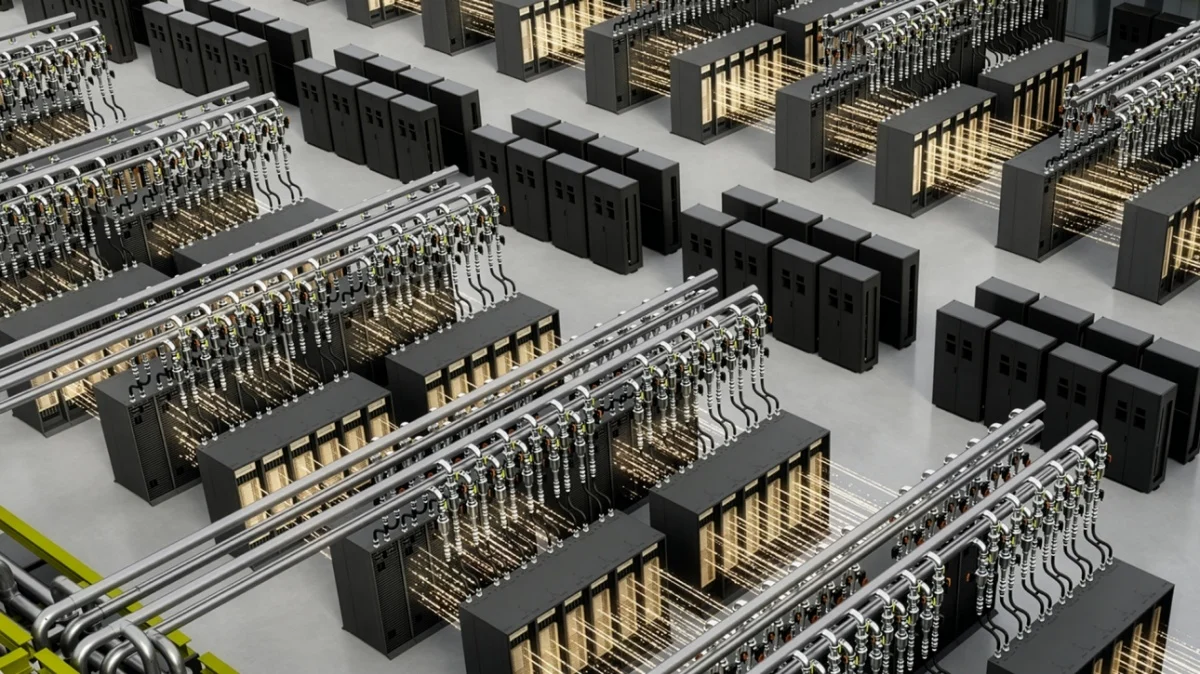
Confronting the extreme thermal and electrical demands inherent to AI factories, NVIDIA has formally bestowed the critical designs of its next-generation Vera Rubin rack and compute tray upon the OCP community through the updated MGX 1.2 open architectural specifications. This masterful blueprint incorporates rack-level liquid cooling mechanisms, high-velocity interconnect infrastructures, and standardized electrical and thermal interfaces. Remarkably, it sustains power deployment specifications reaching an astonishing 250 kilowatts per solitary rack. Consequently, global server manufacturers and strategic partners can leverage this interoperable, open-source modular paradigm to rapidly forge unparalleled computational infrastructures perfectly tailored for the nascent Vera Rubin epoch.
Forging the Novel Ultra-High-Density Optical Module Standard
In the realm of high-speed networking, NVIDIA, in harmonious collaboration with the networking titan Cisco, has jointly promulgated a revolutionary standard designated as USFP (Ultra-High-Density Small Form-Factor Pluggable). This represents the industry’s inaugural module specification meticulously engineered for 400 Gb/s network architectures. Its extraordinary density will exponentially elevate intra-facility network connectivity, thereby decisively vanquishing the bandwidth bottlenecks that traditionally plague data transmission across colossal GPU clusters.
A Unified Front: Establishing Infrastructure and Grid Resilience Standards
The exponential leap in artificial intelligence computational power simultaneously engenders monumental challenges in energy administration. In response, NVIDIA has consciously chosen to forge alliances with former adversaries and prominent cloud providers to cooperatively dictate industry standards:
- Open Datacenter Specification v0.7: NVIDIA, in concert with AMD, Google, and Meta, has jointly heralded this specification to establish a unified, collective standard governing the power, cooling, and physical architectural design of forthcoming AI factories.
- OCP Grid Resilience Specification: A consortium comprising NVIDIA, Google, Meta, and Microsoft has collectively pledged to fortify sprawling AI infrastructures against grid perturbations. This ensures steadfast operational stability, profoundly enhancing the fault tolerance and overall efficiency of vast deployments.
- 800V Direct Current Architecture: Yawan Computing, an indigenous Taiwanese NVIDIA AI factory and GPU cloud platform championed by Foxconn, has synchronized the launch of an 800V direct current power architecture explicitly designed for the Vera Rubin era, further refining energy conversion efficacy.
DSX OS Open-Source Components and Next-Generation Networking
Beyond hardware and infrastructure, NVIDIA extends an olive branch within the software domain. Tailoring offerings for its DSX AI factory platform, NVIDIA has unleashed an array of novel DSX OS open-source software components. These elements encompass network configuration, cluster validation, rack management, and bare-metal provisioning, seamlessly aiding Cloud Service Providers (CSPs) in streamlining their operational workflows.
Regarding the visionary blueprint for network technology, NVIDIA unveiled two momentous previews:
- The Spectrum-X and Meta Collaboration: Meta intends to collaboratively propel the evolution of open AI networks utilizing the NVIDIA Spectrum-X Ethernet SuperNIC, alongside the impending generation of Spectrum-6 switch technologies.
- Endorsement of the Google Falcon Protocol: NVIDIA declared that its future ConnectX-10 SuperNICs and BlueField Data Processing Units (DPUs) will offer comprehensive support for the Google-orchestrated Falcon transmission protocol, vividly demonstrating an unyielding commitment to cross-ecosystem compatibility.
From Closed Sovereignty to Open Collaboration: A Strategy for Hegemony
Reflecting upon the preceding biennial period, NVIDIA triumphantly maximized profitability under the “system is the chip” paradigm via its proprietary NVLink and cloistered rack designs, notably the GB200 NVL72. Nevertheless, as the sheer scale of AI infrastructure violently swells to the monstrous proportions of 250 kilowatts per rack, NVIDIA can no longer unilaterally vanquish the physical limitations inherent to thermal dissipation, electrical grid capacity, and network communication.
NVIDIA’s grand foray into open-source during this OCP Summit essentially constitutes an exquisitely brilliant strategic pivot.
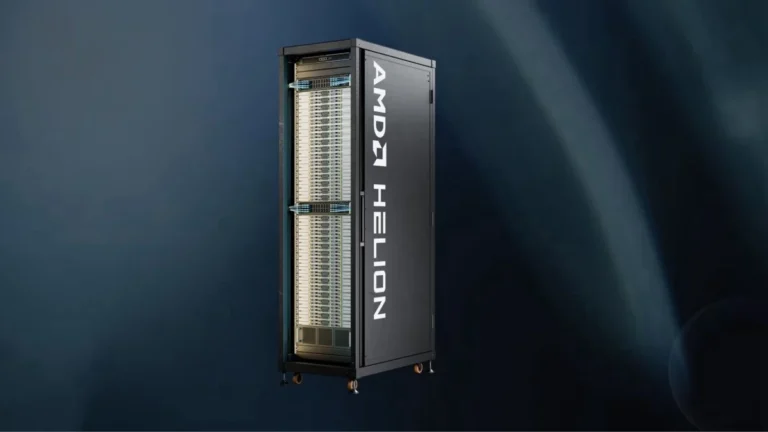
Confronted by AMD’s recent debut of the open-architecture Helion rack, NVIDIA immediately retaliated by brandishing the open-source designs of the MGX 1.2 and Vera Rubin racks. NVIDIA astutely comprehends that rather than alienating cloud titans – such as Google, Meta, and Microsoft – driving them toward AMD due to an intolerable closed architecture, it is infinitely more sagacious to actively collaborate with them to dictate the overarching standards for power, cooling, and optical modules.
Provided these infrastructure standards, heavily influenced by NVIDIA, solidify into an unshakeable industry consensus, all future data center upgrades will encounter minimal deployment friction and flawless compatibility with NVIDIA’s GPUs and networking apparatus. By delegating the arduous, peripheral burdens – such as thermal management, electrical grids, and server chassis fabrication – to the open community, while fiercely maintaining absolute dominion over the exorbitant-margin computational cores and the central network, NVIDIA perfectly executes the ultimate stratagem to perpetuate the relentless expansion of its artificial intelligence empire.
Support Our Threat Intelligence
If you find our technology report and cybersecurity news helpful, consider supporting our work.
 Buy Me a Coffee
PayPal
Buy Me a Coffee
PayPal