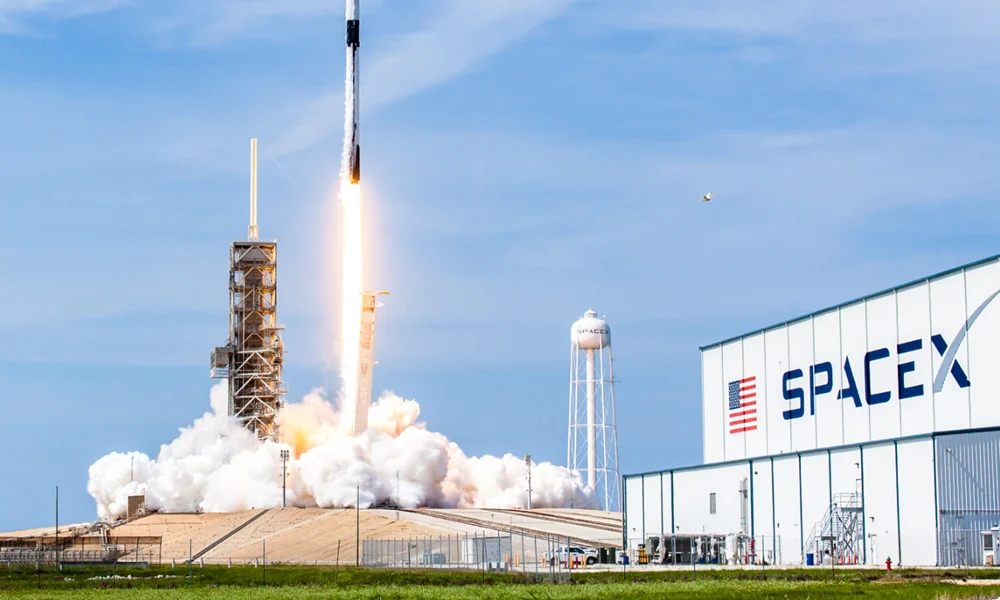
Elon Musk aims to secure absolute computational supremacy in the AI arms race. Consequently, he plans to leverage the balance sheet of his aerospace behemoth. This strategy will instigate an unprecedented financing campaign on Wall Street. Reports indicate that SpaceX seeks 40 billion to buy NVIDIA chips. The company went public recently in June. Furthermore, they intend to allocate these massive funds entirely toward purchasing this critical hardware.
This monumental financing should conclude by 2027. It will comprise a 10 billion dollar bank loan alongside 30 billion dollars in investment-grade bonds. Additionally, the private equity titan Apollo Global Management will lead and distribute this offering.
A Massive Financing Structure and SpaceX Bond Strength
SpaceX mobilized this massive bond market swiftly. This success stems directly from their robust credit rating. In June, three major credit rating agencies awarded SpaceX investment-grade long-term ratings. Specifically, Moody’s, Fitch, and S&P Global granted ratings of Baa1, BBB+, and BBB respectively. S&P Global highlighted a crucial advantage. SpaceX commands a dominant competitive position in both rocket launches and Starlink satellite networking. Consequently, this dominance serves as their ultimate financing leverage.
However, the financial leverage of SpaceX is currently skyrocketing. Back in June, SpaceX issued 25 billion dollars in unsecured bonds. These bonds featured coupon rates between 5.35 and 6.65 percent. Primarily, these funds repaid a 20 billion dollar pre-IPO bridge loan. This prior loan refinanced existing high-interest debts for X and the xAI startup. Recently, foreign media observed these bonds declining in the secondary market. Furthermore, some bond spreads approach non-investment-grade levels. Clearly, investors are showing growing concerns regarding these monumental capital expenditures.
Elon Musk’s Pure NVIDIA Strategy and Stellar Expansion
This 40 billion dollar fund will act as vital ammunition. It will help SpaceX and xAI expand their computational empire. SpaceX officially acquired xAI in February. Since then, they have deeply integrated their AI infrastructure. Elon Musk clarified his stance during an August earnings call. He stated that future AI infrastructure will utilize only NVIDIA platforms. Moreover, he highly praised the NVIDIA Vera Rubin architecture.
Current layouts reveal a strategic leasing arrangement. SpaceX entirely leased its Colossus 1 data center to the AI unicorn Anthropic. Meanwhile, Colossus 2 serves as the primary training hub for the Grok model. Before the year ends, this facility will deploy 660,000 GB300 chips and 110,000 GB200 chips. Furthermore, SpaceX is pushing this computational power into orbit. They announced a joint design project with NVIDIA. Together, they are developing the Starmind AI1 satellite computing payload. This payload will feature Rubin GPUs and Vera CPUs. A prototype should launch into space by 2027.
A Dual Role for Private Equity in the AI Supply Chain
The most intriguing aspect of this financing case is Apollo Global Management. This private equity titan operates with a fascinating dual identity. In August, NVIDIA proudly announced a partnership with top financial institutions. These included Apollo Global Management, BlackRock, and Blackstone. Together, they established a third-party AI infrastructure financing platform. They set a massive target scale exceeding 500 billion dollars.
Today, Apollo Global Management acts as a strategic partner for the NVIDIA financing platform. Simultaneously, they arrange a 40 billion dollar loan for SpaceX. SpaceX is a heavyweight client purchasing only NVIDIA chips. Consequently, the chip seller’s funding pool and the buyer’s intermediary merge brilliantly. They intersect perfectly within a single asset management firm.
Feeding the AI Money Pit: A Dangerous Balancing Act
Morgan Stanley previously estimated massive future costs. Global AI infrastructure will require 1.5 trillion dollars in external financing by 2028. Traditional banks are growing cautious regarding these bottomless computational pits with lengthy payback periods. Therefore, Elon Musk presented an extremely bold solution. He uses SpaceX, with its stable cash flow and investment-grade rating, as the primary financing entity. Through capital market borrowing, he supports the colossal hardware expenditures of xAI.
However, this maneuver carries exceptionally high systemic risks. Apollo Global Management plays a crucial role in this transaction. Effectively, they provide bridge funding and credit guarantees directly for NVIDIA’s revenue. Wall Street lends money to a tech giant, which then buys NVIDIA chips. This capital cycle maximizes computational deployment speed in the short term. Yet, it also binds the AI infrastructure bubble risk tightly to the high-yield bond market.
The commercial monetization of AI applications might ultimately fall short of expectations. For instance, Grok’s subscription revenue or Anthropic’s lease payments might fail to cover the interest on tens of billions in debt. If this occurs, a severe crisis will unfold. This computational leverage game, woven together by Wall Street and Silicon Valley, will face a brutal stress test.
Support Our Threat Intelligence
If you find our technology report and cybersecurity news helpful, consider supporting our work.
 Buy Me a Coffee
PayPal
Buy Me a Coffee
PayPal