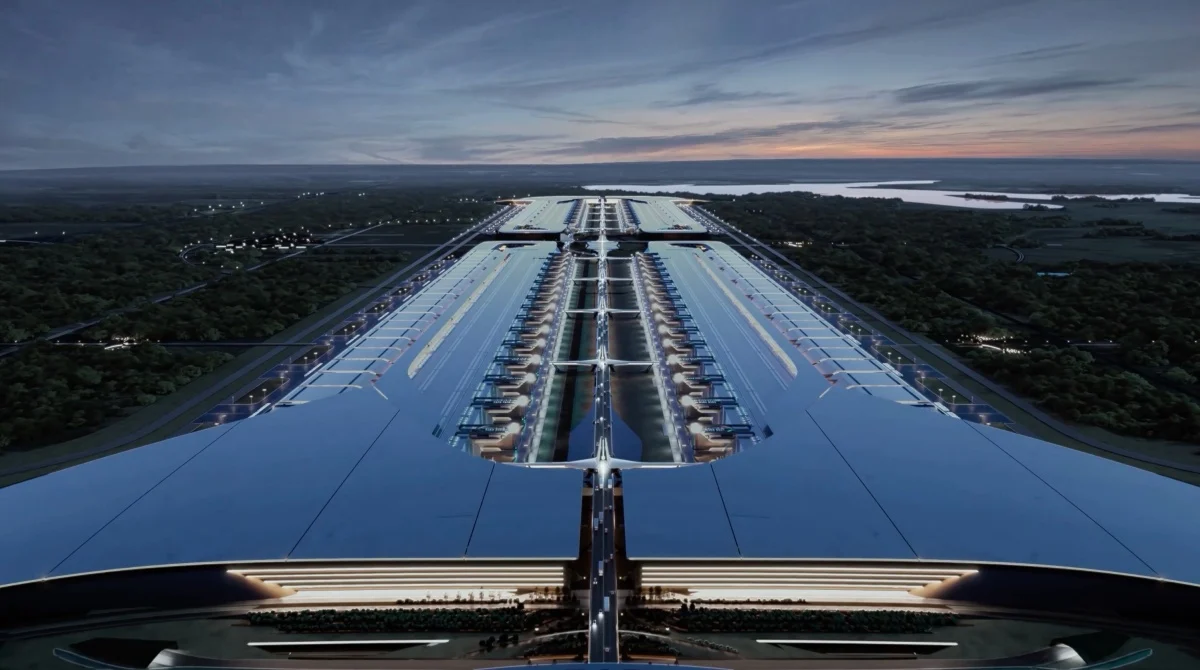
Elon Musk recently confirmed that Terafab, the semiconductor manufacturing enterprise jointly backed by his flagship entities SpaceX and Tesla, is currently engaged in preliminary collaborative negotiations with Taiwanese foundry giant TSMC. This monumental disclosure indirectly corroborates swirling market rumors suggesting that TSMC is aggressively evaluating the establishment of an entirely new, massive wafer fabrication campus within the state of Texas.
Targeting One Terawatt of AI Compute: The Terafab Blueprint
Musk formally unveiled “Terafab” in late March of this year as a hyperscale semiconductor initiative. Strategically situated in Grimes County, Texas, the project boasts an astronomical initial investment of $16.8 billion, with the ultimate projected capital expenditure cresting at an unprecedented $119 billion. Its paramount objective is to achieve a staggering 1 Terawatt of annual AI computational capacity. This colossal facility will exclusively manufacture bespoke AI and aerospace microprocessors, supplying the critical silicon demanded by Tesla’s Optimus humanoid robots, the impending Cybercab autonomous taxi fleet, and SpaceX’s robust orbital data centers.
According to deeply embedded supply chain intelligence, TSMC currently views Terafab as the definitive “anchor customer” for its prospective Texas expansion blueprint. Should the two titans finalize an agreement, TSMC might orchestrate the construction of up to six advanced-process wafer fabrication plants within Texas. This overarching investment magnitude possesses the potential to eclipse TSMC’s currently committed $265 billion outlay in Arizona.
A Strategic Duopoly: Intel and TSMC at Terafab?
It is crucially important to note that Intel had previously announced its integration into the Terafab project as early as April, assuming the mantle of the principal foundry partner. If TSMC formally declares its own participation, this unprecedented development would consecrate Terafab as one of only two contemporary super-fab projects globally to receive simultaneous technological backing and co-operational support from both Intel and TSMC, the undisputed behemoths of the foundry industry.
Currently, these delicate discussions remain strictly within the preliminary evaluation phase; no formal, binding agreements have been executed. Nevertheless, these intense negotiations underscore Musk’s desperate resolve to sever his profound dependency upon the extant AI chip supply chain most notably NVIDIA. Instead, he intends to forge his own foundational hardware ecosystem, fueled by staggering capital deployment.
From Vertical Integration to Computational Hegemony
Within the automotive and aerospace sectors, Musk has consistently demonstrated that extreme “vertical integration” yields gargantuan cost reductions and insurmountable technological advantages. Now, Musk is ruthlessly applying this identical logic to the notoriously complex semiconductor industry.
Musk’s willingness to funnel hundreds of billions of dollars into Terafab transcends merely resolving the chip production bottlenecks currently hindering Tesla and SpaceX. His deeper, overarching strategy focuses intently on monopolizing the physical infrastructure requisite for the impending era of “Artificial General Intelligence.” These critical negotiations with TSMC illuminate a profound realization by Musk: despite possessing bottomless capital reserves and formidable chip design prowess, lacking TSMC’s profound, historical expertise in advanced process nodes and meticulous yield control, this Texas semiconductor leviathan could easily degenerate into an astronomical financial sinkhole.
For TSMC, however, this prospective alliance constitutes a perilous double-edged sword. Forging a pact with Terafab would guarantee the new Texas facility a colossal, stable outlet for its orders, thereby solidifying TSMC’s manufacturing footprint on American soil. Conversely, inextricably linking its operational outcomes to Musk’s notoriously frantic execution timelines, alongside the inherent volatility of Tesla’s financial standing, guarantees that TSMC must shoulder an unprecedented degree of operational risk.
Support Our Threat Intelligence
If you find our technology report and cybersecurity news helpful, consider supporting our work.
 Buy Me a Coffee
PayPal
Buy Me a Coffee
PayPal