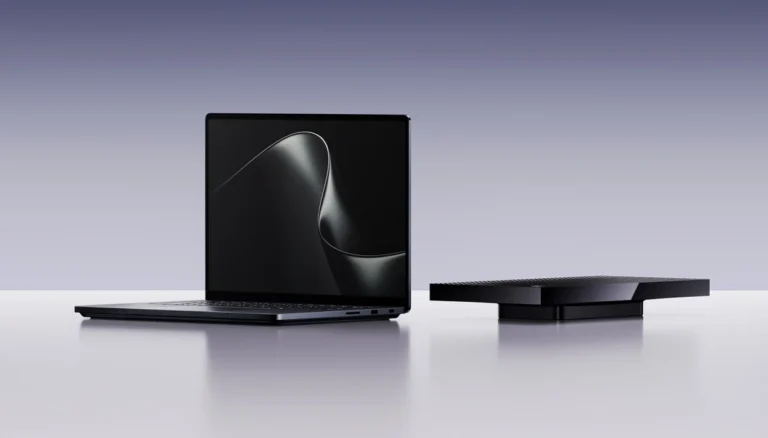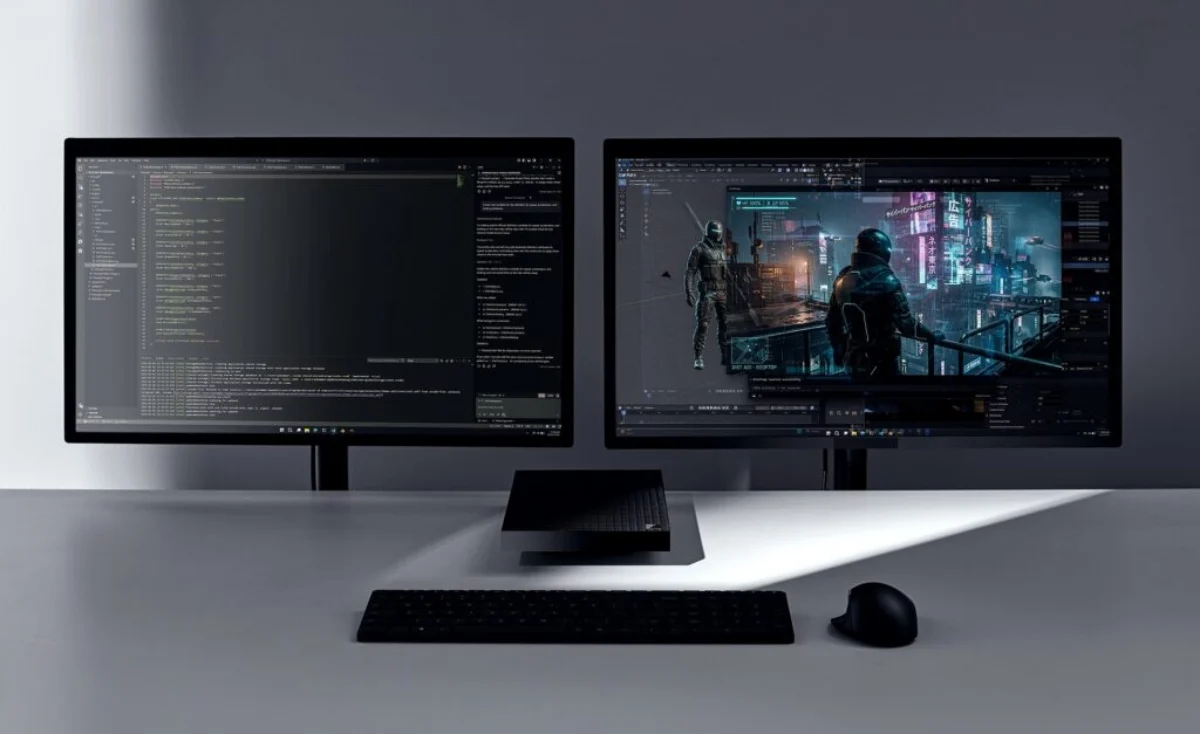
At the Build 2026 conference in San Francisco, Microsoft expanded its hardware horizon. Previously, the tech giant introduced the Surface Laptop Ultra for premium creators. However, the enterprise has now unveiled a dedicated workstation for software engineers. Microsoft officially designates this advanced platform as the Surface RTX Spark Dev Box.
Unleashing Untethered Compute Potential
This compact, miniature desktop platform integrates the powerful Nvidia RTX Spark Superchip. Crucially, the chassis removes the thermal limitations typically found in notebooks. The system easily sustains a 100W Thermal Design Power (TDP). Therefore, engineers engineered this hardware specifically for prolonged training cycles and autonomous agent operations.
Eradicating Cloud Overhead
Furthermore, the workstation excels at on-device model fine-tuning. This localized architecture delivers up to 1 Petaflop of computational power directly to the desktop. Consequently, organizations can seamlessly bypass the exorbitant expenses associated with cloud-based GPU allocation.
Overcoming Notebook Constraints
Initially, the architecture utilizes a premium aluminum alloy enclosure. Interestingly, the chassis itself functions as an expansive, passive heat sink. Furthermore, the upper panel features an array of one thousand precision-milled ventilation grid holes. Accordingly, the device maintains a stable 100W thermal equilibrium. Therefore, this thermal efficiency effortlessly sustains prolonged artificial intelligence training cycles.
Monolithic Unified Memory
Concurrently, Microsoft engineered deep operating system optimizations. This structural choice allows the CPU and GPU to share the 128GB unified memory matrix symmetrically. Consequently, this innovation shatters the traditional 24GB VRAM barrier of discrete consumer graphics cards. Developers can now natively load massive large language models featuring up to 120 billion parameters.
Comprehensive Perimeter Connectivity
Additionally, the physical interface satisfies all mainstream workstation demands. Specifically, the IO panel offers dual USB-C ports alongside a standard USB-A connection. Moreover, it includes an HDMI interface, an RJ45 Ethernet port, and a 3.5mm audio jack.
An Optimized Out-of-the-Box Software Workspace
Beyond the formidable hardware specifications, the software ecosystem provides immediate operational readiness. Microsoft pre-loads each machine with a specialized, image-level installation of Windows 11 Pro. This deployment guarantees that engineers can commence programming immediately upon initial authentication. For example, the factory image includes Visual Studio Code, GitHub Copilot, Git, Python, and Node.js.
Native Subsystem Configuration
Furthermore, the platform incorporates a pre-configured Windows Subsystem for Linux 2 (WSL 2) environment. Geometry parameters feature native GPU passthrough paired with complete Nvidia CUDA integration. Microsoft also designates PowerShell 7 as the default terminal shell.
Minimizing Environmental Distractions
To preserve maximum developer focus, the software defaults to a streamlined dark aesthetic. The interface provides a minimalist taskbar, completely omitting standard desktop widgets. Additionally, the system enables “Do Not Disturb” and “Developer Mode” by default out of the box.
Zero-Trust Hardware Safeguards
Finally, the hardware functions as a highly secure vault for proprietary corporate intelligence. The architecture implements Microsoft’s Secured-core PC framework. Consequently, it delivers hardware-level defenses including BitLocker encryption and Microsoft Defender integration.
Market Dynamics and Strategic Pivots
Later this year, the Surface RTX Spark Dev Box will launch exclusively via Microsoft.com in the United States. Although Microsoft has not announced official pricing, this premium hardware will undoubtedly command a heavy premium. For context, comparable developer systems often retail for approximately 3,999 dollars.
Redefining the Hybrid AI Paradigm
Nevertheless, the debut of this workstation highlights a profound strategic shift for Microsoft. Previously, the corporate business logic favored migrating all computational workloads directly to the cloud. However, the operational realities of artificial intelligence engineering disrupted this vision. Indeed, continuous coding cycles, fine-tuning, and agent testing loops incur unpredictable cloud API expenditures.
Harmonizing Local Workloads with Cloud Deployment
Therefore, this hardware represents a pragmatic compromise and a definitive architectural solution. Teams can smoothly execute localized prototyping and fine-tuning on this desktop platform. Subsequently, engineers can seamlessly deploy models to production environments using Microsoft Azure. Ultimately, this hard-linked workflow integrates effortlessly with Windows 11 and prospective mobile RTX Spark platforms.
Support Our Threat Intelligence
If you find our technology report and cybersecurity news helpful, consider supporting our work.
 Buy Me a Coffee
PayPal
Buy Me a Coffee
PayPal