A Synchronized Tech Alliance
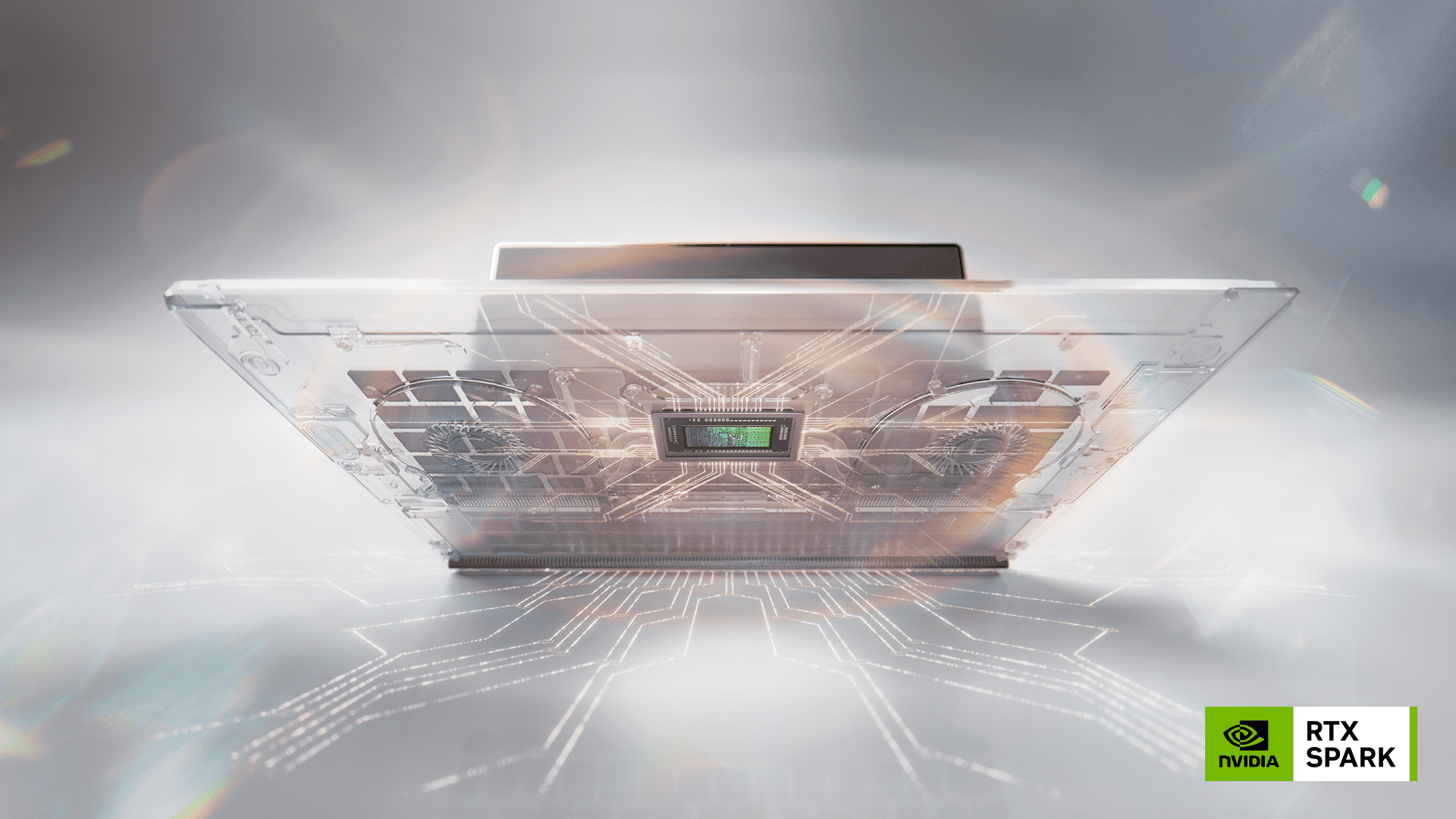
Prior to Computex, Nvidia and Microsoft heightened anticipation for a new generation of artificial intelligence personal computers. Subsequently, at the Taipei exhibition, the collaboration became official. Nvidia unveiled the RTX Spark Superchip specifically engineered for Windows laptops and desktops.
Overcoming Initial Hurdles
For Microsoft, this architecture offers a fresh opportunity to champion AI computing following the turbulent launch of Copilot+ PCs. Meanwhile, the milestone signifies a bold entry into the Windows hardware market for Nvidia, expanding past graphics processing.
Nvidia CEO Jensen Huang announced that the initial RTX Spark laptops and desktops will debut this autumn. Currently, the official launch partners include ASUS, Dell, HP, Lenovo, Microsoft Surface, and MSI. Furthermore, Acer and GIGABYTE will introduce compatible devices later in the release cycle.
Architecture and Core Specifications
The RTX Spark Superchip elegantly unifies a central processor and a graphics accelerator. Specifically, Nvidia engineered this platform in collaboration with Taiwan’s MediaTek to target Microsoft Windows for Arm.
A Historic Return to Consumer Silicon
This launch represents Nvidia’s second major endeavor to establish a foothold in the PC processor market. More than a decade ago, the company participated in a similar initiative. However, that early project failed to achieve mainstream adoption.
Today, Nvidia returns to the consumer arena from a position of unprecedented strength. Their lucrative data center business generates massive revenue. As a result, skyrocketing demand for AI accelerators has transformed the manufacturer into a titan of the global semiconductor industry.
Form Factors and Physical Frameworks
Initial devices powered by the RTX Spark platform will target the premium tier. Specifically, Nvidia promises ultra-thin, lightweight laptops with exceptional battery longevity. The company will also introduce compact desktop variations.
In official press disclosures, the manufacturer highlights chassis designs under 14 millimeters thick. These sleek systems will weigh approximately 1.36 kilograms. Moreover, the laptops will feature 14-to-16-inch G-SYNC compatible OLED displays. Eventually, subsequent iterations of the platform will accommodate a broader range of price points.
Microarchitectural Dominance
Architecturally, the RTX Spark Superchip integrates an NVIDIA Grace CPU featuring 20 compute cores. It also embeds a Blackwell RTX GPU packed with 6,144 CUDA cores and fifth-generation Tensor cores. These components communicate seamlessly via a high-speed NVLink-C2C interconnect.
Massive Memory and Local Processing
Consequently, the system supports a unified memory pool of up to 128 gigabytes. Nvidia boasts up to one petaflop of localized AI compute performance. Therefore, this immense power easily facilitates the local execution of large language models and autonomous agents.
TSMC will manufacture the superchip utilizing its advanced 3N process node. Nvidia emphasizes that unified memory serves a broader purpose beyond mere processing speed. Crucially, it handles workloads that traditional laptops typically offload to the cloud.
For example, the hardware can execute localized 120-billion-parameter models with a 1-million-token context window. It also effortlessly processes 3D scenes exceeding 90 gigabytes. Furthermore, creators can seamlessly execute 12K 4:2:2 video editing and native 4K AI video generation.
Orchestrating Localized AI Agents
Both Nvidia and Microsoft place a strategic wager on localized AI agents. To support this vision, Microsoft is engineering novel identification, isolation, and access control frameworks. Meanwhile, Nvidia introduces the robust OpenShell runtime environment.
This powerful combination empowers users to establish strict operational boundaries for autonomous agents. As a result, individuals can decide which queries remain local, effectively shielding private data from cloud models.
Revolutionizing Daily Workflows
The overarching concept centers on a PC that actively assists with workflows rather than merely launching applications. These local agents will intelligently parse files and electronic mail. They will also orchestrate multi-application workflows,祖 synthesize media, write syntax, and debug code.
For corporate enterprises, on-device processing significantly mitigates reliance on cloud infrastructure. Consequently, this shift protects budgets from the escalating costs of remote model queries.
Software Compatibility and Ecosystem Support
Nvidia collaborated with Microsoft for several years to ensure software compatibility with Windows for Arm. Although Microsoft and Qualcomm have championed similar PCs for over a year, a market breakthrough remains elusive.
Outside of Apple’s Mac ecosystem, the vast majority of personal computers continue to rely on Intel or AMD processors. Undeniably, Arm’s primary advantage lies in its superior energy efficiency. However, legacy software compatibility has historically stood as its greatest operational constraint.
Creative Application Optimization
Upcoming RTX Spark PCs will dramatically accelerate AI features within popular software suites. For instance, Adobe is actively optimizing Premiere and Photoshop for this specific architecture. The creative software giant promises up to a two-fold performance increase for timeline editing. These updates for Premiere, Photoshop, and Substance will launch concurrently with the first physical devices.
Gaming Heritage and Future Prospects
Naturally, Nvidia retains its legendary gaming heritage at the core of the new platform. The company guarantees smooth AAA gaming at 1440p resolving well over 100 frames per second. The architecture natively supports real-time ray tracing, DLSS, and Reflex technologies.
For equipment manufacturers, this magnificent combination proves highly attractive. Ultimately, a single processor masterfully addresses localized AI, content creation, and high-fidelity gaming simultaneously.
The Path to Retail Launch
Currently, Nvidia refrains from publishing direct performance comparisons against rival hardware. The manufacturer promises to disclose granular benchmarks closer to the official retail launch. Finally, executives do not expect ongoing semiconductor supply chain constraints to disrupt the production timeline.
Support Our Threat Intelligence
If you find our technology report and cybersecurity news helpful, consider supporting our work.
 Buy Me a Coffee
PayPal
Buy Me a Coffee
PayPal