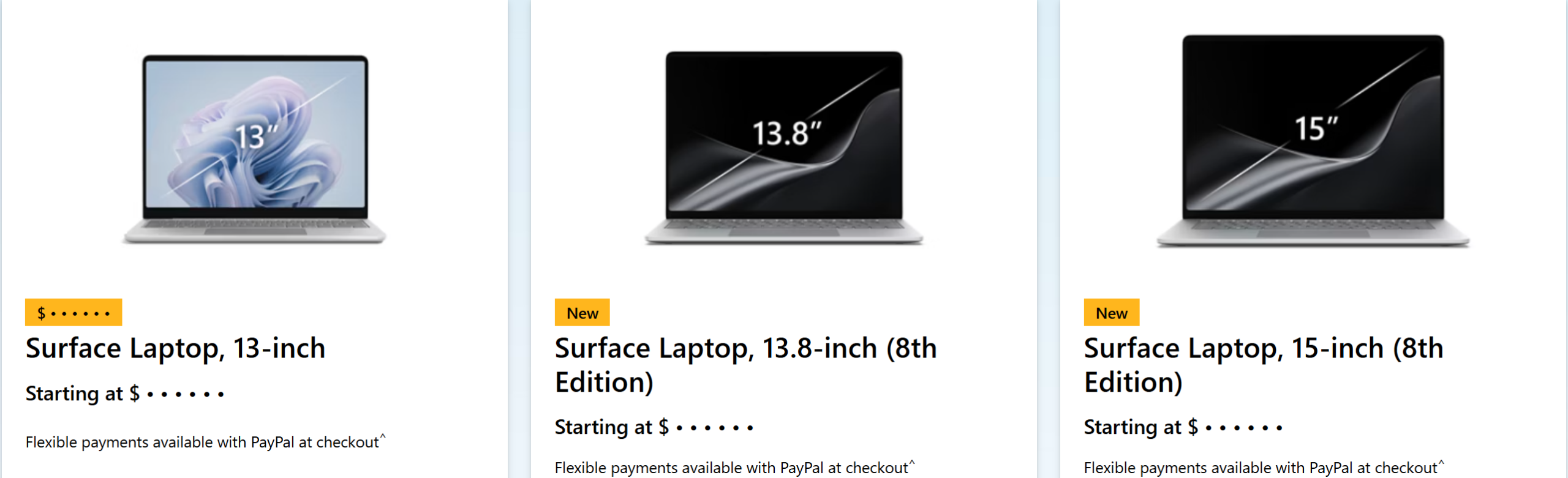
Previously, Microsoft espoused the philosophy that an optimal Windows 11 experience necessitated a minimum of 16GB of RAM. The company even asserted that 32GB remained the gold standard for dedicated gamers. However, the technology behemoth has recently introduced a new iteration of the Microsoft Surface equipped with a mere 8GB of memory. Concurrently, they revised their official purchasing guidelines. Microsoft now describes 8GB as perfectly suited for quotidian tasks such as web browsing, video streaming, academic assignments, and operating productivity software.
From Erasing 32GB Recommendations to Rationalizing 8GB
In February, Microsoft published an ill-timed blog post declaring 32GB of RAM as a “worry-free” upgrade for Windows 11 gamers. While 32GB or even 64GB certainly provides an exceptional gaming experience, an unavoidable truth remains. Few consumers can easily shoulder the financial burden of such vast memory capacities. Consequently, this publication provoked a torrent of intense criticism from the gaming community. This backlash prompted Microsoft to quietly excise the article from their platform.
Naturally, Microsoft continued to recommend a baseline of 16GB for Windows 11 devices. The company acknowledged that insufficient memory drastically impedes the operating system’s performance. Yet, the harsh realities of the current hardware market forced the corporation to compromise. Microsoft recently unveiled an 8GB iteration of the Microsoft Surface. Had the industry not experienced this relentless surge in memory prices, Microsoft would have undoubtedly established 16GB as the absolute minimum standard.
The Reality of Multitasking Constraints
Microsoft sudden endorsement of 8GB feels somewhat disingenuous. Navigating web pages on Windows 11 with 8GB of RAM might not induce immediate system distress. However, intensively utilizing productivity applications presents a palpable challenge. Should a user simultaneously run office software while opening numerous browser tabs for research, the system’s memory rapidly reaches full saturation. While this might not trigger incessant stuttering, the overarching user experience undeniably suffers a noticeable degradation.
Microsoft’s Financial Dilemma and Strategic Retreat
Apple recently introduced the MacBook Neo powered by the A18 silicon. In response, Microsoft commissioned a report asserting that Windows 11 laptops eclipsed the MacBook Neo in performance. This specific analysis astutely highlighted Apple reliance on 8GB of memory. It contrasted this against comparably priced Windows laptops that traditionally boasted 16GB. The current landscape presents a profound irony. Constrained by market forces, Microsoft now offers a commercial Surface Laptop, priced at $1,299, armed with a mere 8GB of RAM.
Furthermore, Microsoft consumer-oriented offerings also feature this reduced capacity. The Microsoft Surface Laptop 13 and Surface Pro 12 both ship with 8GB of memory. The foundational issue lies in the current economic climate. An 8GB memory module today commands a higher premium than a 16GB module did a mere two years ago. If Microsoft stubbornly persisted with 16GB configurations, the total manufacturing expenditure would skyrocket. Averse to operating at a loss, the corporation would inevitably transfer these costs to the consumer. This strategy would invariably stifle sales volume. Interested buyers can explore the current configurations and buy a Surface Laptop directly through official channels to see these specifications firsthand.
Adapting Windows 11 to New Market Realities
Thus, Microsoft finds itself compelled to swallow its pride. The company must release 8GB Surface devices while simultaneously extolling the virtues of this diminished capacity. Concurrently, the tech giant is furiously attempting to optimize Windows 11. They are striving to minimize the memory footprint of core system components. In the immediate future, entry-level devices equipped with 8GB of RAM will likely dominate the mainstream market. This harsh reality forces Microsoft to rigorously refine its operating system to accommodate this constrained hardware paradigm.
Support Our Threat Intelligence
If you find our technology report and cybersecurity news helpful, consider supporting our work.
 Buy Me a Coffee
PayPal
Buy Me a Coffee
PayPal