Following the initial teaser of an entirely new laptop product line in May, Google is finally prepared to launch its next major expansion into the market. The official Googlebook landing page is now live, allowing users to register for imminent pre-order notifications. Concurrently, Google confirmed that official pre-orders will commence on September 21 at 9:00 AM Eastern Time. Historically, Chromebooks targeted the education sector and rudimentary daily tasks. Conversely, the Googlebook deliberately positions itself as a premier, flagship-tier laptop boasting premium materials and formidable performance. The inaugural wave of these sophisticated devices will be spearheaded by five long-standing OEM partners: Acer, ASUS, Dell, HP, and Lenovo.
Deep Integration of Android and Gemini AI
Regarding its underlying architecture, the Googlebook operates on a radically reimagined operating system built directly upon the Android framework. Crucially, the entire core user experience revolves seamlessly around “Gemini Intelligence.”
Concerning specific functional applications, the Googlebook introduces several exclusive, innovative interactive designs:
- Magic Pointer: Users simply shake their mouse cursor on the screen to awaken this intuitive feature. By selecting any content with the cursor, Gemini instantly provides contextually relevant action suggestions, actively assisting with inquiries, complex comparisons, or creative endeavors.
- Custom Widgets: The operating system empowers users to generate highly personalized desktop widgets driven entirely by artificial intelligence.
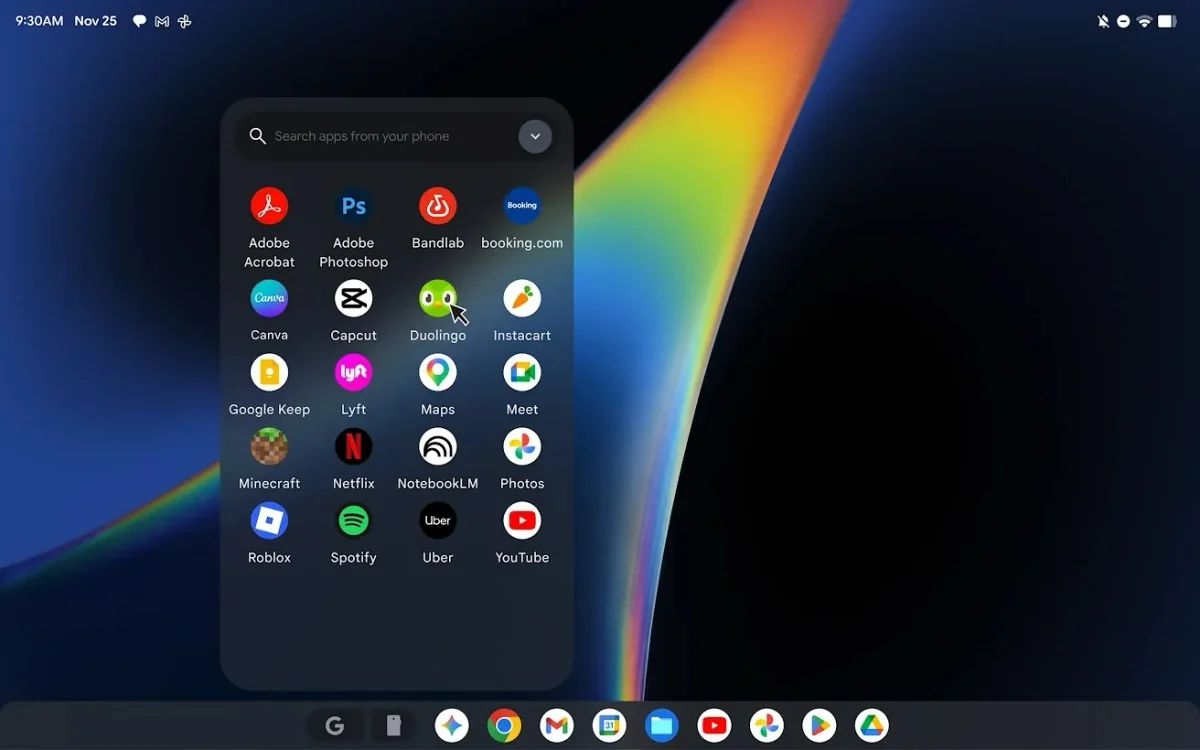
- Quick Access and Deep Mobile Integration: The Googlebook possesses the profound capability to link seamlessly with Android smartphones. Users can directly access files housed on their phones straight from the laptop, creating an experience as fluid as if the files resided locally on the laptop’s own hard drive.
- Glowbar Identification: Regarding external aesthetics, the Googlebook features a distinctive, illuminated strip across the laptop’s upper lid known as the “Glowbar.” This striking element will serve as the signature hardware design language for the entire product line.
Pricing and Initial Launch Regions Await September 15
Although the pre-order date is firmly established, crucial details remain unconfirmed. Specific pricing, comprehensive hardware specifications, and the anticipated official shipping dates will likely be unveiled during the formal launch event scheduled for September 15 (US local time).
Furthermore, judging by the supported languages currently available on the official website which are limited to English, German, Spanish, and French (encompassing regional variations like British English, Canadian French, Australian English, and Canadian English) analysts predict the initial Googlebook launch will likely target major Western markets. This includes the United States, the United Kingdom, Canada, Australia, Germany, and France. Whether this initial rollout will encompass Asian regions like Taiwan, or if consumers there must await a subsequent release wave, requires further official confirmation from Google.
Google Deploys Android Ecosystem to Encircle Windows
Analyzing the strategic brand metamorphosis from “Chromebook” to “Googlebook,” Google’s ultimate ambition becomes crystal clear. Historically, ChromeOS achieved monumental success within light document processing and K-12 education markets. However, it persistently struggled to compete against Microsoft Windows or Apple MacBooks in the premium laptop sector, which demands high-end productivity and a robust application ecosystem.
With the Googlebook, the company chose to dismantle the old framework and start anew, utilizing the massive app repository of Android as its foundation. This decisive pivot not only completely resolves the historical pain point of a weak desktop application ecosystem but also ensures formidable competitiveness amidst the surging “AI PC” market wave by natively integrating Gemini Intelligence.
Moreover, the “Quick Access” feature, bridging the gap with Android phones, represents a vital weapon in Google’s arsenal as it attempts to forge a seamless experience reminiscent of the vaunted “Apple ecosystem.” When a laptop operates as intuitively as a smartphone, entirely eliminating software usage friction, this premium “supersized Android laptop” might successfully tear a significant breach into the highly lucrative high-end market.
Support Our Threat Intelligence
If you find our technology report and cybersecurity news helpful, consider supporting our work.
 Buy Me a Coffee
PayPal
Buy Me a Coffee
PayPal