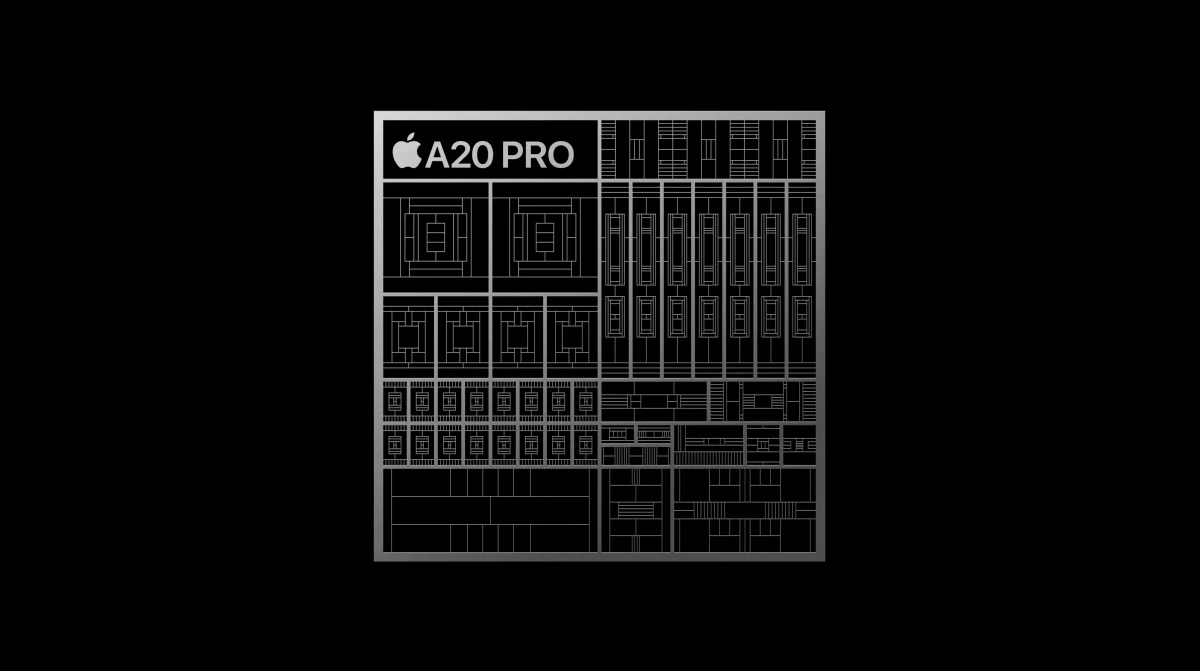
Apple’s next-generation A20 Pro processor, officially integrated into the iPhone 18 Pro series, leverages TSMC’s 2nm (N2) manufacturing process to successfully embed two desktop-class CPU core architectures within the stringent power constraints of a mobile device. According to current benchmark data from Geekbench 7, the A20 Pro achieves unprecedented heights, recording a single-thread score of 4006 and a multi-thread score of 11460. Compared to the single-core performance of approximately 3249 from its predecessor, the A19 Pro, the A20 Pro delivers a profound 23.3% leap in single-core prowess and a staggering 27.1% surge in multi-core capabilities, marking Apple’s most monumental intergenerational performance elevation in recent years.
Integrating M5 Desktop Architecture and Nearing 5GHz Frequencies
The architectural foundation of the A20 Pro features a sophisticated “2+4” configuration, marrying two phenomenal performance cores with four efficiency cores, capable of reaching a breathtaking maximum clock speed of 4.93GHz. These superlative performance cores directly inherit the illustrious design of Apple’s M5 silicon, boasting an expanded front-end decoding bandwidth, a radically revolutionized cache hierarchy, and vastly enhanced branch prediction capabilities.
To accommodate these high-frequency cores operating near 5GHz, Apple augmented the memory transmission bandwidth of the A20 Pro by a remarkable 50% compared to previous iterations. Analysts presume the implementation of a 96-bit memory I/O to guarantee voluminous data transmission throughput. This substantial enhancement serves as the fundamental cornerstone allowing its single-core performance to eclipse even its own M5 chip. Simultaneously, it grants memory data processing vastly superior efficiency, enabling the handling of more extensive datasets within the identical operational workflow – a crucial advantage as memory capacity costs continue to escalate.
Mobile Silicon Battlefield: Absolute Single-Core Dominance
Within the fiercely competitive realm of mainstream smartphone processors, the single-core performance of the A20 Pro exerts absolute and unwavering dominance.
- When pitted against the Qualcomm Snapdragon 8 Elite Gen 5 processor, the A20 Pro commands a 31.5% lead in single-core performance and a 12.2% advantage in multi-core metrics.
- Compared to the MediaTek Dimensity 9400, it establishes a massive supremacy of 76.2% and 48% in single-core and multi-core evaluations, respectively.
- Facing the Google Tensor G5, the A20 Pro boasts a staggering 99.2% single-core superiority and a 95.6% multi-core triumph, practically doubling the performance output.
- Against the Huawei Kirin 9050 Pro, the disparity becomes exceedingly profound; the A20 Pro surges ahead by a colossal 289.7% in single-core and 139% in multi-core benchmarks.
The solitary contender to surpass the A20 Pro in multi-core assessments is the Xiaomi Xring O3, armed with a formidable 10-core configuration. Its multi-core score of 11777 relegates the A20 Pro to a marginal 2.7% deficit. Nevertheless, the A20 Pro steadfastly maintains a resolute 33.7% advantage in single-core performance. This brilliantly illustrates Apple’s remarkable ability to flawlessly push the multi-core potential of a 6-core architecture to its absolute zenith, despite a numerical disadvantage in core count.
Transcending Boundaries Against PC Processors
The architectural brilliance of the A20 Pro not only conquers the mobile handset market but audaciously challenges desktop and laptop processors. In single-thread execution, the monumental 4006 score of the A20 Pro transcends Apple’s proprietary M5 chip (3739, a 7.1% superiority) and the M4 chip (3351, a 19.5% advantage). When evaluated against Intel’s latest Panther Lake architecture, specifically the Core Ultra X9 388H, the single-core prowess of the A20 Pro establishes a commanding 48.7% lead.
Within multi-threaded scenarios, the 6-core A20 Pro (scoring 11460) triumphantly defeats Intel’s mainstream ultrabook processors, including the Core Ultra 5 325 (11107, a 3.2% lead) and the Core Ultra 5 332 (6976, an astonishing 64.3% superiority). This paradigm shift signifies that contemporary mobile silicon can now vanquish the processors driving mainstream ultralight laptops.
Constrained by its fundamental core configuration, the multi-core capability of the A20 Pro understandably trails behind elite desktop silicon, such as the AMD Ryzen 9 9950X3D (by 62.3%), the Intel Core i9-14900KS (by 45.8%), and its internal 8-core sibling, the M3 (though merely trailing by 5%).
Cross-Platform Processor Performance Comparison (Geekbench 7)
| Processor Name | Single-Core Performance | Multi-Core Performance | A20 Pro Single-Core Lead | A20 Pro Multi-Core Lead |
|---|---|---|---|---|
| A20 Pro (6-core) | 4,006 | 11,460 | – | – |
| Snapdragon 8 Elite Gen 5 (8-core) | 3,047 | 10,212 | 31.50% | 12.20% |
| Xring O3 (10-core) | 2,996 | 11,777 | 33.70% | -2.7% |
| Exynos 2600 | 2,694 | 10,580 | 48.70% | 8.30% |
| Dimensity 9400 (8-core) | 2,273 | 7,745 | 76.20% | 48.00% |
| Tensor G5 (8-core) | 2,011 | 5,859 | 99.20% | 95.60% |
| Kirin 9050 Pro | 1,028 | 4,794 | 289.70% | 139.00% |
| Apple A19 Pro | 3,249 | 9,016 | 23.30% | 27.10% |
| Apple M5 (Laptop) | 3,739 | 18,671 | 7.10% | -38.6% |
| Apple M4 (Laptop) | 3,351 | 15,806 | 19.50% | -27.5% |
| Apple M3 (Laptop) | 2,808 | 12,061 | 42.70% | -5.0% |
| Ryzen 9 9950X3D (Desktop) | 3,182 | 30,428 | 25.90% | -62.3% |
| Core i9-14900KS (Desktop) | 3,024 | 21,145 | 32.50% | -45.8% |
| Core Ultra X9 388H (Laptop) | 2,694 | 18,121 | 48.70% | -36.8% |
| Core Ultra 5 325 (Laptop) | 2,297 | 11,107 | 74.40% | 3.20% |
| Core Ultra 5 332 (Laptop) | 2,134 | 6,976 | 87.70% | 64.30% |
Strategic Divergence: Apple’s Singular Brute Force Versus Arm CSS for Mobile 2
Regarding the application of artificial intelligence and the foundational design of computational architecture, the Apple A20 Pro and the next-generation Arm CSS for Mobile 2 native AI platform (both forged upon TSMC’s 2nm node technology) manifest starkly contrasting strategic philosophies.
Apple perpetuates its trajectory of meticulous customization, anchoring the bedrock of its AI computational power upon “exceedingly high-frequency performance cores” and “colossal memory bandwidth.” This architecture of singular, amplified extremity directly endows Apple Intelligence with phenomenal responsiveness and immense token throughput when processing large language models directly on the device. Furthermore, Apple utilizes its formidable raw CPU Instructions Per Clock (IPC) performance as a robust bastion for AI computation, adamantly refusing to rely entirely upon dispersed neural network units.
Conversely, the Arm CSS for Mobile 2 computational platform champions the heterogeneous synergy and integrated platformization of agentic AI. Its integrated Cortex C2 CPU cluster not only boasts the C2-Ultra but seamlessly incorporates dual SME2 extended instruction sets specifically tailored to dispatch lightweight AI workloads. Furthermore, the Mali G2-Ultra NX GPU, paired with the CSS for Mobile 2 platform, marks a historic milestone by embedding a dedicated neural network accelerator directly within the shader cores of the GPU, elevating rendering efficiency through AI-assisted computation.
The architectural ethos of Arm dictates that graphic and AI computations finalize within a unified workflow, thereby conserving overarching power consumption. Apple, however, opts to continuously invest massive silicon real estate into crafting omnipotent, monolithic cores, ensuring its software ecosystem receives the most abundant and absolute computational support possible.
Concluding Perspectives
Analyzing the performance metrics of the A20 Pro unequivocally confirms that the transistor density and energy efficiency dividends bestowed by TSMC’s 2nm process represent the absolute linchpin for this generational performance metamorphosis. Apple audaciously cascaded M5-tier desktop architecture into the rigorously power-constrained processor of the iPhone 18 Pro. By harnessing elevated clock speeds and expanded memory bandwidth, Apple cemented its unrivaled status as the paragon of single-core dominance in the mobile sphere. This endeavor seeks not merely to conquer synthetic benchmarks but to satisfy the draconian demands for minimal latency and immense data throughput when Apple Intelligence processes multimodal generative tasks on-device.
Although in extreme multi-core scenarios, devices like the Xiaomi Xring O3 demonstrate the breakout potential of the Android faction leveraging a “10-core” (or higher) methodology, the transient responsiveness and IPC prowess of the A20 Pro during single, high-load tasks remain an insurmountable fortress for rival mobile silicon in the foreseeable future.
Nevertheless, as Qualcomm and MediaTek strategize to forge their forthcoming mobile computing platforms (anticipated as the Snapdragon Elite Gen 6 and Dimensity 9600, encompassing diverse specification tiers) using TSMC’s 2nm technology, and as more entities inevitably adopt the Arm CSS for Mobile 2 blueprint for custom processors, uncertainty lingers regarding whether Apple can indefinitely maintain its unassailable dominion over mobile computational supremacy purely through the A20 Pro.
Support Our Threat Intelligence
If you find our technology report and cybersecurity news helpful, consider supporting our work.
 Buy Me a Coffee
PayPal
Buy Me a Coffee
PayPal