Regulatory filings submitted to the European Commission reveal Apple’s latest strategic maneuver. The technology giant has successfully finalized an agreement with Huxe, a pioneering AI startup specializing in customized voice podcasts. Consequently, Apple will integrate Huxe’s core developmental team while securing a non-exclusive license for their underlying intellectual property.
The Rise of Reverse Acqui-hires in Silicon Valley
Industry insiders frequently characterize this specific transaction model as a “reverse acqui-hire.” Simply put, Apple circumvented a direct, wholesale acquisition of Huxe’s corporate assets. This calculated maneuver effectively bypasses the protracted and rigorously severe scrutiny typically imposed by antitrust regulatory bodies. Instead, Apple formulated a specialized agreement to selectively recruit specific employees while formally licensing their foundational technologies.
Over recent years, this sophisticated approach has emerged as the standard operational playbook for technology behemoths seeking to rapidly expand their artificial intelligence arsenals. For instance, Microsoft recently executed a similar strategy with Inflection AI. Furthermore, widespread reports suggest NVIDIA is contemplating a comparable maneuver with Reflection AI.
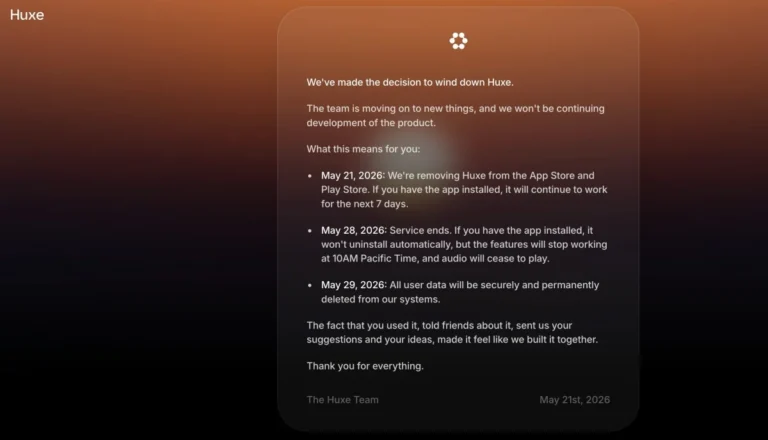
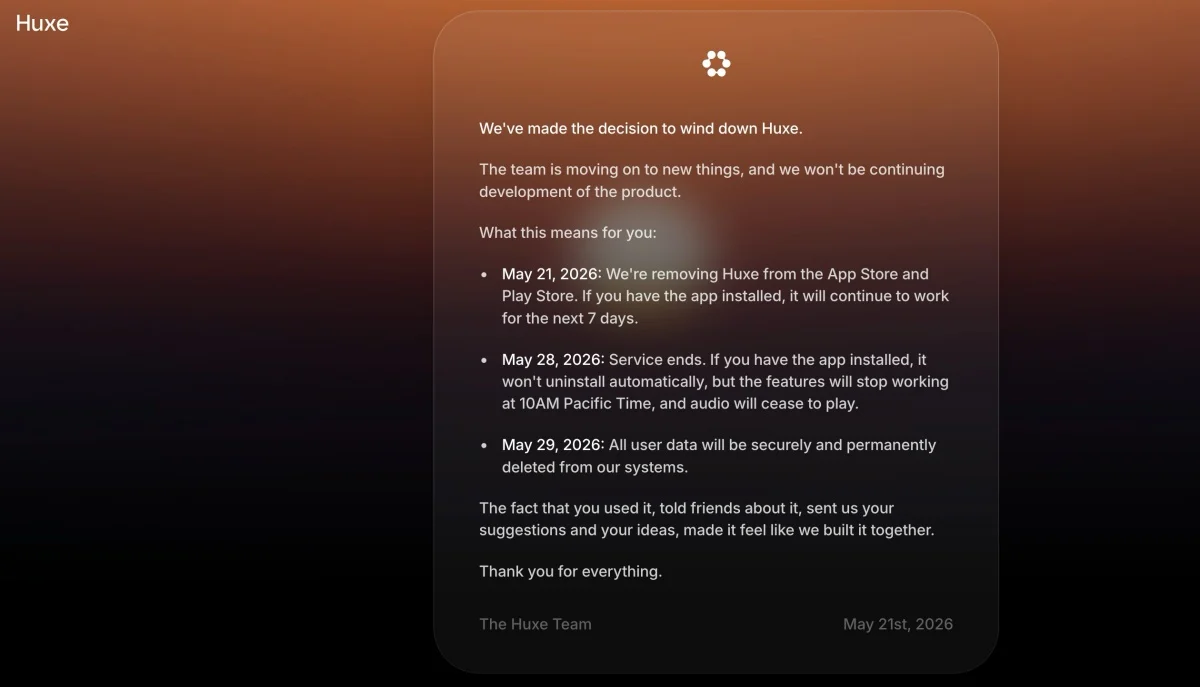
According to preliminary intelligence published by MacRumors, Apple formally notified the European Union of this transaction on June 9. Intriguingly, shortly before this notification, Huxe abruptly published an unexpected announcement on their official website on May 21. They declared an immediate cessation of all operational activities. Furthermore, they hastily removed their applications from both the Apple and Google marketplaces and subsequently purged all existing user data.
At that juncture, the Huxe team offered only a cryptic explanation: “We are embarking on a new developmental trajectory and will cease further development of this product.” In retrospect, this mysterious “new trajectory” clearly signified their integration into Apple’s formidable AI division.
From Gemini Notebook to Apple Podcasts
The professional pedigree of this startup team is exceptionally prestigious. The founding developers previously contributed to the highly acclaimed “Audio Overview” feature within Google’s renowned AI note-taking application, NotebookLM (recently rebranded as Gemini Notebook). Following their departure from Google, these visionary engineers established Huxe to focus exclusively on crafting highly personalized, AI-driven podcast experiences.
Although Apple’s regulatory filings abstain from specifying which Huxe employees received offers or detailing future product roadmaps, the broader industry consensus remains resolute. Analysts universally believe this technological absorption is inextricably linked to recent aggressive maneuvers by leading music streaming competitors.
Remarkably, just one day prior to Huxe’s operational shutdown, Spotify officially debuted its proprietary AI-driven podcast generation capabilities. By leveraging Huxe’s sophisticated technology, Apple will likely introduce comparable AI voice generation or customized content summarization features within its native Apple Podcasts application. Ultimately, this strategic enhancement aims to counter Spotify’s relentless expansion within the competitive audio content market.
Evaluating the Demand for Custom AI Broadcasts
By employing this reverse acqui-hire methodology, Apple successfully navigated beneath the European Union’s antitrust radar while precisely addressing a critical technological deficiency in generative audio content. This maneuver undeniably constitutes a brilliant strategic execution. However, beyond the technical implications, it presents a compelling market inquiry: Do consumers genuinely desire exclusively AI-generated podcasts?
Recently, executive leadership across Silicon Valley has exhibited an almost fanatical infatuation with personalized AI audio. They operate under the assumption that by simply inputting a user’s interests, documents, or notes, the AI can effortlessly synthesize a conversational broadcast between two virtual hosts. Some even envision this technology entirely superseding traditional podcasting formats.
Nevertheless, the fundamental allure of traditional podcasting remains intrinsically tied to its human essence. Listeners crave authentic perspectives, genuine humor, and the unpredictable spark of spontaneous interaction. While AI-generated audio summaries are exceptionally efficient for extracting knowledge such as condensing a voluminous PDF report their utility as daily, casual entertainment remains questionable. Extended exposure to these customized broadcasts inevitably reveals a synthetic, canned quality.
Having secured Huxe’s technological prowess, Apple’s future challenge lies in gracefully integrating these AI capabilities into the Apple Podcasts ecosystem. This endeavor will test not only the formidable technical acumen of these newly acquired engineers but also Apple’s legendary standard for impeccable product design and user experience.
Support Our Threat Intelligence
If you find our technology report and cybersecurity news helpful, consider supporting our work.
 Buy Me a Coffee
PayPal
Buy Me a Coffee
PayPal