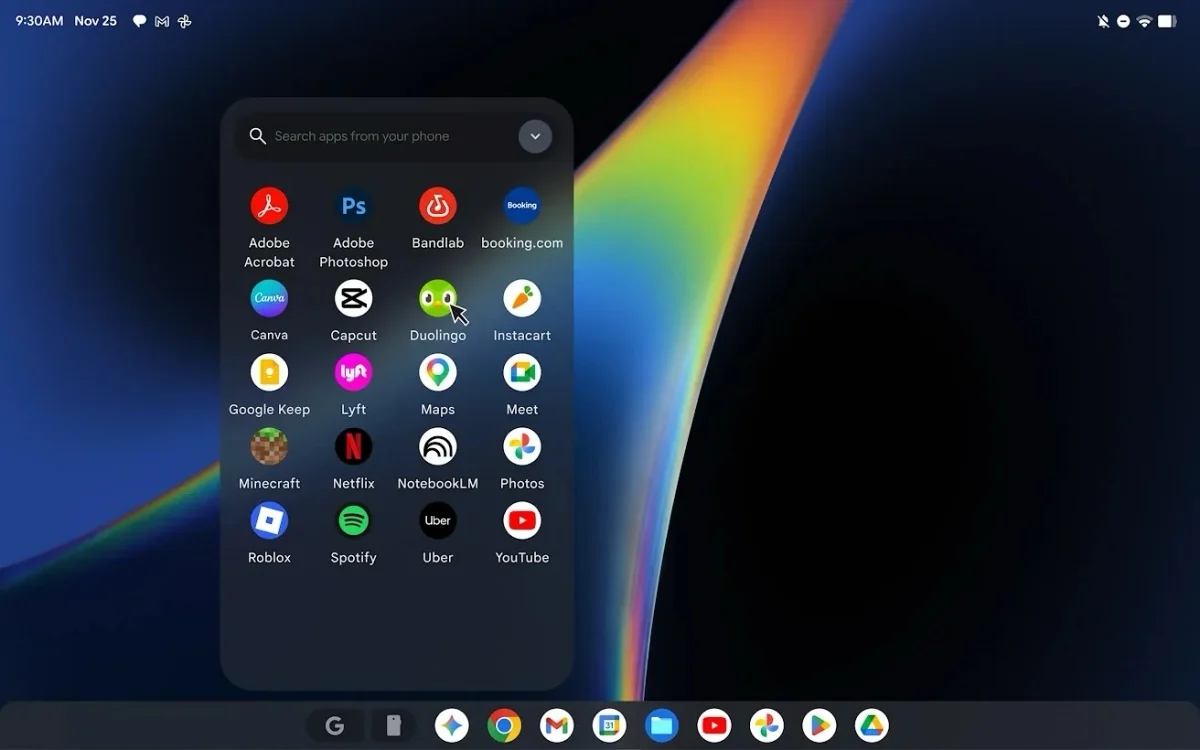
The highly anticipated “Googlebook” laptop platform, designed to offer profound integration with Android smartphones, is confronting significant architectural compatibility challenges shortly after its debut. In a candid disclosure to Android Authority, Google acknowledged that specific “more complex” Android applications may experience compatibility hurdles and degraded performance when executing on Googlebooks equipped with Intel x86 architecture processors.
The Performance Penalty of Arm-to-x86 Translation
The genesis of this predicament lies within the fundamental disparities between the underlying hardware architectures. The overwhelming majority of contemporary Android applications—particularly resource-intensive mobile games—are natively compiled specifically for Arm architecture chips. Consequently, when these applications launch on a Googlebook utilizing an Intel x86 processor, the operating system must utilize a hardware translation layer to instantaneously convert the Arm codebase into x86-compatible instructions. Google has historically noted that this real-time, dynamic translation process inevitably induces performance degradation and accelerates battery depletion.
A Google representative clarified the situation: “The vast majority of Android apps deliver an exceptionally fluid user experience across both Intel and Qualcomm-powered Googlebooks. However, because certain complex applications or advanced games were engineered exclusively for the Arm architecture, they fundamentally require developers to implement specific ‘fine-tuning’ to achieve optimal performance on the Intel platform.”
Google emphasized that it is aggressively collaborating with software developers, Intel, and Qualcomm to continuously optimize overall performance and broaden the spectrum of compatibility.
A Bifurcated Hardware Ecosystem Faces Market Realities
Currently, while Google curates a dedicated section of officially selected, heavily optimized applications specifically for the Googlebook, users retain the absolute freedom to download any unoptimized Android app directly from the integrated Google Play Store.
However, Google has deliberately abstained from explicitly naming which specific applications will encounter severe compatibility issues on the x86 processor variants.
The contemporary Googlebook hardware ecosystem presents a distinct, dual-track reality. It encompasses three distinct models featuring Intel Core 5 processors (manufactured by Acer, Asus, and Lenovo) juxtaposed against two models utilizing the Qualcomm Snapdragon X Elite Arm-based processor (manufactured by Dell and HP). Unsurprisingly, the Qualcomm Arm-based models possess a massive, inherent compatibility advantage when executing native Android applications, as they entirely circumvent the resource-intensive code translation process.
Echoes of Historical Architectural Transitions
The x86 translation performance impediments plaguing the Googlebook are remarkably familiar within the annals of technological history. Both Microsoft’s arduous attempts to port Windows to the Arm architecture (spanning from Windows RT to the nascent iterations of Windows on Arm) and Apple’s monumental transition from Intel processors to its proprietary Apple Silicon (M-series) encountered identical, agonizing “instruction set translation” transitional periods.
Apple, leveraging its fiercely closed and dominant ecosystem, successfully coerced developers into rapidly deploying native architectural versions, bridging the gap seamlessly via the extraordinary translation efficiency of Rosetta 2. In stark contrast, the sprawling Android developer community has historically focused exclusively on the mobile form factor. Persuading these developers to dedicate substantial resources to recompile and painstakingly fine-tune their applications for the x86 architecture—specifically for a nascent Intel laptop platform possessing an unproven market share—will undeniably prove to be an arduous undertaking.
Ultimately, this architectural dichotomy suggests a pragmatic consumer strategy: if a buyer’s primary motivation for acquiring a Googlebook is the seamless enjoyment of sophisticated Android gaming and complex productivity applications, selecting a model equipped with the Arm-based Snapdragon X Elite processor currently represents the most secure and performant choice.
Support Our Threat Intelligence
If you find our technology report and cybersecurity news helpful, consider supporting our work.
 Buy Me a Coffee
PayPal
Buy Me a Coffee
PayPal