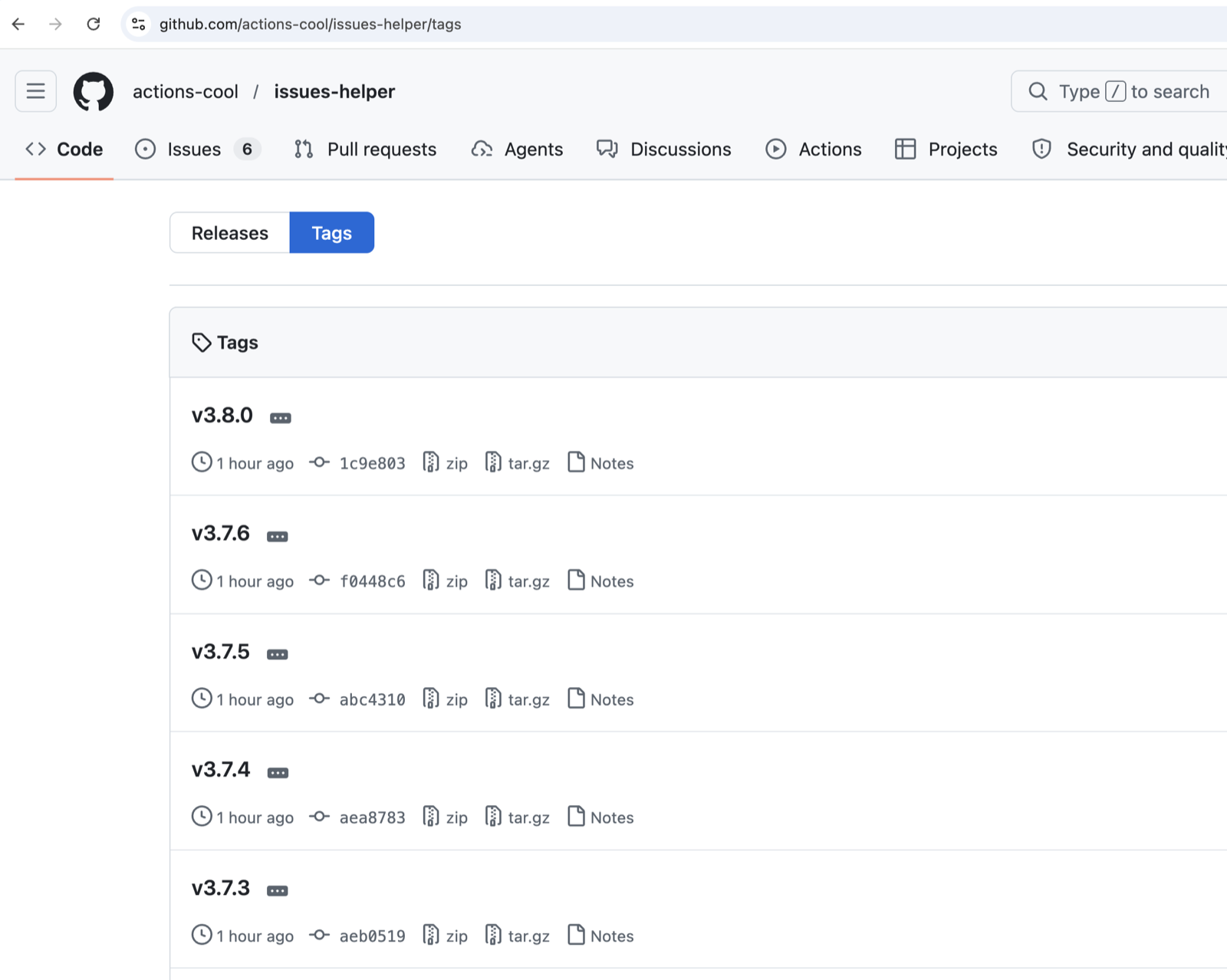
The mere restoration of public access to previously suspended repositories proved catastrophically sufficient to reinvigorate a dormant supply chain attack, shattering four months of enforced tranquility. Two critical GitHub Actions repositories, explicitly managed by the ‘actions-cool’ organization, abruptly became accessible once again on September 16. Appallingly, the malicious tags injected back in May had never been expunged. Consequently, unsuspecting automated workflows inadvertently resumed downloading and executing the virulent Mini Shai-Hulud malware payload.
The cybersecurity firm Socket definitively identified the compromised repositories as actions-cool/issues-helper and actions-cool/maintain-one-comment. You can read the detailed Mini Shai-Hulud GitHub Actions investigation for deeper technical insights. During the initial May incursion, threat actors hijacked all 53 version tags belonging to the former Action, and 15 tags belonging to the latter, forcibly redirecting them toward counterfeit commits harboring malicious code. While GitHub decisively disabled both repositories on May 19, the poisoned tags themselves inexcusably survived in stasis.
The Mechanics of Mutable Git Tags
While the repositories remained under lockdown, any dependent CI/CD workflows inherently failed during the initial ‘Set up job’ phase, as the GitHub Actions runner was physically prevented from downloading the necessary Action. Tragically, when repository access was abruptly restored on September 16, this crucial defensive barrier dissolved instantly. Any active workflow statically referencing a version tag, such as actions-cool/issues-helper@v2.2.1, unwittingly retrieved and executed the dormant malicious code during its very next automated execution cycle.
This devastating vulnerability is fundamentally rooted in the mutable nature of Git tags. A reference like @v2.2.1 does not cryptographically anchor to a specific, immutable commit hash. Therefore, an individual possessing repository write access can seamlessly redirect that exact tag toward entirely divergent code, executing this maneuver without requiring any modifications within the consuming user’s workflow configuration. The adversaries masterfully exploited this precise architectural quirk during the original May assault. When the repositories mysteriously reopened, those legacy tag references immediately began resolving back to the infected commits.
Data Exfiltration and the Scale of the Threat
The malicious payload operates with chilling efficiency. It initially downloads the Bun runtime environment, subsequently scanning the memory space of the Runner.Worker process. This specific memory enclave is where GitHub Actions temporarily stores the decrypted secrets required for the executing job. StepSecurity previously published a comprehensive analysis detailing how this compromised GitHub Action exfiltrates CI/CD credentials, ultimately transmitting the stolen data to t.m-kosche[.]com. Forensic analysts have definitively linked this specific domain to the broader Mini Shai-Hulud campaign.
The potential blast radius of this secondary infection wave is genuinely staggering. The dependency graph for issues-helper alone encompasses approximately 15,000 downstream repositories, although Socket has not yet quantified exactly how many of those projects unwisely relied upon mutable version tags rather than strict commit hashes. Both compromised Actions are primarily utilized for managing routine issues and pull requests, meaning they frequently execute on a daily basis or trigger automatically in response to external events. Consequently, countless projects inadvertently executed the malware without requiring any renewed prompting from the attackers.
Ongoing Threat Landscape and Remediation
This alarming incident represents merely the latest chapter in the relentless Mini Shai-Hulud campaign targeting developer infrastructure. In August, a highly mutated variant of this worm successfully infected 444 disparate npm packages, which collectively commanded a staggering two billion downloads per month. The campaign’s overarching strategy revolves entirely around aggressive token theft and subsequent lateral proliferation throughout trusted repositories, software packages, and automated build pipelines.
By September 25, GitHub administrators recognized the error and definitively severed access to actions-cool/issues-helper and actions-cool/maintain-one-comment once again. Consequently, any new workflow executions are currently halted before the malicious payload can deploy. The precise rationale behind the disastrous September 16 reopening remains an absolute mystery. Socket remains unable to ascertain whether this occurred due to a formal request from the repository owners or stemed from an internal administrative error.
Socket strongly implores all developers to ruthlessly audit their .github/workflows configurations for any lingering references to these specific Actions. Administrators must either delete them entirely or strictly pin the reference to a verified, immutable full SHA commit hash generated prior to May 18. For any workflows that executed subsequent to September 16 while utilizing tag-based references, security teams must proactively revoke and rotate all accessible secrets. Furthermore, they must meticulously audit GITHUB_TOKEN permissions, review execution histories, and scrutinize the repository for any unexpected commits injected during the vulnerability window.
Support Our Threat Intelligence
If you find our technology report and cybersecurity news helpful, consider supporting our work.
 Buy Me a Coffee
PayPal
Buy Me a Coffee
PayPal