Following NVIDIA’s inaugural unveiling of the “NVIDIA Space-1 Vera Rubin” aerospace computing module at the GTC conference this March, this pioneering initiative has achieved a monumental breakthrough in under six months. SpaceX formally announced a strategic partnership with NVIDIA to co-develop a next-generation orbital computing satellite christened Starmind AI1.
This collaboration signifies a historic moment as two technological titans extend data-center-grade artificial intelligence computing power from the Earth’s surface into low Earth orbit.
The Ultimate Utilization of Space Resources
As terrestrial data centers confront insurmountable bottlenecks regarding power grid capacity and liquid cooling infrastructure, launching AI computational capabilities into space has emerged as a revolutionary solution to the escalating energy crisis. The fundamental design philosophy behind Starmind AI1 seeks to harness the boundless, uninterrupted solar energy available in space, alongside its naturally cryogenic operating environment.
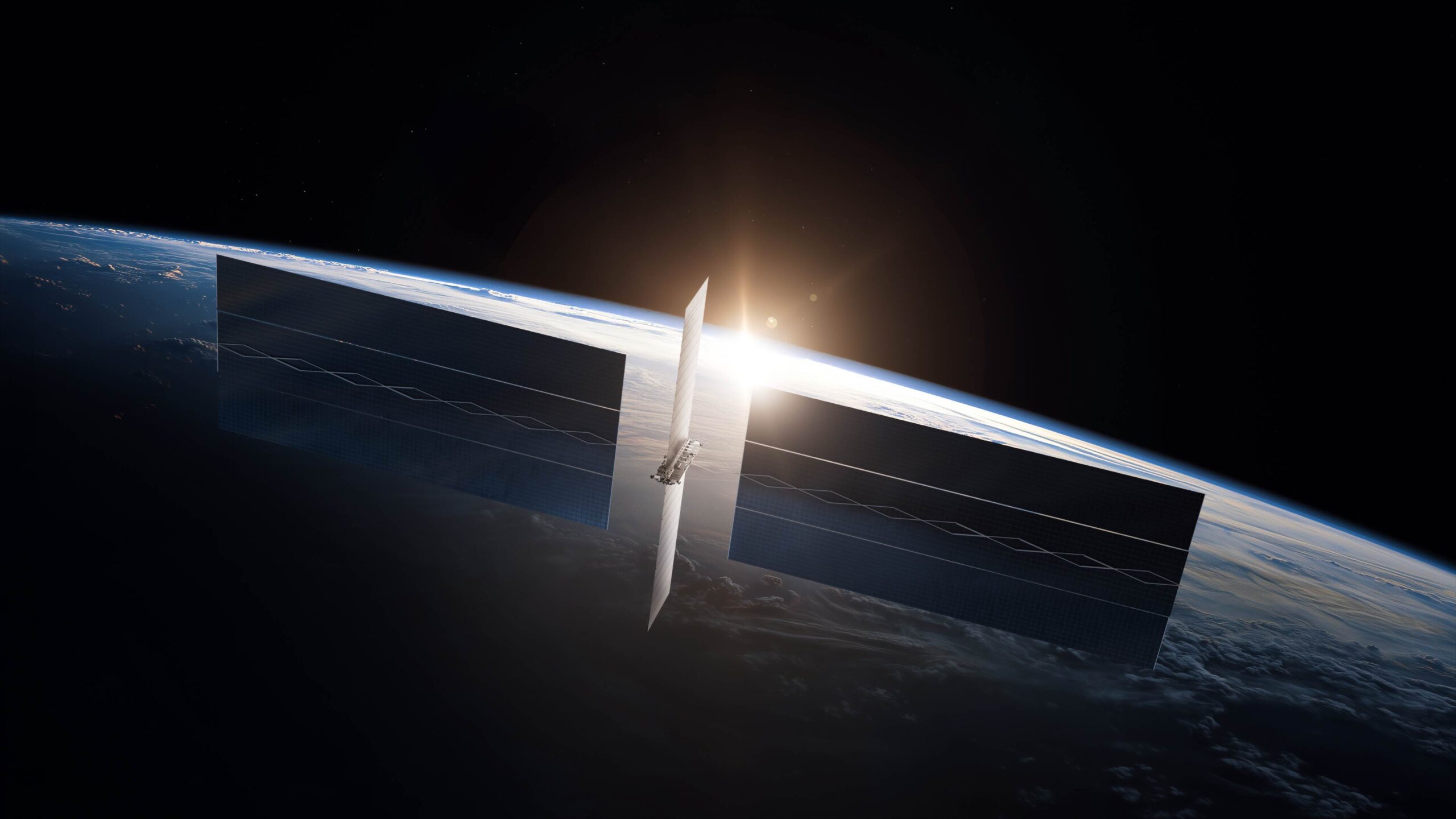
According to technical specifications provided by SpaceX, the Starmind AI1 computational satellite will feature an advanced solar array system manufactured autonomously by SpaceX in Texas:
- High-Efficiency Power Generation: It integrates a massive 210kW solar array, achieving an impressive power density of 250W per square meter.
- Breakthrough Thermal Dissipation: To address the severe challenges of cooling high-power silicon within a vacuum, the satellite is equipped with a deployable, large-scale “Active Fluid Radiator.” This system utilizes fluid thermal cycling to radiate the immense waste heat generated by the Rubin GPUs and Vera CPUs directly into the cosmic void.
- Starlink Backhaul: Artificial intelligence computational outcomes generated by the satellite will be transmitted via a high-bandwidth laser mesh network directly back to the Starlink low-earth orbit constellation. This ensures high-speed, ultra-low-latency data transmission on a global scale.
Synchronized Terrestrial and Orbital Deployment
The pulsating core of the Starmind AI1 satellite is the Space-1 computational module, gracefully integrating NVIDIA’s latest-generation Rubin GPU and Vera CPU. This architecture not only delivers colossal computational power for complex large language models and spatial computing but also boasts radiation hardening and aerospace-grade stability.
Intriguingly, Elon Musk subsequently revealed on his personal X platform that SpaceX plans to synchronize the deployment of these identical core computational modules within their terrestrial data centers. This strategy aims to achieve a seamless integration of a singular hardware and software architecture across both Earth and space.
When addressing community inquiries regarding why the company did not simply utilize proprietary silicon developed by SpaceX or xAI, this decision indirectly highlights NVIDIA’s current irreplaceability within the apex AI computing ecosystem and the rigorous realm of aerospace modular validation.
The Dawn of Orbital Computing
“Orbital Computing” has transcended the boundaries of science fiction to become a rapidly unfolding industrial revolution.
Historically, satellite-borne microchips primarily handled rudimentary signal relay and image acquisition. However, as artificial intelligence models ascend toward trillion-parameter milestones, terrestrial data centers face harrowing trials regarding land availability, electrical grid stability, and water resources for cooling. The collaboration between SpaceX and NVIDIA ingeniously leverages the infinite solar energy and natural cryogenic cooling environment of space. Coupled with Starlink’s colossal laser mesh network, they are essentially constructing a supercomputing pool in the Earth’s exosphere that consumes zero terrestrial resources.
For NVIDIA, this successfully extends its silicon empire from terrestrial cloud infrastructure into the limitless expanse of space. Conversely, for SpaceX, this endeavor not only massively enriches the commercial application value of the Starlink network but also establishes a critical computational foundation for future deep space exploration and automated AI control systems.
Support Our Threat Intelligence
If you find our technology report and cybersecurity news helpful, consider supporting our work.
 Buy Me a Coffee
PayPal
Buy Me a Coffee
PayPal