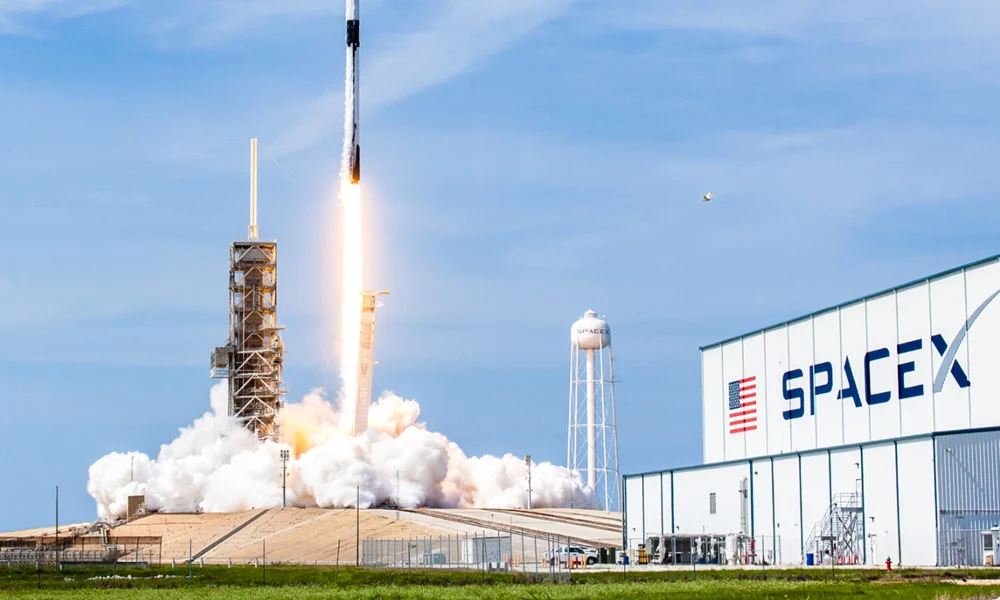
Since SpaceX formally executed its initial public offering on June 12th of this year, external observers finally obtained an unobstructed view into the genuine financial condition of Elon Musk’s technological behemoth. This conglomerate intricately integrates Starlink, rocket launches, the X social platform, and xAI under a single corporate umbrella.
According to the newly released SpaceX Q2 2026 earnings report, total corporate revenue achieved a robust 92 percent year-over-year growth, cresting at $7.8 billion. However, the most compelling narrative within this financial disclosure does not center on launch cadences. Instead, it brutally exposes the staggering costs required to operate a premier artificial intelligence division, juxtaposed against the grim reality of a contracting advertising business on the X platform.
Q2 Highlights: Shrinking Deficits as Starlink and AI Dominate
SpaceX’s aggregate financial performance in the second quarter confidently exceeded Wall Street forecasts. While gross revenue hit $7.8 billion, the net deficit contracted dramatically from $1 billion during the same period last year to a far more manageable $541 million.
Deconstructing the revenue generated across various divisions reveals that SpaceX has fundamentally transformed its core structural revenue model:
- Starlink: Generated approximately $4.3 billion, constituting over half of total revenue, cementing its position as the company’s primary economic engine.
- AI Division: Delivered $2.56 billion in revenue, representing a staggering 247 percent year-over-year surge.
- Space and Launch Division: The foundational rocket launch operations contributed a comparatively modest $962 million.
- Advertising Operations (X Platform): Contributed merely $367 million in revenue.
The AI Infrastructure Gamble: Capital Expenditure Skyrockets 2013%
The most breathtaking statistic within the report originates from the AI division’s capital expenditures. While the division’s operational deficit narrowed from $1.54 billion to $125 million, the capital expenditure required to construct massive computational clusters reached an astronomical $1.58 billion in the second quarter. This investment, primarily dedicated to hardware computing power, represents a breathtaking 2013 percent increase compared to the same period last year. For stark contrast, SpaceX’s entire aerospace launch division spent a relatively paltry $1.17 billion maintaining and upgrading its fixed assets.
The explosive surge in AI division revenue is primarily attributed to lucrative “Cloud Services Agreements” forged with major technology enterprises. Previous reports indicated that Anthropic agreed to remit up to $1.25 billion monthly (under a contract extending to May 2029). This massive payment secures computing resources within SpaceX’s Colossus 1 data center to underpin Anthropic’s AI services.
Consequently, SpaceX has formally established itself as the “fourth major titan” of AI infrastructure, standing alongside Microsoft, Google, and OpenAI. Furthermore, SpaceX anticipates finalizing its acquisition of the renowned AI code editor Cursor this quarter. This strategic acquisition will likely precipitate even more profound shifts within the AI division’s future financial structure and software service revenues.
The Persistent Decline of X Platform Advertising
Contrasting sharply with the dazzling success of the AI and Starlink operations, the advertising business of the X social platform appears decidedly bleak.
The financial report reveals that the X platform generated $367 million in advertising revenue during the second quarter (April to June). While this represents a marginal improvement over the $343 million recorded in the first quarter (which CFO Bret Johnsen attributed to a “comprehensive overhaul” of the advertising technology platform during the earnings call), it still signifies a year-over-year decline compared to the $426 million secured during the same period last year.
Expanding the timeline provides further context. Before Elon Musk acquired the company in late 2022, Twitter’s final quarter as an independent, publicly traded entity (Q2 2022) yielded a massive $1.08 billion in single-quarter advertising revenue. This stark contrast highlights the enduring, long-term impact of advertisers retreating en masse over the past few years. Although the X platform boasts that 97 of its top 100 advertisers have ostensibly returned, the company now relies heavily on its Premium subscription model; traditional advertising operations are clearly no longer the focal point of its development strategy.
Support Our Threat Intelligence
If you find our technology report and cybersecurity news helpful, consider supporting our work.
 Buy Me a Coffee
PayPal
Buy Me a Coffee
PayPal