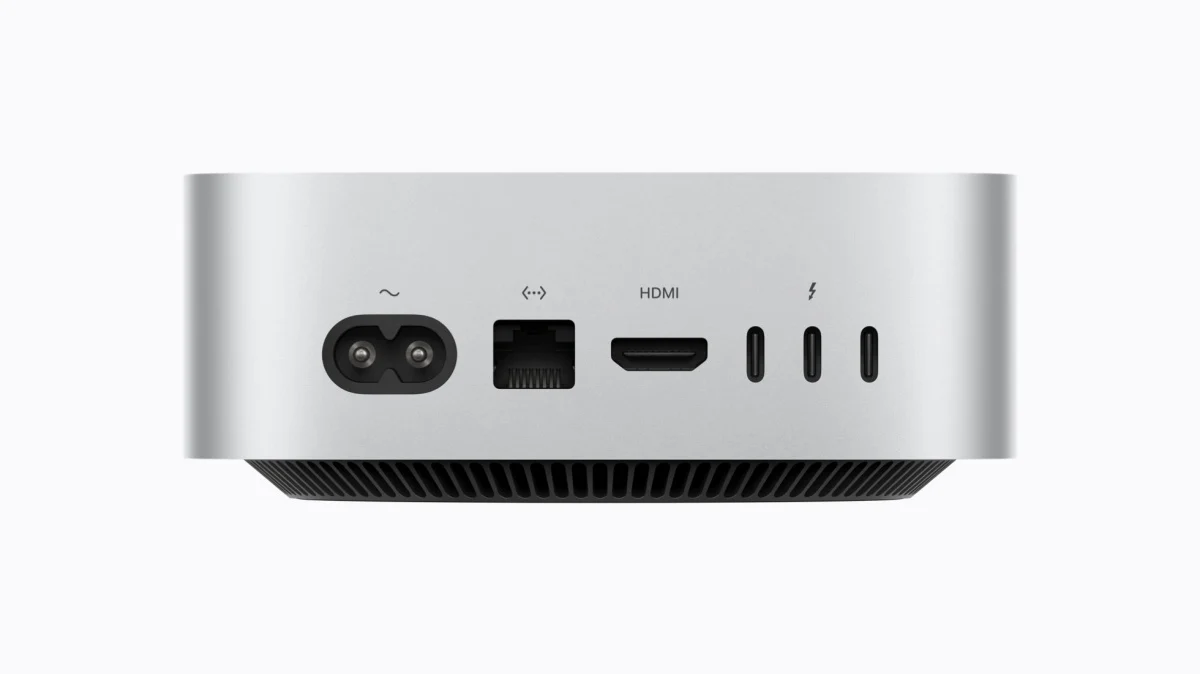
On September 21, Apple updated the parts-support documentation for the Mac Mini. Within it, the 2024 model’s solid-state-drive module is still listed as a part that can be swapped using other parts, yet the new Mac Mini models carrying the M5/M6-series chips have no such option. The corresponding repair manual likewise offers no steps for independently replacing the SSD module. In other words, Apple’s official repair system no longer treats the solid-state drive as a separately replaceable part. Apple’s full parts-support table is available on the official Mac Mini parts and service history page.
NAND Chips Now Soldered Directly to the Logic Board
Why did Apple change its support documentation? The reason lies chiefly in the fact that the new Mac Mini’s design differs from that of the old model. In the new model, Apple solders the NAND chip directly onto the logic board, whereas in the old model Apple used a standalone solid-state-drive module design. On the old model, one could simply unplug the SSD module and swap in a new one, a remarkably simple replacement step.
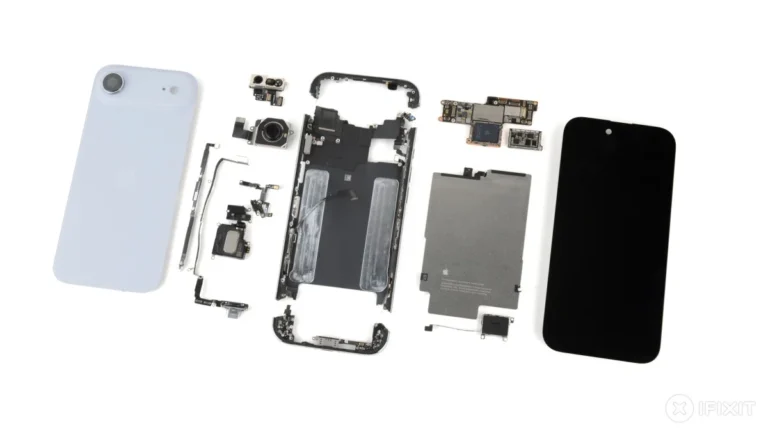
The approach the new Mac Mini adopts resembles that of the iPhone: the chip is soldered directly to the logic board. Consequently, replacement or capacity expansion now requires a hot-air gun to blow off the chip, followed by soldering on a fresh one.
Repair and Expansion Remain Possible, Just More Involved
Engineers in Huaqiangbei have already completed their testing. The 256GB version of the new Mac Mini, for instance, likewise uses two solder pads, except that actual capacity expansion now requires manually patching the circuit (using resistors to bridge it). Once the circuit is patched, the NAND chip can still be reballed and resoldered, so ordinary repair or expansion remains entirely unaffected.
For consumers, this replacement procedure is rather troublesome and not especially suited to doing oneself, since it demands an assortment of tools and repair experience. Turning to a professional repair shop remains a viable option, though the expansion and replacement steps now involve more work, so the price may run somewhat higher as well.
Support Our Threat Intelligence
If you find our technology report and cybersecurity news helpful, consider supporting our work.
 Buy Me a Coffee
PayPal
Buy Me a Coffee
PayPal