The explosive proliferation of generative artificial intelligence and sophisticated AI agents is fundamentally reshaping the desktop computing landscape. Doug Brooks, Apple’s seasoned product manager for bespoke silicon, recently illuminated this trend during an exclusive interview. He revealed that the Mac mini and Mac Studio have unexpectedly emerged as the premier choices for developers and enterprises alike. These machines effortlessly sustain relentless, 24-hour AI agent workloads. This astonishing success directly stems from Apple’s visionary implementation of unified memory and holistic heterogeneous computing architectures established over a decade ago. You can dive deeper into this fascinating evolution by reading how Apple’s decade-long bet on chips won AI.
The Rise of the Uninterrupted “AI Server”
Unprecedented Market Demand
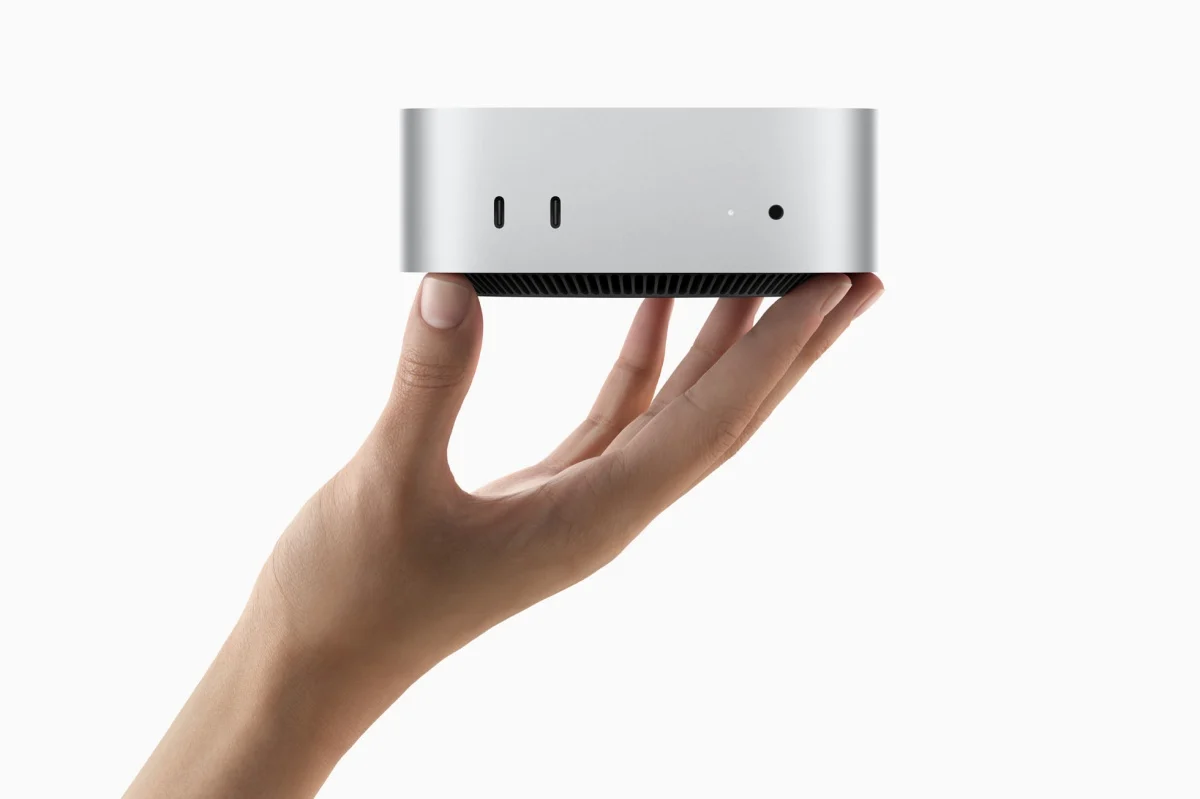
Brooks highlighted a remarkably robust surge in market demand specifically targeting the Mac mini and Mac Studio desktops. This sudden appetite originates primarily from the explosive ascent of agentic workloads. Brooks elaborated on the unique requirements of executing these highly autonomous, enduring multitasking operations. He explained that users typically demand absolute systemic control. Furthermore, they require strict physical isolation from their primary workstation, such as a daily MacBook. Crucially, they necessitate unyielding, round-the-clock operational capabilities. Within this demanding context, the remarkably compact and astonishingly energy-efficient Mac mini constitutes an absolutely flawless system.
A “Mac-First” Development Ecosystem
Additionally, numerous cutting-edge AI development utilities currently embrace a distinctly “Mac-first” or even a “Mac-exclusive” paradigm. This reality further solidifies the Mac’s prestigious standing within the global developer community. In fact, within the hallowed halls of the world’s most elite frontier AI laboratories, the Mac has long established itself as the ubiquitous standard equipment adorning every engineer’s desk.
Beyond the GPU: The Power of Whole-Chip Synergy
Orchestrating Complex Workflows
How does Apple articulate its unique AI advantage amidst the formidable, massive GPU computational supremacy wielded by NVIDIA? Brooks articulated a compelling perspective, declaring that automated AI agents present a profound “whole-chip” challenge. It is no longer simply a monolithic GPU problem. He clarified that contemporary AI workflows transcend the rudimentary execution of large language models relying solely upon GPU calculations. Modernized AI agents require frequent and intricate “tool-calling” maneuvers. They demand nuanced contextual logic judgments and must seamlessly process peripheral tasks encompassing these workflows. Consequently, the CPU, GPU, and NPU residing upon the SoC must orchestrate a flawless, collaborative symphony.
Visionary Silicon Design
Brooks attributes Apple’s formidable contemporary AI prowess to incredibly prescient decisions executed long before ChatGPT materialized. For instance, Apple deliberately embedded the dedicated Neural Engine deeply within its silicon years ago. This component exists specifically to accelerate high-performance matrix mathematics. Furthermore, the CPU incorporates miniaturized accelerators to handle time-sensitive tasks, such as instantaneous voice processing. Recently, Apple seamlessly integrated neural network accelerators directly into the GPU architecture. This strategy disseminates immense AI computational power uniformly across the entire ecosystem, from the iPhone to bespoke Mac silicon. This profound “integrated SoC design,” harmonizing hardware and software development, perfectly addresses the incredibly intricate demands of modernized AI agents.
Core Hardware Advantages for AI Agents
Apple’s bespoke silicon delivers specific, pivotal advantages for managing AI agent workflows:
- Unified Memory Architecture (UMA): Permits the CPU, GPU, and NPU to harmoniously share a colossal, high-bandwidth memory reservoir. This architecture definitively eliminates the necessity to redundantly copy data between VRAM repositories, an archaic requirement in traditional PCs. Consequently, it facilitates the direct execution of massive models boasting tens of billions of parameters.
- Neural Engine (NPU): Expertly processes foundational matrix mathematical calculations and model inferences while consuming minimal energy. This critical component underpins the Mac mini’s astonishing capability to operate continuously for 24 hours while maintaining exceptionally low temperatures and energy consumption.
- CPU/GPU Integrated Accelerators: Diligently manages vital functions encompassing voice dictation, intricate tool-calling, and localized edge logic judgments. Ultimately, this achieves genuine, whole-chip synergy rather than relying entirely upon brute-force GPU computation.
The Inevitable Transition Towards “Edge” AI
Migrating from the Cloud
Regarding the ultimate trajectory of AI development, Brooks identified a distinct and accelerating migration of computation transitioning from remote cloud servers directly toward localized “edge” environments. This monumental shift transcends mere privacy and data security apprehensions. As sophisticated AI agents consume tokens at an exponentially accelerating velocity, remote cloud inference expenses have escalated into an unsustainable financial burden for modern enterprises.
Nevertheless, he envisions a sophisticated “hybrid” architecture dominating the foreseeable future. Empowered AI agents will autonomously and intelligently ascertain which highly sensitive or instantaneous tasks demand localized edge execution. Conversely, they will seamlessly delegate the most monumentally burdensome computational workloads toward remote cloud infrastructure.
The Era of “Transparent AI”
Brooks enthusiastically championed the concept of “Transparent AI,” offering two compelling, real-world illustrations. First, he highlighted Draw Things, a remarkably fluid image generation utility that executes completely locally across the iPhone, iPad, and Mac ecosystems. Second, he praised SwingVision, an innovative sports analysis application. It brilliantly leverages the iPhone’s camera to perform instantaneous, on-court analysis encompassing tennis and squash ball trajectories.
Brooks marveled at the breathtaking velocity characterizing current AI advancement. He candidly confessed an inability to accurately foresee where technological innovation will propel humanity mere months, or even weeks, from the present moment.
Unified Memory: The Unintentional Superweapon
Overcoming Traditional PC Limitations
Traditional PC conglomerates, including Intel, AMD, and NVIDIA, remain perpetually entangled in agonizing battles regarding dedicated VRAM capacity. A single graphics card equipped with a mere 24GB of video memory frequently commands an exorbitant premium. Conversely, Apple seamlessly transitioned to its bespoke Apple Silicon (the M-series chips) years ago. By leveraging its revolutionary Unified Memory Architecture (UMA), the Mac seamlessly mobilizes a staggering 64GB, or even an unprecedented 128GB, of memory. This capacity effortlessly accommodates colossal AI models at an incredibly minimal hardware expense.
Engineers initially conceived this architecture to ruthlessly optimize video editing workflows and general graphical efficiency. Remarkably, within the explosive 2026 generative AI era, this design has unintentionally transformed into Apple’s most devastating technological superweapon.
The Perfect Edge AI Server
As Brooks eloquently articulated, autonomous AI agents demand relentless, perpetual execution. During these sustained operations, traditional PC systems transform into ravenous “space heaters,” consuming hundreds of watts. When enterprises deploy these systems en masse, they generate terrifying electricity expenditures and nightmarish thermal management costs. Conversely, the Mac mini operates in near-absolute silence while consuming incredibly minimal power. Crucially, its unified memory empowers it to effortlessly digest massive AI models. Essentially, it has organically evolved into the absolutely perfect “edge AI server.”
This profound reality thoroughly explains why the Mac mini has suddenly materialized as the indispensable, ubiquitous command center for dispatch and automation among elite engineers within Silicon Valley’s vibrant AI circles. Apple is actively weaponizing a revolutionary “low-power, massive-memory” SoC design philosophy. Consequently, they are meticulously carving out an incredibly formidable, highly competitive fortress entirely independent of NVIDIA’s seemingly impenetrable computational dominance.
Support Our Threat Intelligence
If you find our technology report and cybersecurity news helpful, consider supporting our work.
 Buy Me a Coffee
PayPal
Buy Me a Coffee
PayPal