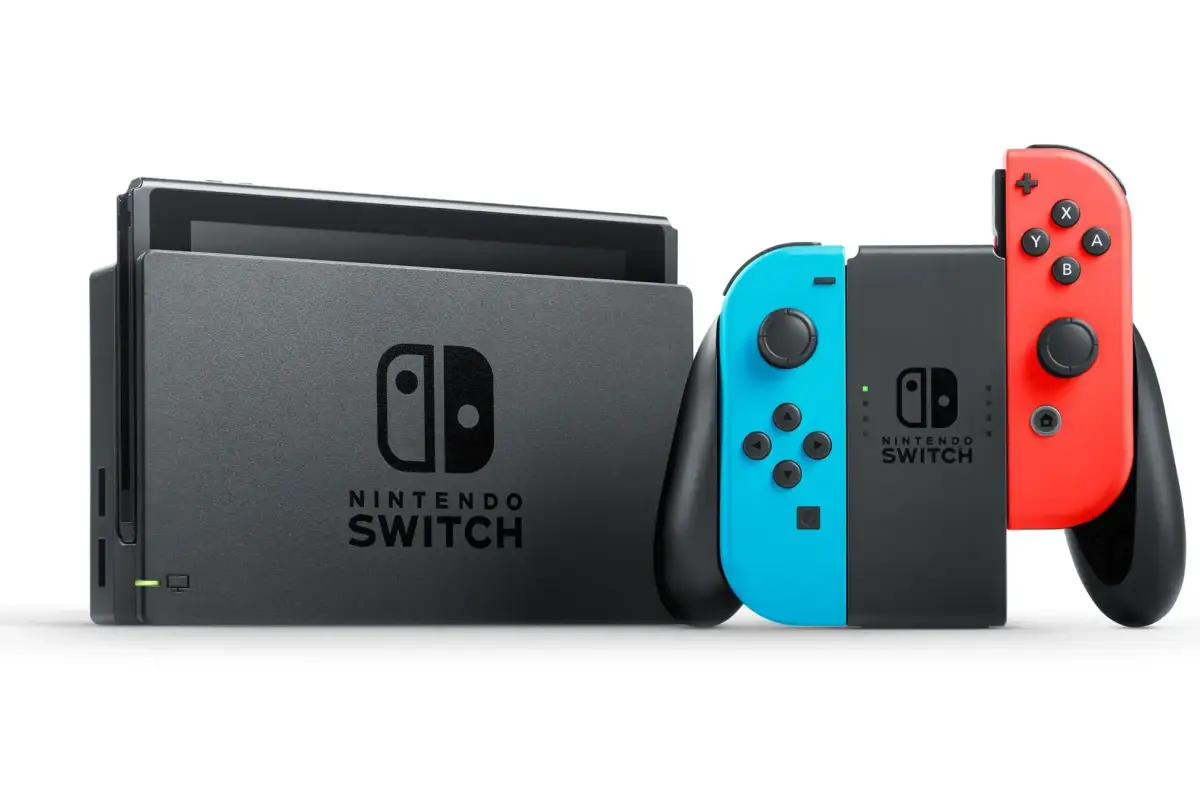
Nintendo recently announced a significant product line adjustment for the European market. This strategic shift addresses increasingly stringent environmental and right-to-repair regulations within the European Union. Furthermore, this policy affects regions governed by Nintendo’s European branch, including the United Kingdom, the Middle East, and South Africa. Starting this summer, Nintendo will introduce revised hardware featuring consumer-replaceable batteries. Consequently, the upcoming Nintendo Switch 2 and its associated peripherals will experience minor specification and weight modifications. Conversely, the company has no plans to redesign the original Nintendo Switch family. Therefore, Nintendo will completely halt sales of these classic consoles across the European market before February 2027.
The Impending 2027 Battery Legislation
Mandating Accessible Hardware Design
This monumental change stems directly from sweeping new EU battery legislation. These stringent laws will officially take effect in February 2027. The mandate requires specific electronic devices sold within the EU to feature easily accessible internal batteries. Ultimately, this initiative empowers consumers to replace aging batteries effortlessly. This accessibility drastically reduces electronic waste while significantly extending overall product lifespans. Accordingly, Nintendo will debut a specialized replaceable battery variant of the Nintendo Switch 2 this autumn.
Hardware Specification Adjustments
Diminished Battery Capacity
The revised Nintendo Switch 2 features a slightly reduced battery capacity. It drops from the original 5220mAh down to 5172mAh. This adjustment represents a marginal decrease of approximately one percent.
Increased Overall Weight
The main console body will gain approximately ten grams. Furthermore, the redesigned Joy-Con 2 controllers add two grams each. Consequently, the total hardware weight reaches 548 grams, representing a 14-gram increase.
Peripheral Revision Timelines
Controller Updates and Compromises
Beyond the primary console, Nintendo also outlined a comprehensive revision schedule for various European peripherals. You can find more information about upcoming battery-related revisions to some Nintendo products on their official support page.
First, Nintendo will introduce a revised Joy-Con controller supporting the original console in Summer 2026. Interestingly, this remains the only product maintaining its original capacity and weight. Next, the company will subsequently release the updated Joy-Con 2 in Winter 2026. They will also launch the highly anticipated Nintendo Switch 2 Pro Controller simultaneously. Notably, the revised Pro Controller suffers a significant sixteen percent capacity reduction. However, it concurrently sheds seven grams of weight. Finally, Nintendo plans to update its classic retro controllers by early 2027. This includes the N64 controller, which gains one gram. It also features the GameCube controller for the Switch 2, gaining five percent capacity and five grams.
Phasing Out the Original Console
A Logical Business Decision
While advancing these replaceable battery designs, Nintendo made inevitable compromises. Officials confirmed they possess no plans to develop replaceable batteries for the original Nintendo Switch lineup. This encompasses the Standard, Lite, and OLED models. To strictly avoid violating EU regulations, these decade-old consoles will completely exit the European market.
Nevertheless, Nintendo emphasized that production of the original console family will continue throughout 2026. Therefore, retailers will maintain ample supply across the European market temporarily. However, following the early 2027 regulatory deadline, official stores and retailers will cease inventory replenishment. Currently, Nintendo has not clarified whether this discontinuation will eventually impact North America, Japan, or Asia. However, manufacturing costs continue to rise steadily. Furthermore, the generational transition to the Nintendo Switch 2 is accelerating rapidly. Consequently, the final countdown for the original console’s global retirement has seemingly commenced.
The European Union’s Ultimate Test
Balancing Environmental Mandates and Costs
Nintendo’s nuanced product line adjustments perfectly highlight the immense influence of EU regulations. These laws exert tremendous pressure upon the global consumer electronics supply chain. Previously, the EU successfully mandated the unified USB-C interface. Now, they are fiercely enforcing consumer-replaceable battery standards. Ultimately, the European Union utilizes its massive market volume to forcefully reshape technological design philosophies.
For Nintendo, retrofitting an already exquisitely compact handheld device presents formidable engineering challenges. Integrating a compliant battery module inevitably sacrifices precious internal space. This spatial compromise directly causes the aforementioned one percent capacity reduction. Furthermore, the necessary physical structural enhancements undeniably increase the overall weight. This reality perfectly explains the drastic capacity sacrifice endured by the new Pro Controller. Finally, choosing not to redesign the original console represents a highly rational business calculation. The original hardware has definitively entered the twilight of its life cycle. Global sales momentum is slowing considerably. Therefore, funding entirely new molds and motherboard layouts for a single region remains financially impractical.
Support Our Threat Intelligence
If you find our technology report and cybersecurity news helpful, consider supporting our work.
 Buy Me a Coffee
PayPal
Buy Me a Coffee
PayPal