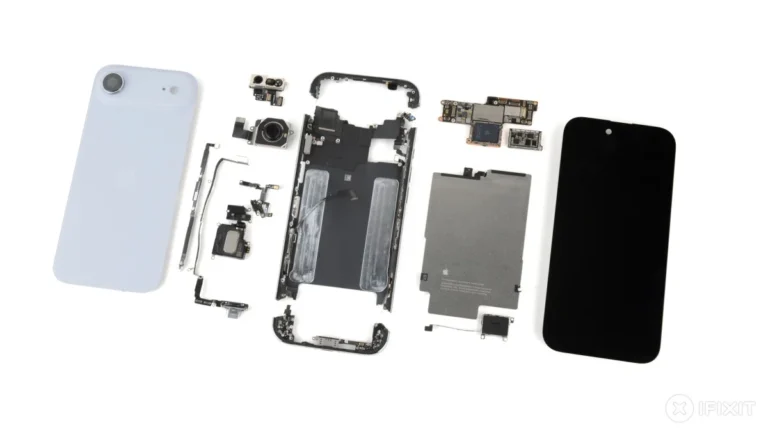
On August 25th, Apple officially unveiled the entirely reimagined Mac mini. Within its exceptionally compact chassis, this remarkable machine boldly bypasses incremental upgrades. It directly incorporates the cutting-edge M6 processor and the formidable M5 Pro chip. Consequently, this profound revision completely sheds the device’s former reputation as a mere entry-level desktop computer. Apple has meticulously aligned its strategic vision with the surging artificial intelligence revolution. They are deliberately forging the Mac mini into a dedicated hardware nexus. It is specifically engineered for robust Agentic AI operations and relentless edge computing applications.
Architectural Advancements: Neural Accelerators Embedded in GPUs
To effortlessly sustain the massive data throughput demanded by local AI models and sophisticated agent computations, Apple has executed significant underlying architectural reconstructions.
The Formidable M6 Chip
The standard M6 chip boasts a formidable upgrade to a 12-core CPU paired with a 12-core GPU. The most critical technological breakthrough resides within the graphics processing unit itself. For the very first time, Apple has seamlessly integrated dedicated Neural Accelerators directly into the GPU cores. When synergized with the entirely new dual 16-core Neural Engine, this innovation propels the device’s AI performance to staggering heights, achieving a fourfold increase compared to the previous M4 iteration. Furthermore, the baseline memory configuration now begins at a substantial 16 gigabytes, expandable up to 32 gigabytes. It supports an impressive data transmission bandwidth of 170 GB/s.
The Uncompromising M5 Pro Chip
The premium M5 Pro variant features an astonishing configuration of up to an 18-core CPU and a 20-core GPU. It proudly supports advanced third-generation ray tracing technology. This powerhouse commands a massive memory transmission bandwidth reaching 307 GB/s and supports up to 64 gigabytes of unified memory. These exceptional specifications empower developers to fluidly execute colossal diffusion models and process demanding ProRes RAW video directly on their local machines.
Comprehensive Connectivity Upgrades: Embracing Thunderbolt 5
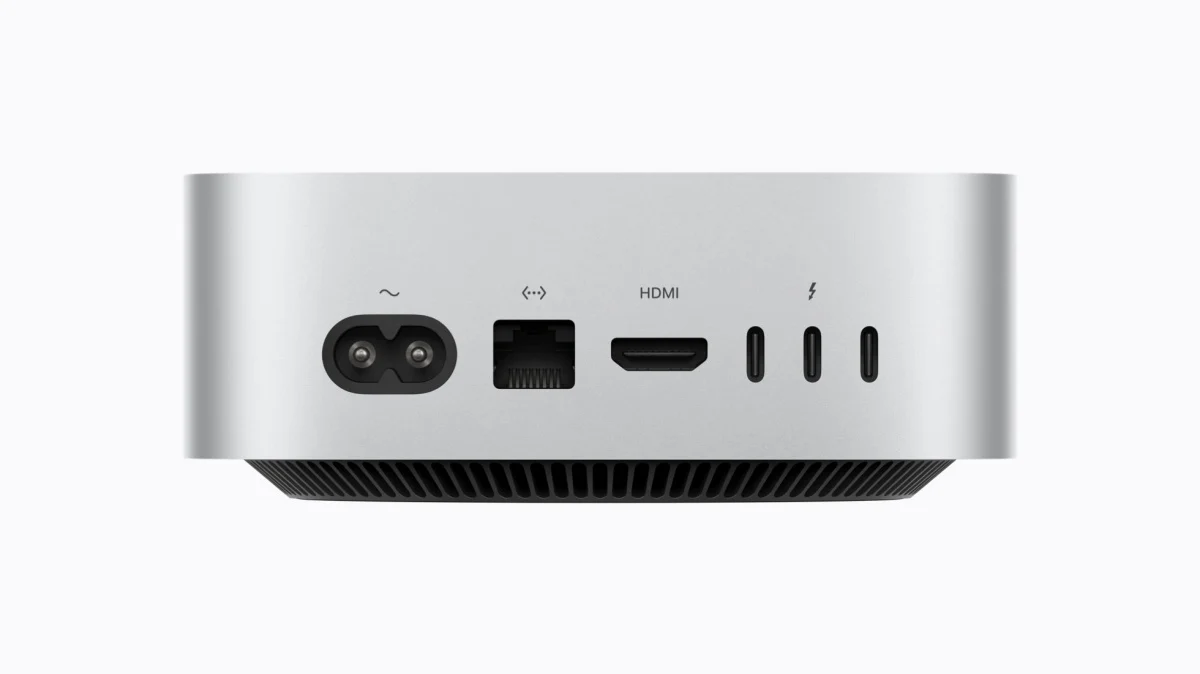
The revitalized Mac mini delivers remarkably generous connectivity specifications. The front panel features two accessible USB-C ports, fully supporting USB 3 protocols, alongside a high-impedance headphone jack. The rear I/O configuration varies distinctively based upon the selected processor.
Distinguishing Features by Processor
The M6 iteration comes standard with three potent Thunderbolt 4 ports. Conversely, the M5 Pro version elevates connectivity by incorporating three advanced Thunderbolt 5 ports. Leveraging this extraordinarily high transmission bandwidth, developers can ingeniously link multiple Mac mini units together. This creates a formidable local AI computing cluster, capable of running exceptionally massive language models entirely on-premises.
Enhanced Network Communications
The entire product line benefits from comprehensive network upgrades, embracing the latest Wi-Fi 7 and Bluetooth 6.0 standards. Wired networking begins at a solid 2.5GbE baseline, with high-performance 10GbE configurations available as optional upgrades.
Market Availability and Strategic Observations
The newly unveiled Mac mini is immediately available for pre-order, with the official market launch scheduled for September 22nd. The introductory pricing for the M6 version starts at an attractive $899, while the powerful M5 Pro model begins at $1699.
Asserting Local AI Dominance
Harmonizing with the impending autumn release of macOS 27 Golden Gate and a comprehensively evolved Siri AI, Apple is making a definitive statement. Through this compact desktop, they are aggressively demonstrating their dominance in local AI agent deployment hardware to both enterprises and developers. By condensing immense computational power into such a small footprint, Apple continues to widen the performance-per-watt gap against competing x86 architectures. Furthermore, they are brilliantly planting the seeds for future dominance in the burgeoning smart home and enterprise edge server markets.
Beyond merely introducing the M6 processor variant, the simultaneous launch of the M5 Pro model is highly strategic. The inclusion of Thunderbolt 5 ports and the explicit capability to cluster multiple devices together reveal Apple’s broader ambitions. They are clearly leveraging the new Mac mini to aggressively penetrate markets demanding intensive development and robust AI application capabilities.
Support Our Threat Intelligence
If you find our technology report and cybersecurity news helpful, consider supporting our work.
 Buy Me a Coffee
PayPal
Buy Me a Coffee
PayPal