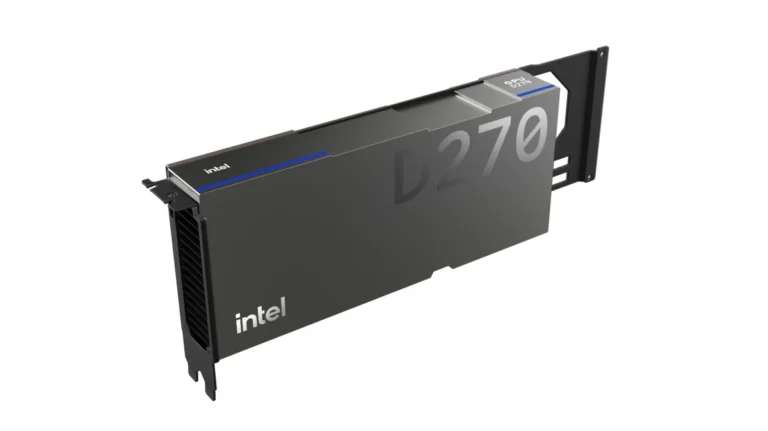
At the prestigious Hot Chips 2026 conference in California, Intel comprehensively revealed the latest evolutionary direction for its server and data center architectures. Generative artificial intelligence is rapidly shifting away from simplistic conversational models. It now increasingly demands complex, multi-step reasoning, intricate tool invocation, and extensive long-context processing. This sophisticated paradigm is commonly known as “Agentic AI.” Consequently, Intel publicly disclosed crucial design details addressing this shift.
They introduced the next-generation Xeon processor, codenamed “Diamond Rapids,” fabricated utilizing the enhanced Intel 18A-P process node. Furthermore, they unveiled the entirely novel “Crescent Island” accelerator, engineered specifically for rigorous AI inference tasks. Ultimately, Intel attempts to fundamentally reshape the operational energy efficiency of modern AI factories. They plan to achieve this through profound advancements in underlying computation, sophisticated packaging technologies, and revolutionized memory architectures.
Diamond Rapids: The Bedrock of AI Orchestration
Positioned as the definitive flagship of the next-generation Xeon family, the Diamond Rapids server processor prioritizes a highly elastic architecture. It also boasts formidable large-scale orchestration capabilities. The processor exclusively utilizes Intel’s proprietary, advanced Intel 18A-P process node and the innovative Foveros Direct 3D stacked packaging technology. Moreover, it pioneeringly integrates the UCIe-S open chiplet interconnect standard.
Unprecedented Core and Bandwidth Specifications
The processor features a top-tier configuration boasting up to 256 entirely newly architected cores. It is equipped with a massive 1.28 gigabytes of Last Level Cache (LLC). Regarding memory and I/O bandwidth, the system robustly supports 16-channel memory, achieving blistering transmission rates up to 12,800 MT/s. The expansion interface seamlessly integrates up to 128 PCIe Gen6 lanes, alongside full compliance with the CXL 3.0 standard.
Advanced Instruction Set Acceleration
Furthermore, Diamond Rapids introduces the novel Advanced Performance Extensions (APX). It also incorporates an upgraded version of the Advanced Matrix Extensions (AMX) instruction set. These crucial enhancements focus intently upon elevating massive data throughput. They also significantly improve the real-time scheduling efficiency of demanding AI agent workloads.
Crescent Island: Debuting the Authentic Xe3P Architecture
Unlike previous generalized GPUs, the Crescent Island inference accelerator is meticulously tailored for high-speed agentic AI inference. It operates primarily at the edge and within massive data centers. Consequently, it competes directly with customized AI Application-Specific Integrated Circuits (ASICs).
A Purely AI-Focused Design
While the Xe3 display design featured on the Panther Lake laptop platform was essentially a refined Battlemage architecture, Crescent Island introduces the 32-core Xe3P. This represents the first authentic third-generation architecture bearing the “C” codename. This remarkable chip entirely removes the traditional graphics rendering and 3D modules typically found in conventional GPUs. Instead, it focuses exclusively upon complex matrix and vector calculations.
The powerful Xe3P display design introduces vital support for FP8, FP4, and Microscaling (MX) data formats. Furthermore, it possesses full-rate FP64 capabilities alongside 256 sets of formidable 16-deep systolic XMX matrix engines.
Balancing Performance with Energy Efficiency
The chip’s architecture consists of four distinct slices, each containing eight potent Xe cores. These cores efficiently share 32 megabytes of L2 cache. The accelerator utilizes a standard 350W power envelope and an air-cooled PCIe interface card design. It robustly supports up to a staggering 480 gigabytes of LPDDR5X memory. Intel’s proprietary branded cards will likely feature 160 gigabytes. This specific configuration successfully balances the massive capacity and immense bandwidth required for loading extensive language models against crucial power consumption costs.
The Inevitable Division of Computational Labor
Analyzing the strategic pairing of Diamond Rapids and Crescent Island reveals a clear strategy. Intel is attempting to construct a highly cost-effective AI deployment solution for modern enterprises. Diamond Rapids expertly handles the massive and intricate task orchestration and generalized computing requirements. Meanwhile, Crescent Island leverages its massive LPDDR5X memory capacity and highly efficient 350W air-cooled power advantage.
This allows enterprises to successfully deploy long-context AI agents without requiring prohibitively expensive cooling infrastructure upgrades. Intel currently faces fierce competition from NVIDIA and custom ASICs developed by cloud behemoths like Google and Amazon. Whether this strategic combination can achieve a decisive breakthrough in enterprise deployment cost-effectiveness remains to be seen. It will undoubtedly serve as the pivotal battle determining if Intel can successfully revitalize its data center empire.
Support Our Threat Intelligence
If you find our technology report and cybersecurity news helpful, consider supporting our work.
 Buy Me a Coffee
PayPal
Buy Me a Coffee
PayPal