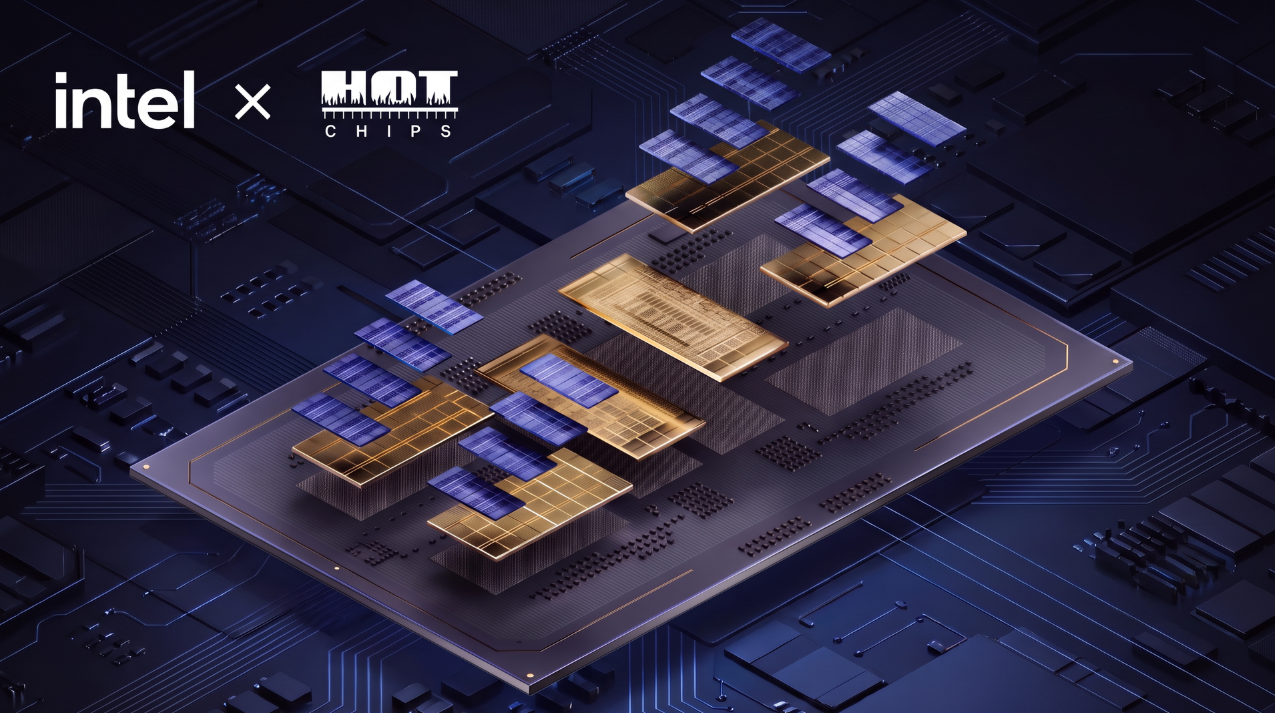
Amid a market environment where component prices continue climbing and budget PCs face mounting cost pressure, Intel used its presentation at Hot Chips 2026 to disclose further architectural details behind its Core Series 3 processor, codenamed Wildcat Lake, designed specifically for the mainstream and entry-level segments.
According to Intel’s official presentation, compared to the higher-end Core Ultra Series 3 (codenamed Panther Lake), Wildcat Lake takes a deliberate “hardware subtraction” approach – reworking packaging, trimming die area, and introducing the UCIe interconnect standard for the first time – all in pursuit of maximum cost efficiency.
Packaging and Process Trade-Offs: MCP Organic Substrate Replaces the Base Die
To substantially reduce production and assembly costs, Wildcat Lake makes several critical adjustments to its packaging strategy.
Abandoning Foveros 3D Packaging
The chip drops the costly Base Die design in favor of traditional MCP (multi-chip package) construction on an organic substrate. This not only improves overall manufacturing yield, but also simplifies internal power management and signal routing.
Mixed Mature Process Nodes
The Compute Tile is manufactured on Intel’s own 18A process, while the I/O Tile continues to be produced using TSMC’s mature N6 process.
First-Ever UCIe Interconnect Implementation
Wildcat Lake becomes Intel’s first processor to use the UCIe 1.0 standard for die-to-die interconnection. Although MCP packaging results in wider bump pitches, Intel successfully maintained stable data transfer by optimizing signal timing and high-frequency transmission, all while keeping controller area in check.
A Major Core Diet: Die Area Shrinks by 38%
To hit its aggressive cost targets, Intel made substantial cuts to the chip’s compute units.
Compute and Graphics Cores Cut in Half
Core configuration was reduced to 2 Performance-cores (P-Cores) and 4 Low-Power Efficiency-cores (LP E-Cores). The integrated Xe3 GPU was scaled down from 4 execution units to 2, with ray tracing support removed entirely.
Reduced AI Compute Capacity
The NPU engine was reduced to a single unit, delivering 17 TOPS of AI performance. While this falls short of the 40 TOPS threshold Microsoft requires for Copilot+ PC certification, it remains sufficient for everyday hybrid AI assistance tasks.
Trimmed Cache and Peripheral Support
System cache was reduced from 4MB to 2MB, the memory interface shifted to a 64-bit LPDDR5X-7467 configuration, and the dedicated IPU was removed entirely in favor of a USB2ISP interface for video functionality. Following this round of trimming, the overall Compute Tile area shrank by 38%, while the IO Tile shrank by 15%.
Lowering Total System Cost
Beyond controlling the cost of the chip itself, Wildcat Lake’s high level of integration also helps OEMs drive down bill-of-materials (BOM) costs. The chip natively integrates Wi-Fi 7, Bluetooth 6.0, and a USB PD controller, eliminating the need for separate motherboard modules and connector slots. It also supports a 6-layer Type3 PCB and 64-bit DRAM memory design, substantially simplifying motherboard manufacturing.
Back to Basics: Reclaiming the Entry-Level Market Through Value
Wildcat Lake’s design philosophy is refreshingly straightforward – forgo the specifications arms race entirely, and instead concentrate on everyday performance and cost control.
At a moment when the Copilot+ PC concept has been heavily over-marketed across the industry, Intel has pragmatically stripped away excess AI compute capacity and premium multimedia IP, while fully preserving single-thread performance, everyday productivity computing, and connectivity features like Wi-Fi 7 and Thunderbolt. By pairing the UCIe interface with MCP packaging, Intel has engineered a chip that balances yield and low power consumption – one suited not only to affordable productivity laptops and the education market, but also flexible enough to extend into IoT endpoints, smart conferencing systems, and lightweight edge devices.
In an era of volatile memory and display component pricing, this processor stands to become an important line of defense in helping the x86 camp maintain its footing in the budget PC market.
Support Our Threat Intelligence
If you find our technology report and cybersecurity news helpful, consider supporting our work.
 Buy Me a Coffee
PayPal
Buy Me a Coffee
PayPal