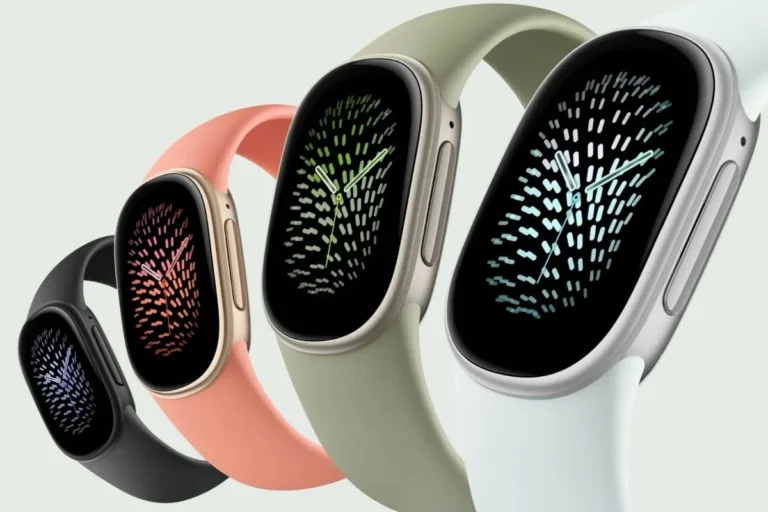
Google’s inaugural screenless wellness wearable, the Fitbit Air, debuted earlier this month with a definitive commercial release slated for May 26. However, the initial vanguard of consumer fulfillment has yielded acute frustration for an expansive cohort of eager early adopters who received their hardware ahead of schedule.
Per widespread telemetry emerging from international technology forums and digital communities, numerous Android proprietors unboxing the Fitbit Air are confronting a complete failure within the device pairing architecture. Satirically, this systemic roadblock exclusively impacts Google’s native Android ecosystem. Conversely, consumers utilizing Apple’s iOS framework report entirely unhindered device initialization and smooth operational orchestration.
Software Consolidation Friction: The Google Health v5.0 Transition Horizon
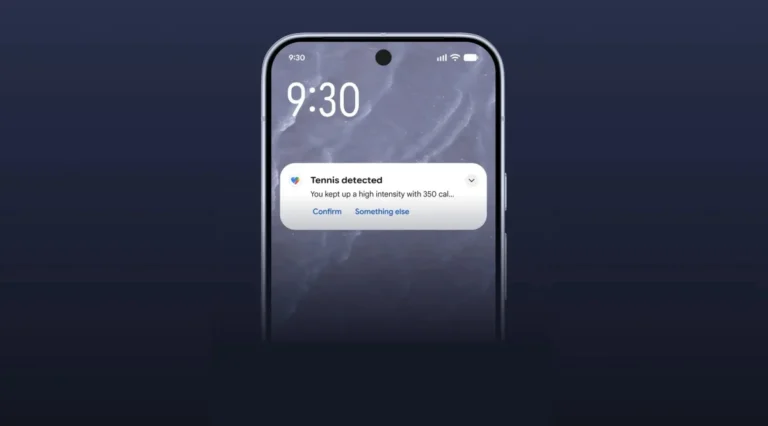
The structural genesis of this pairing failure resides within a comprehensive architectural consolidation currently reshaping Google’s digital health infrastructure. To coincide with the launch of the Fitbit Air, the legacy Fitbit software environment has undergone a foundational metamorphosis, emerging as the newly minted, Gemini AI-powered Google Health App. Crucially, the Fitbit Air firmware enforces a strict programmatic dependency on version 5.0 of this application to complete initial handshake routines and security pairings.
The failure point, therefore, is not a hardware deficiency, but a classic asynchronous deployment oversight. Google’s play store distributions traditionally leverage a staged rollout methodology to mitigate server overhead and limit the radius of potential bugs. Because shipping logistics outpaced software deployment, a massive contingent of Android developers and consumers had not yet received the v5.0 software payload. Consequently, the pairing sequence triggers a continuous loop of error dialogs demanding software virtualization upgrades, temporarily reducing the $99.99 piece of silicon into an inert wrist ornament.
Corporate Intercession: Accelerating Play Store Deployment Pipelines
Confronted by escalating user friction across online aggregators, product management personnel representing Google immediately mobilized on Reddit to validate the community’s findings and issue a formal clarification.
An official spokesperson stated: “We are aggressively accelerating the deployment velocity of the updated application build through the Google Play Store to dynamically match these premature hardware deliveries. The software asset will manifest imminently; the completely re-architected Google Health v5.0 framework is a mandatory prerequisite to successfully pair and orchestrate the peripheral.”
Adding to the irony surrounding the Android user base, the divergent auditing and distribution heuristics governing Apple’s App Store have already permitted the global, unhedged release of Google Health 5.0 for iOS. Consequently, iPhone users receiving early device shipments have achieved immediate, seamless ecosystem synchronization. At present, advanced Android enthusiasts are circumventing the official distribution bottleneck by manually sideloading the cryptographic APK binaries to force an immediate system upgrade and activate the hardware.
Structural Taxonomy of the Fitbit Air Architecture
To facilitate a concise macro-evaluation of this transitional phase, the fundamental product metrics and software revisions are cataloged below:
| Architectural Vector | Core Specifications and Transformational Milestones |
| Hardware Form Factor | Fitbit’s inaugural screenless wellness peripheral, utilizing an ultra-lightweight, minimalist chassis configuration. |
| Software Nomenclature | The historical Fitbit suite is formally deprecated and absorbed into the comprehensive Google Health App ecosystem. |
| Primary Value Metrics | Continuous 24/7 biometric tracking (Heart Rate, Sleep Architecture, SpO2), automated kinetic exercise profiling, and an uncompromised seven-day power reserve. |
| Cognitive Enrichment | Ingestion of the Gemini-driven Google Health Coach engine (contingent upon premium subscription), delivering highly individualized medical telemetry analysis and optimized athletic protocols. |
The Persistent Hazard of Asynchronous Product Lifecycles
From an industrial strategy perspective, while this configuration bottleneck represents a transient logistical oversight, it serves as a potent allegory for Google’s historical struggle to synchronize its hardware distribution tracks with its cloud software pipelines.
The rollout of the Fitbit Air was engineered to be a definitive milestone—an intellectual declaration wherein Google emancipated itself from traditional display constraints to pioneer minimalist ambient computing deeply intertwined with the Gemini AI cognitive matrix. Transmuting the Fitbit footprint into Google Health was a masterful geopolitical gambit designed to dissolve brand division and assert technological authority over the consumer wellness sector.
Regrettably, the organization failed to establish robust cross-functional communication between supply-chain fulfillment divisions and software release engineering cells. For early adopters who invest immediate capital into a platform’s vision, unboxing a premium device only to have it throttled by native application delivery mechanisms induces immediate consumer apathy. Ensuring that the software environment seamlessly safeguards the physical deployment of hardware remains a critical operational precision that Google must master as it advances its ecosystem goals.
Support Our Threat Intelligence
If you find our technology report and cybersecurity news helpful, consider supporting our work.
 Buy Me a Coffee
PayPal
Buy Me a Coffee
PayPal