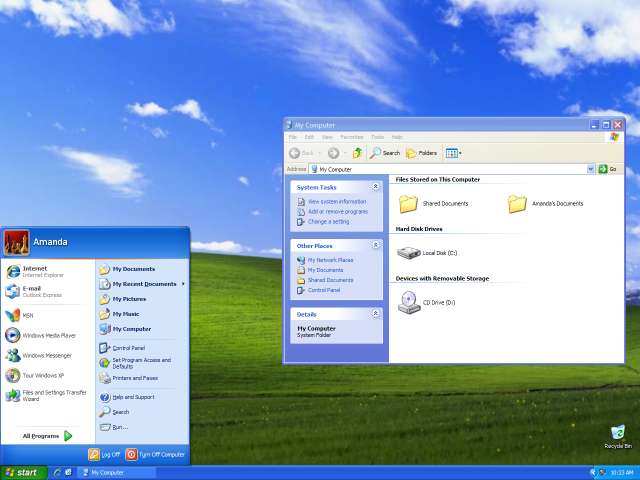
Users who installed Windows XP at the dawn of this century may still recall this key: FCKGW-RHQQ2-YXRKT-8TG6W-2B7Q8. Anyone had only to download the Windows XP volume-license edition, pair it with this key, and activate the system. Microsoft did indeed know the key was being abused, yet it took no aggressive measures. Not until the release of SP1 did Microsoft finally blacklist it.
A Former Microsoft Engineer Points to an Early OEM Leak
Former Microsoft engineer Dave Plummer explains that the original Windows XP came in two forms: a retail edition and a volume-license edition. The retail edition was aimed at all users who directly purchased an operating-system license (all bundled with an installation disc at the time), while the latter was intended mainly for Microsoft’s partners and OEMs.
The volume-license edition allowed partners and OEMs to install the system in bulk across devices without activating each one with a different key. At the very least, ordinary users of that era had no access whatsoever to the OEM-only volume-license disc. During installation, the setup program compared the key the user entered against specific data on the disc, an encryption mechanism that could recognize legitimate keys generated by Microsoft. Plummer shared the full account in a post on X.
The OEM-facing version of Windows XP was completed on August 24, 2001, whereas Windows XP formally launched on October 25, 2001. The volume-license discs had been sent to OEMs in advance so they could preinstall the system. Plummer suggests that an employee at a large OEM such as Dell or Intel may have leaked the installation image and key before Windows XP’s official release, after which the piracy group Devils0wn swiftly spread it online for everyone to use.
Microsoft Adopted a Hands-Off Attitude
Did Microsoft know about such volume-license key leaks? Of course it did. Plummer says Microsoft did not wish to cause users unnecessary trouble, so it adopted a hands-off attitude, taking no action at all, at least in the official release of Windows XP, until the release of Windows XP SP1.
With SP1, Microsoft, as was its custom, added the leaked keys to the operating system’s activation blacklist, banning 640 keys at the time. By the release of SP2, and as Microsoft’s Windows Genuine Advantage program further tightened license detection, systems illegitimately activated with blacklisted keys could no longer properly obtain updates.
Many people believe the FCKGW key worked simply because Microsoft’s key-generation algorithm was rather basic, but Plummer flatly rejects this notion. He says the key-generation algorithm was written by a group of truly brilliant people, so big-brained they would knock their heads on the door frame walking into your office.
Support Our Threat Intelligence
If you find our technology report and cybersecurity news helpful, consider supporting our work.
 Buy Me a Coffee
PayPal
Buy Me a Coffee
PayPal