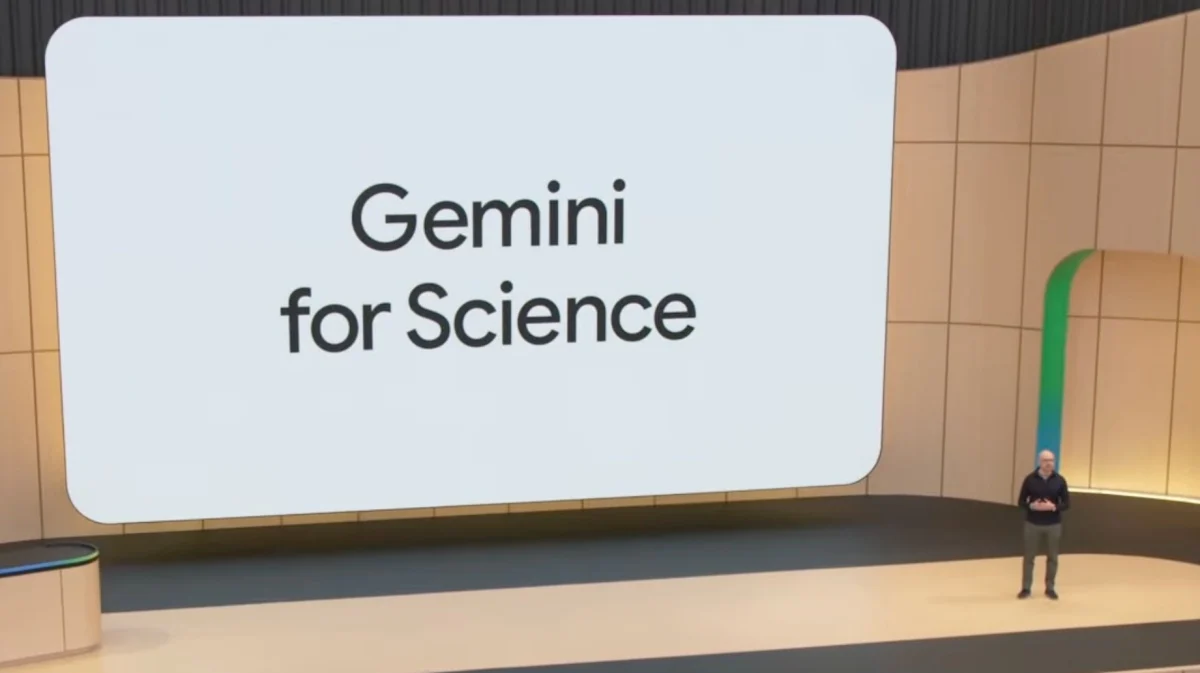
For epochs, the rigorous execution of the scientific method has served as the paramount locomotive driving human advancement. Yet contemporary researchers now confront a deeply paradoxical dilemma: the velocity of human knowledge accumulation has become so hyper-accelerated that a singular mind can no longer comprehend the structural totality of the global scientific landscape. To dissolve this intellectual bottleneck, Google has inaugurated the “Gemini for Science” initiative.
This manifestation transcends a mere collection of analytical utilities; it signals Google’s grand ambition to pivot from domain-specific, narrow artificial intelligence architectures—such as the revolutionary AlphaFold—toward the engineering of multi-disciplinary, autonomous General Agents capable of empowering the global research constituency. By deploying three foundational experimental instruments within Google Labs and integrating specialized “Science Skills” into the Antigravity developer ecosystem, Google intends to compress complex workflows that historically demanded weeks or months of manual orchestration into mere computational minutes.
Google posits that profound scientific breakthroughs are inherently predicated upon the discovery of creative, latent correlations buried deep within colossal, multi-dimensional datasets. To liberate scholars from the grueling burdens of manual data taxonomy, the inaugural rollout of Gemini for Science delivers three experimental architectures centered on fully agentic execution frameworks:
- Hypothesis Generation (Orchestrated via Co-Scientist): With millions of peer-reviewed treatises published annually, total literary assimilation has transcended human cognitive boundaries. This framework faithfully simulates the scientific method, collaborating with researchers to define foundational challenges before initiating an autonomous, adversarial multi-agent ideation tournament. Within this crucible, independent agentic proxies synthesize, debate, and rigorously evaluate competing hypotheses. To preserve absolute epistemological fidelity, every postulated assertion undergoes comprehensive validation routines, anchored by explicit, clickable citations linking back to original literature.
- Computational Discovery (Orchestrated via AlphaEvolve and ERA): The horizon of scientific discovery is structurally bounded by the absolute volume of computational experiments a laboratory can realistically execute. This agentic research engine concurrently synthesizes and interrogates thousands of programmatic code variants, empowering researchers to rapidly validate novel algorithmic modeling methodologies. Across hyper-complex domains like photovoltaic forecasting or epidemiological simulation, optimizations that previously mandated months of iterative manual script refinement are executed with unparalleled swiftness.
- Literature Insights (Orchestrated via Google NotebookLM): A precision instrument engineered explicitly to parse and distill dense scientific literature. The utility autonomously structures disparate search outcomes into interactive multi-variate matrices, facilitating side-by-side comparative analysis. Beyond unearthing highly nuanced textual subleties through natural dialogue, researchers can command the engine to generate structured technical briefs, presentations, detailed infographics, or even rich multimedia synopses, systematically mapping cross-paper consensus points and identifying critical research vacuums.
Effective immediately, these experimental instruments will undergo a staggered provisioning phase; interested academic and institutional investigators may register for consideration via the dedicated portal at labs.google/science.
Moving beyond individual exploratory deployments, Google is concurrently delivering these formidable capabilities to enterprise architectures via Google Cloud. A vanguard of global industrial leaders and institutional entities—including BASF, Klarna, Daiichi Sankyo, Bayer Crop Science, and several premier U.S. National Laboratories—are already leveraging AlphaEvolve and Co-Scientist within isolated private previews to optimize supply-chain topologies and accelerate foundational material science discoveries.
Furthermore, Google has introduced a specialized software extension pack designated as “Science Skills” into its flagship Antigravity developer platform. This suite establishes native API bridges into over thirty preeminent life-science repositories, including UniProt, the AlphaFold Database, and AlphaGenome. Consequently, researchers can locally direct autonomous agents to execute intricate structural bioinformatics and deep genomic sequencing analyses that historically mandated weeks of manual pipeline configuration.
During baseline internal evaluations, a convoluted genomic analysis routine that traditionally consumed hours of manual processing was completed via Science Skills within minutes, enabling research cells to isolate a novel potential mechanism underlying a rare genetic pathology precipitated by mutations in the AK2 gene.
Tracing an evolutionary trajectory from AlphaFold’s resolution of the protein-folding enigma to a contemporary framework capable of autonomously generating and cross-examining hypotheses, Google is systematically elevating artificial intelligence from a point-solution utility into ubiquitous, foundational scientific infrastructure.
The crux of this contemporary manifesto is the cultivation of a robust, self-sustaining agentic ecosystem. Forging collaborative alliances with over one hundred elite academic institutions—including Stanford University and Imperial College London—while enlisting Nobel laureates to execute rigorous adversarial stress testing, Google seeks to guarantee that the telemetry produced by these agents preserves absolute scientific rigor. As autonomous systems successfully assume the labor-intensive dimensions of literature synthesis, experimental modeling, and dialectical hypothesis validation, human scientists can finally consecrate their premium cognitive reserves to articulating the next generation of profound, world-altering scientific inquiries.
Support Our Threat Intelligence
If you find our technology report and cybersecurity news helpful, consider supporting our work.
 Buy Me a Coffee
PayPal
Buy Me a Coffee
PayPal