Fortifying Critical Sectors
Anthropic is actively broadening access to its revolutionary Claude Mythos system. This advanced artificial intelligence platform scans software code to identify critical vulnerabilities. Initially, only a handful of select partners utilized the sophisticated tool. However, the organization is now elevating the project to a far more sensitive echelon. Consequently, they are onboarding critical infrastructure entities that manage regional power grids and municipal water supplies. Furthermore, the expansion incorporates healthcare networks, telecommunications providers, and industrial equipment manufacturers.
Mitigating the Attack Surface
The enterprise announced that approximately 150 new participants across more than 15 nations will join Project Glasswing. Anthropic actively spearheads this defensive initiative alongside key industry partners. Their shared goal is to identify and remediate critical software flaws swiftly. Crucially, they aim to patch these vulnerabilities before malicious actors can exploit them in live campaigns.
The Capabilities of the Mythos Engine
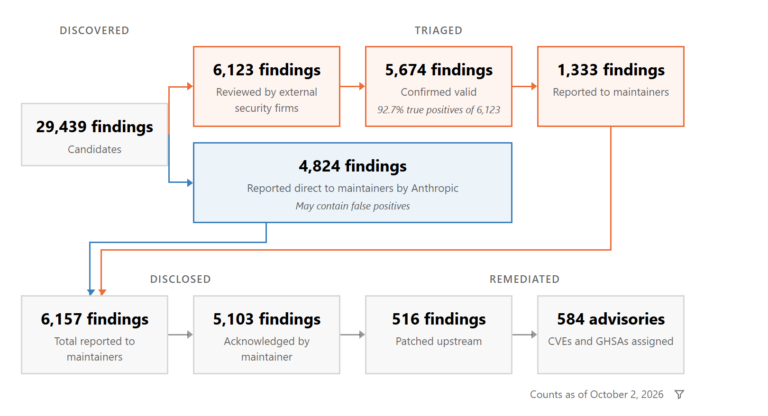
Claude Mythos serves as the absolute core of this ambitious security initiative. Anthropic characterizes this specialized model as its most formidable code analysis engine. Remarkably, the architecture can uncover thousands of zero-day vulnerabilities within a matter of weeks. In early April, an initial cohort of 50 partners, including United States government agencies, secured early preview access. During that preliminary phase, operators deployed the model to audit foundational source code for structural weaknesses.
Scaled Infrastructure Dependencies
This subsequent phase represents a significantly broader operational expansion. According to corporate data, the newer participants include prominent representatives from vital utility sectors. Additionally, hardware manufacturers are joining the defensive ranks. Anthropic specifically highlights that many of these organizations maintain foundational code libraries. Therefore, numerous external enterprises and sovereign entities depend entirely on their software stability.
Geopolitical Alignments and Strategic Data Sharing
The company attributes the expansion of Project Glasswing to the rising threat of catastrophic attacks against core digital infrastructure. Based on Anthropic’s internal projections, a major security breach across these core partners could compromise over 100 million individuals. Consequently, such an intrusion would trigger severe ramifications for both national and global security.
A Curated Alliance
The Financial Times, citing an anonymous source familiar with the matter, reports that access remains restricted to entities within allied nations. This exclusive directory encompasses Australia, Canada, France, Germany, and Italy. Furthermore, the list includes Switzerland, the Netherlands, Spain, Belgium, Sweden, India, Japan, New Zealand, and South Korea.
According to the publication, the elite cohort of newly authorized organizations features the American identity giant Okta. Additionally, South Korean conglomerates like Samsung, SK Hynix, and SK Telecom have secured access. Finally, international bodies such as NATO and the European Union Agency for Cybersecurity (ENISA) are actively participating in the program.
Financial Milestones and the Market Race
The strategic expansion of Project Glasswing coincides with a monumental milestone for Anthropic itself. Merely a day prior to this announcement, the enterprise filed documentation for its initial public offering. Previously, Anthropic successfully secured 65 billion dollars in venture funding. Consequently, this capital influx elevated the firm’s market valuation to nearly 1 trillion dollars.
The Frontier of AI Security Competition
The corporation freely acknowledges that rival artificial intelligence developers will soon construct models of comparable efficacy. In light of this reality, Anthropic is rushing to establish definitive safety protocols surrounding the deployment of Mythos. Unquestionably, industry competition is intensifying rapidly. Following the debut of Mythos, OpenAI unveiled its own specialized security model, designated as GPT-5.5-Cyber. OpenAI has already distributed this competing framework to an expansive group of partners for active beta testing.
Support Our Threat Intelligence
If you find our technology report and cybersecurity news helpful, consider supporting our work.
 Buy Me a Coffee
PayPal
Buy Me a Coffee
PayPal