In the computational arms race fueled by generative artificial intelligence, successfully acquiring high-end AI chips merely represents the initial step. Discovering facilities equipped with abundant electricity and superior cooling capabilities to house these computational behemoths has emerged as a severe challenge for enterprises. A recent CNBC report indicates that NVIDIA actively assumes the role of a corporate matchmaker. The company proactively connects clients seeking GPU deployment with Nordic data center operators, thereby consolidating its core position within the AI infrastructure ecosystem.
Resolving the Infrastructure Void: NVIDIA Intervenes in Deployment
Traditionally, NVIDIA’s primary business model involved selling silicon directly to server manufacturers (OEMs), who subsequently assembled and shipped the server racks. However, as the scale of AI computation experiences exponential growth, NVIDIA has begun intervening directly in the deployment phases of its end-users.
Indeed, NVIDIA Chief Financial Officer Colette Kress explicitly confirmed this strategic shift earlier this June at the Bank of America Global Technology Conference. She noted that NVIDIA actively participates in matchmaking endeavors, assisting enterprises in acquiring land, electricity, and data center infrastructure to ensure these immensely expensive computational assets commence operations as swiftly as possible.
Furthermore, insider sources reveal that NVIDIA even anonymously represents clients possessing GPUs, inquiring with data centers regarding available power and spatial capacity. These matchmaking initiatives transcend the Nordic region, having already expanded into American and Asian markets.
The Nordic Region: An Oasis for AI Computation
Within NVIDIA’s matchmaking portfolio, the Nordic region undoubtedly shines as the most prominent focal point. Blessed with a frigid climate that drastically reduces the cooling costs associated with overheated silicon, alongside abundant renewable energy and vast expanses of land, the Nordics are rapidly absorbing global AI infrastructure investments.
Emergence of Landmark Developments
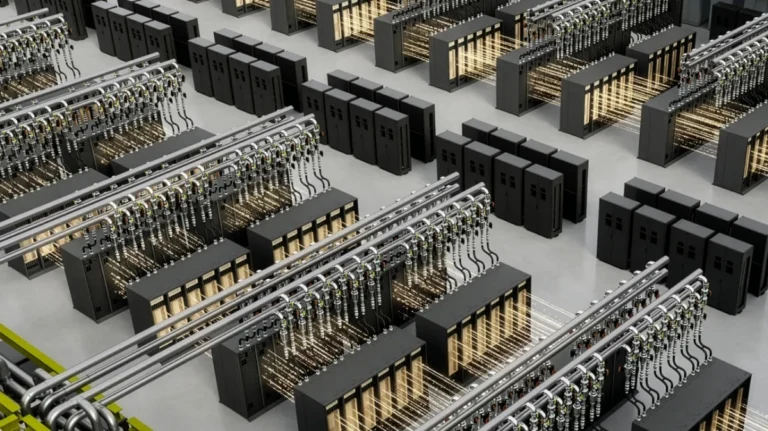
Pure DC announced a 1.5 billion euro investment in Finland to construct a 110-megawatt computational campus, harboring future plans to expand to 550 megawatts. Similarly, Arcem proposed a facility capable of generating 500 megawatts of computational power. Additionally, Nebius and Microsoft are aggressively expanding their AI infrastructure within Finland and Norway, respectively.
Surging Power Grid Demands
Statnett, the Norwegian national power grid operator, indicates that data center capacities totaling a staggering 2.3 gigawatts currently await grid connection.
Ranking Among the Global Elite
According to the latest report published this month by Savills, an international real estate consultancy, Oslo, Stockholm, and Helsinki all secured positions among the top six global cities boasting the highest potential for future data center development.
Evolution from Hardware Supplier to AI Kingmaker
NVIDIA’s proactive descent into the role of a real estate and data center broker carries profoundly far-reaching strategic implications. Having effectively monopolized the premium AI silicon market, NVIDIA keenly understands that its greatest impediment to growth is no longer the performance of rival chips, but rather the infrastructural bottlenecks of global power grids and data centers.
If clients expend hundreds of millions of dollars acquiring H200 or Blackwell processors, only to leave them languishing in warehouses due to a lack of suitable facilities, it will inevitably cause severe delays in their subsequent procurement cycles. By offering this ultimate deployment matchmaking service, NVIDIA ensures that hardware sales swiftly translate into tangible computational power for its clients.
Furthermore, by integrating its software stack (CUDA), government relations, and direct investments, NVIDIA sublimates itself from a mere silicon vendor into the absolute kingmaker dictating the rhythm of the entire AI industrial chain. Facing NVIDIA’s comprehensive infiltration across foundational hardware, software ecosystems, and infrastructure deployment, what alliance strategies will other cloud giants and silicon manufacturers adopt to counterbalance this absolute dominance? This question is expected to become the paramount focus for market observers in the future.
Support Our Threat Intelligence
If you find our technology report and cybersecurity news helpful, consider supporting our work.
 Buy Me a Coffee
PayPal
Buy Me a Coffee
PayPal