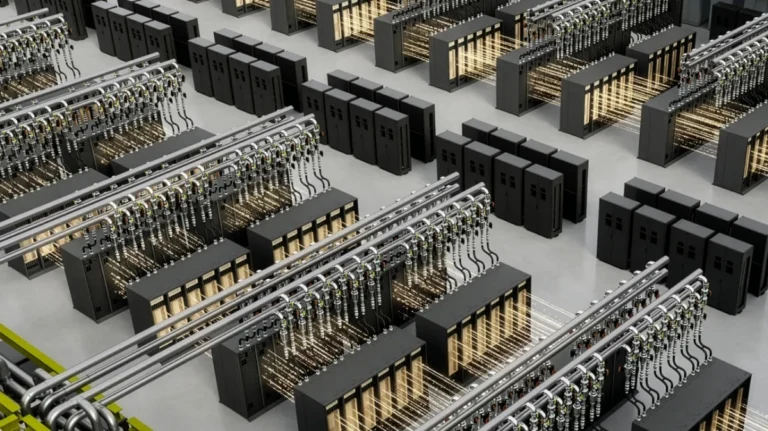
Google has aggressively forged a monumental green energy procurement agreement. They urgently need to counterbalance the exorbitant fossil fuel consumption of their expanding data centers. According to an exclusive Financial Times report, Google will acquire the entire initial electrical output of the Steel River Energy Center. This massive solar power plant is currently under construction in Arkansas.
Developers anticipate this colossal solar facility will officially commence operations in 2029. During its initial phase, it will generate a staggering 1.6 gigawatts (GW) of solar electricity alongside 2 gigawatt-hours (GWh) of battery storage capacity. This sheer scale could effortlessly power over 315,000 homes daily.
Virtual Power Purchase Agreements Fuel US Manufacturing
In practical terms, this transaction utilizes a structured “Virtual Power Purchase Agreement” (vPPA). This financial mechanism dictates that Google guarantees a fixed price for the green electricity the solar farm produces. However, Google will not physically route this specific electricity directly into its own server farms.
Conversely, Google massive data centers will continue drawing power from the standard local grid. This grid typically blends electricity from coal, nuclear, renewable sources, natural gas, and localized gas-fired generators. Meanwhile, the pristine solar energy produced by the Steel River Energy Center flows directly into the broader power grid. Ultimately, this arrangement financially and substantively “offsets” the fossil fuel carbon emissions generated by Google, theoretically reducing the corporation’s overall carbon footprint.
Upon absolute completion, the entire solar project will boast an awe-inspiring total generation capacity of 2.45 GW, paired with 2.9 GWh of battery storage. Currently, the first two of the three projected phases have successfully secured a massive $3.5 billion in project financing. Furthermore, the developers prioritize utilizing domestically manufactured steel and solar panels throughout the construction process, intentionally nurturing the local American supply chain.
The Data Center “Power Monster” Crisis
Google desperate rush to sign this colossal green energy contract directly stems from its rapidly deteriorating carbon emission reality. Constrained by the insatiable demands of massive data centers and relentless AI computation, Google total electricity consumption skyrocketed by a shocking 37% last year. Consequently, its grid-based carbon emissions experienced an equally proportional and devastating surge.
Unsurprisingly, a parallel crisis engulfs other technology behemoths. Meta and Amazon energy consumption has similarly leapt astronomically due to their proliferation of AI data centers. Because these vast facilities predominantly rely on fossil fuel generation, they tangibly exacerbate global warming and extreme weather patterns. Scientists warned just last month that the devastating heatwaves recently ravaging Europe would be “virtually impossible” without the accelerant of climate change.
To desperately mitigate this escalating environmental and public relations crisis, tech giants are frantically investing in, and aggressively acquiring, massive green energy projects:
- Meta: Recently purchased the complete 200 MW electrical output of another massive solar power plant in Texas. Furthermore, they announced the infusion of tens of billions of dollars to drastically expand an enormous data center complex in Louisiana.
- Amazon: Recently agreed to fully acquire the Sunstone solar and storage project in Oregon, which boasts an impressive generation capacity of 1.2 GW.
Nevertheless, this controversial practice of purchasing green electricity to merely “offset” ongoing fossil fuel consumption remains fiercely debated within environmental circles. Numerous experts and advocacy groups argue that such financial offset mechanisms fundamentally fail to solve the actual, localized power grid displacement and regional carbon emission problems directly caused by AI data centers.
Tech Giants Stabilize the Green Energy Sector
Google’s aggressive move to purchase the Steel River Energy Center’s entire initial output actually highlights a fascinating, symbiotic relationship. This dynamic increasingly binds the booming AI industry and the burgeoning green energy sector together.
Examined through the strict lens of pure environmentalism, virtual power purchase agreements resemble a purchased “financial absolution.” After all, the electricity physically powering Google servers today likely still originates from a neighboring natural gas or coal-fired power plant. However, viewed through the pragmatic lens of “commercial viability,” these massive cloud providers have undeniably become the most critical catalysts driving the global implementation of colossal renewable energy projects.
Developing a gargantuan solar farm like the Steel River Energy Center demands billions of dollars in upfront capital. Without an apex-tier customer like Google willing to sign a long-term, 100% guaranteed purchase agreement, developers would find it virtually impossible to secure the necessary $3.5 billion financing from Wall Street or syndicates of major banks. As industry insiders aptly analogize: It resembles a hotel developer who only builds a lavish resort in a location with absolutely guaranteed, long-term guest bookings.
As AI models grow exponentially larger, computing power has violently transitioned from an industry bonus into a ruthless arms race. Moving forward, the ultimate expansion bottleneck for titans like Google, Meta, and Microsoft will no longer be the sheer availability of advanced silicon chips. Instead, their growth will face an absolute limit dictated entirely by one simple question: “Is there sufficient green electricity available for purchase?”
Support Our Threat Intelligence
If you find our technology report and cybersecurity news helpful, consider supporting our work.
 Buy Me a Coffee
PayPal
Buy Me a Coffee
PayPal