Meta quietly launched a novel standalone application named Pocket. This platform champions generative AI technology. Consequently, it empowers the general public to construct exclusive interactive mini-games or digital toys. Users simply employ natural language prompts. Through this innovative vibe-coding approach, individuals without programming backgrounds can generate interactive gaming experiences using mere text descriptions. Furthermore, they can share and play these creations within a dedicated community of enthusiasts.
What Is Pocket? A Magical Platform for Creating Gizmos Instantly
Renowned reverse-engineering expert Alessandro Paluzzi initially detected traces of this application. Meanwhile, data from the app-tracking platform AppFigures reveals a surprising timeline. Pocket actually debuted silently on both iOS and Android platforms as early as June 29.
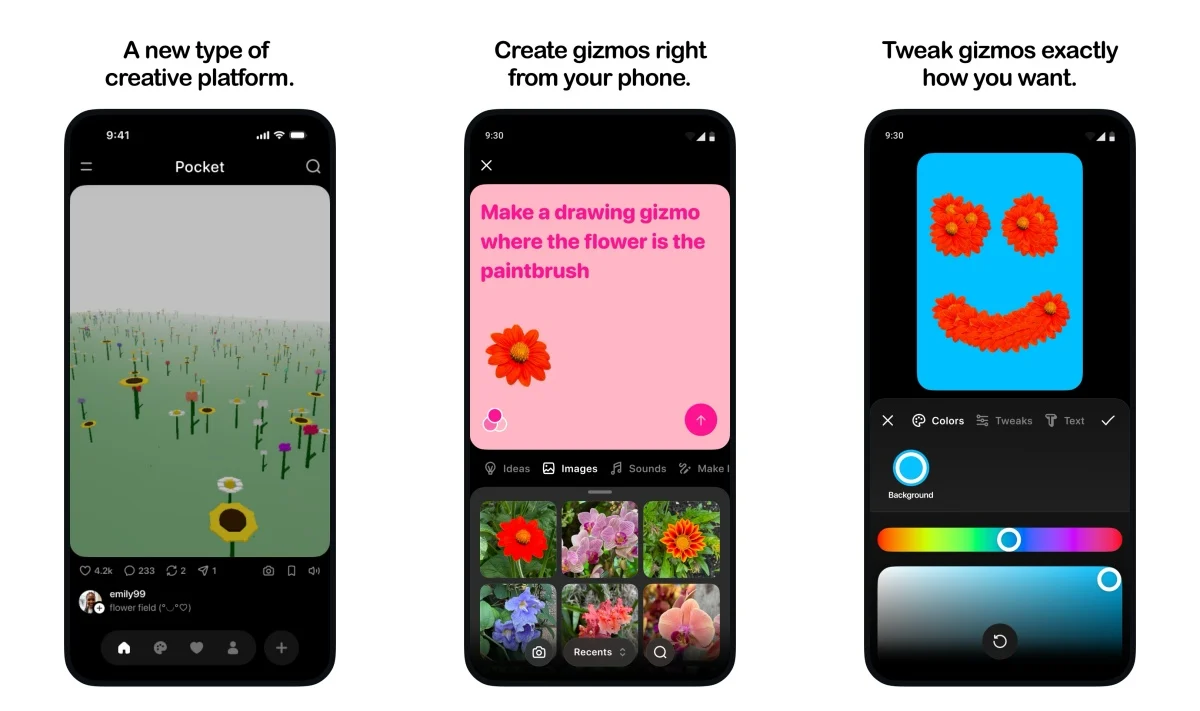
Within the Pocket universe, the core concept revolves around micro-interactive games and digital artifacts called gizmos. Users require absolutely no knowledge of programming languages or game engines like Unity. Instead, you simply articulate your ideas through pure text descriptions. Subsequently, Meta’s underlying generative AI automatically writes the code. Ultimately, it produces a playable masterpiece.
According to official documentation and screenshots, these AI-generated gizmos fully leverage smartphone hardware capabilities. They seamlessly respond to screen touches and gyroscope tilts. Additionally, they can play sound effects and music. They can even access the device’s camera lens and photo gallery directly.
For instance, a user might input a specific prompt. You could instruct the AI to create a physics-based gravity puzzle featuring space cats. Alternatively, you could generate a digital paintbrush that utilizes gallery photos as pigment.
Beyond a Creation Tool: The Interactive TikTok
Pocket transcends the limitations of a standalone AI generation tool. Indeed, it features a robust social discovery mechanism. The application integrates a scrollable feed natively. Therefore, users can continuously explore gizmos crafted by creators worldwide. This experience feels remarkably similar to scrolling through TikTok.
You can actively like and comment on your favorite interactive experiences. Moreover, you can organize them into customized playlists. These might include the best puzzle games or amusing camera filters. Simultaneously, you can publish your own proudest creations to your personal homepage for others to enjoy.
Showcasing Acquired Startup Firepower in Limited Regional Testing
International media reports illuminate Pocket’s developmental background. This stealthy app launch directly correlates with Meta’s acquisition of the startup Atma Sciences. Meta also acquired its Gizmo application team earlier this year. Evidently, Meta directly absorbed this team’s technological architecture and nomenclature system.
However, eager players might need to exercise patience. Although Pocket has appeared publicly in app marketplaces, it seemingly undergoes small-scale testing in limited regions currently. Field tests reveal that the application remains unavailable for download in the United States. Furthermore, Meta’s official support page explicitly states that the Pocket application is not yet available in all regions.
As of now, Meta officials have not released any formal statement regarding this novel application’s launch.
Transitioning from Generated Content to Generated Software
The introduction of Pocket represents a remarkably potent strategic signal from Meta. The generative AI battlefield has officially expanded. It transitioned from merely helping you write text, generate images, or produce videos. Now, it actively assists you in building software and interactive experiences.
The developer community recently engaged in enthusiastic discussions about vibe-coding. Its core philosophy tasks the human brain with brainstorming ideas and defining content. Meanwhile, it delegates the tedious underlying coding and debugging to AI. Meta successfully packaged this incredibly high technical threshold into a popular social application. Ultimately, the ambition behind this maneuver is truly colossal.
Currently, short-form videos and text-based social media increasingly induce user fatigue. Amidst this climate, Pocket offers an entirely novel User-Generated Content (UGC) paradigm. It empowers absolutely everyone to become a micro-game designer. This approach not only cultivates exceptional user stickiness but also serves as a crucial training ground. It prepares Meta’s content ecosystem for the forthcoming Metaverse. Although Pocket currently remains in its nascent testing phases, it undeniably showcases the spectacular future of social interactive entertainment.
Support Our Threat Intelligence
If you find our technology report and cybersecurity news helpful, consider supporting our work.
 Buy Me a Coffee
PayPal
Buy Me a Coffee
PayPal