To amortize massive investments, Meta plans a novel cloud venture. The company wants to sell idle AI compute. Furthermore, it will offer model-access services. This nascent initiative could transform Meta entirely. It might shift from an advertising behemoth to an infrastructure purveyor. Consequently, Meta will directly challenge AWS, Microsoft Azure, and Google Cloud. This move injects an unprecedented variable into the enterprise AI market.
MaaS or Wholesale Bare-Metal? Two Business Paradigms
According to insiders cited in a recent Bloomberg News report, Meta evaluates two disparate cloud paradigms. These models can develop in parallel.
Model-as-a-Service (MaaS)
This model aligns seamlessly with Meta’s existing ecosystem. It permits external developers to access hosted AI models. For example, users can utilize the formidable Muse Spark model via APIs. Subsequently, Meta bills clients based on actual resource consumption.
Neocloud (Bare-Metal)
Conversely, the Neocloud approach is significantly more aggressive. It mirrors the strategies of emerging cloud providers. CoreWeave and Nebius utilize similar tactics. Specifically, Meta would wholesale bare-metal AI compute capacity. Enterprise clients could directly lease colossal GPU clusters.
Market analysts predict a phased rollout. Therefore, Meta will likely test model-access services first. Later, the company will evaluate market reception. Finally, it will decide whether to lease foundational compute power directly.
The Pressure of Compute Monetization
Massive AI infrastructure investments primarily drive this cloud initiative. During the first-quarter earnings call, Meta revised its 2026 capital expenditure guidance. Management increased this figure to a staggering $125 billion to $145 billion. Consequently, this amount doubles the actual 2025 expenditure.
To sustain this computational empire, Mark Zuckerberg inaugurated a “Meta Compute” division. He launched this unit early this year. The division aims to amass massive power capacity. Specifically, it targets tens of gigawatts over the next decade.
Key Infrastructure Projects
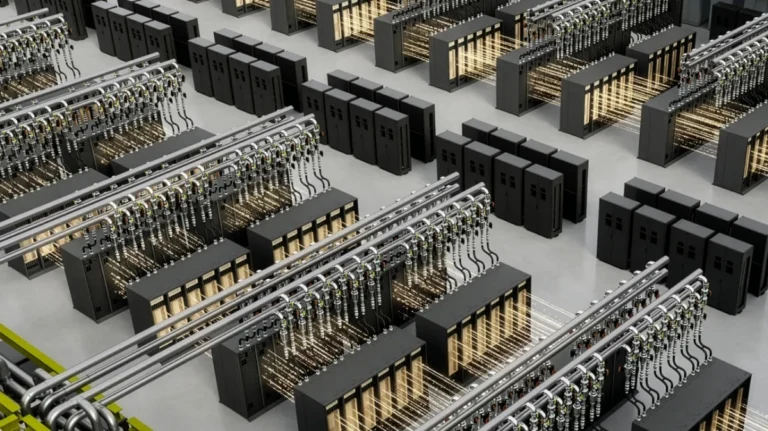
Currently, several paramount projects remain under construction. For instance, the 1-gigawatt “Prometheus” facility operates in Ohio. Meanwhile, the $10 billion “Hyperion” campus rises in Louisiana. This massive site boasts a 5-gigawatt capacity.
Indeed, Zuckerberg foreshadowed this development in May. During the shareholder meeting, he addressed potential overbuilding. If Meta generates superfluous computing capacity, cloud services become an option.
Furthermore, he disclosed revealing industry demand. “Almost weekly, external entities approach us,” Zuckerberg stated. These companies yearn for API services. Alternatively, they want to procure premium computing resources directly.
Perturbing the Cloud Hierarchy
Following this cloud revelation, Meta’s stock price surged by 8.81%. Wall Street clearly favors this “compute monetization” strategy. Previously, Meta’s stock languished under excessive AI expenditures. Therefore, this financial tourniquet reassures anxious investors.
However, traditional cloud giants did not feel the initial tremors. Instead, emerging compute service providers suffered immediate impacts. CoreWeave and Nebius saw their stock prices decline precipitously. Historically, both entities served as pivotal outsourced compute partners. Meta previously awarded them massive contracts. These deals allegedly reached $21 billion and $27 billion, respectively.
Understandably, investors harbor profound apprehensions. If Meta commences self-production and direct sales, outsourcing contracts will vanish. Additionally, Meta becomes an invincible competitor with ultimate economies of scale.
Meta Lacks Enterprise DNA
Nevertheless, Meta faces structural impediments in this cloud transition. Transmuting colossal GPU clusters into a lucrative business requires specific expertise. Indubitably, Meta possesses premier GPU cluster orchestration capabilities. Its state-of-the-art network architecture constitutes an absolute advantage.
Yet, cloud computing remains an arduous enterprise endeavor. AWS, Microsoft, and Google dominate through comprehensive services. They rely on global node coverage and stringent SLAs. Moreover, they provide expansive technical support and bespoke security frameworks.
The Ultimate Challenge
Historically, Meta relies exclusively on consumer advertising revenue. Therefore, cultivating an enterprise-grade support apparatus poses a Herculean task. It is arguably as daunting as erecting a new data center.
Should this initiative materialize, Meta must proffer disruptive price discounts. Alternatively, it must intertwine proprietary open-source models with dedicated hardware. Ultimately, this venture exceeds mere financial maneuvering. It represents the pivotal catalyst for the 2026 enterprise AI market reshuffle.
Support Our Threat Intelligence
If you find our technology report and cybersecurity news helpful, consider supporting our work.
 Buy Me a Coffee
PayPal
Buy Me a Coffee
PayPal