Three colossal technological gambles the Metaverse, augmented reality smart glasses, and Large Language Models (LLMs) previously perceived by external observers as isolated, highly speculative endeavors notoriously difficult to realize, are now experiencing an unprecedented, synergistic convergence within Meta’s internal ecosystem.
During an exhaustive, deeply revealing interview conducted on September 25th, Meta Chief Executive Officer Mark Zuckerberg disclosed that the recently launched personal AI assistant, “Muse,” had astronomically accumulated millions of highly active users within a mere fortnight. This revolutionary product not only completes Meta’s strategic chessboard regarding Agentic AI but is also scheduled for comprehensive integration directly into the Ray-Ban Meta smart glasses lineup. This integration positions the hardware as the ultimate, pivotal nexus bridging the tangible physical world with expansive virtual environments.
Muse: A Spectacular Debut and Relentless In-House Development
In his candid dialogue, Zuckerberg enthusiastically characterized the overwhelmingly positive initial reception to Muse as hitting a “home run right out of the gate.” Such immediate, explosive success is exceptionally rare within Meta’s historically cautious product development trajectory, powerfully corroborating the absolute precision of their strategic AI product positioning. For a deeper understanding of his perspective, you can read the complete Mark Zuckerberg interview regarding Connect, audio glasses, and Muse AI.
The genesis of Muse traces back to a rudimentary, experimental prototype that Zuckerberg and his core engineering team meticulously “cobbled together” in their own homes utilizing disparate open-source tools. They acutely recognized that to successfully democratize this miraculous, transformative experience, they had to forge a frictionless, “out-of-the-box” consumer-grade product. Their ultimate objective was to empower billions of ordinary users individuals entirely unfamiliar with complex coding or command-line terminal operations to effortlessly harness advanced AI capabilities.
Consequently, Meta bravely elected to traverse the arduous, demanding path of comprehensive “full-stack” internal development. From the foundational training of the underlying neural models and the architectural construction of the operational framework, to ensuring the crucial “heartbeat” mechanism capable of autonomously waking the AI agent to proactively advance ongoing tasks, every critical component was painstakingly forged entirely in-house.
Endowing AI with Nuanced Judgment and Dedicated Virtual Machines
Zuckerberg emphatically asserted that the absolute vanguard of current AI competition revolves around elevating models into superior, autonomous “agents.” Beyond merely demonstrating formidable programming prowess, a genuinely useful personal AI assistant desperately requires refined “judgment” a deep, intuitive comprehension of rigid privacy boundaries and complex social nuances.
He provided a compelling illustration: when Muse proactively assists in securing a restaurant reservation, it may possess highly sensitive, intimate knowledge regarding the user’s specific dietary allergies or a concealed pregnancy. However, fundamental social etiquette dictates that the AI must not indiscriminately broadcast this profoundly personal data to the restaurant staff. This sophisticated capacity to seamlessly accomplish complex tasks while strictly minimizing the disclosure of sensitive information represents basic human social intelligence; furthermore, it constitutes a paramount, guiding directive in Meta’s rigorous training regimen for Muse.
To definitively fortify user privacy and systemic security, Meta has ingeniously provisioned each individual Muse assistant with a completely isolated, dedicated “Secure Virtual Machine” (Secure VM). Functionally, this architecture resembles a private, unassailable computer sequestered safely beneath the user’s desk; astonishingly, even Meta’s official corporate administrators remain technologically incapable of peering into this encrypted sanctuary. Moreover, “Sentinel,” a specialized security agent meticulously tasked with rigorously monitoring data streams, provides a crucial layer of defense-in-depth, instantaneously intercepting any anomalous or malicious operations detected within the environment.
The Final Puzzle Piece: Smart Glasses and the Metaverse
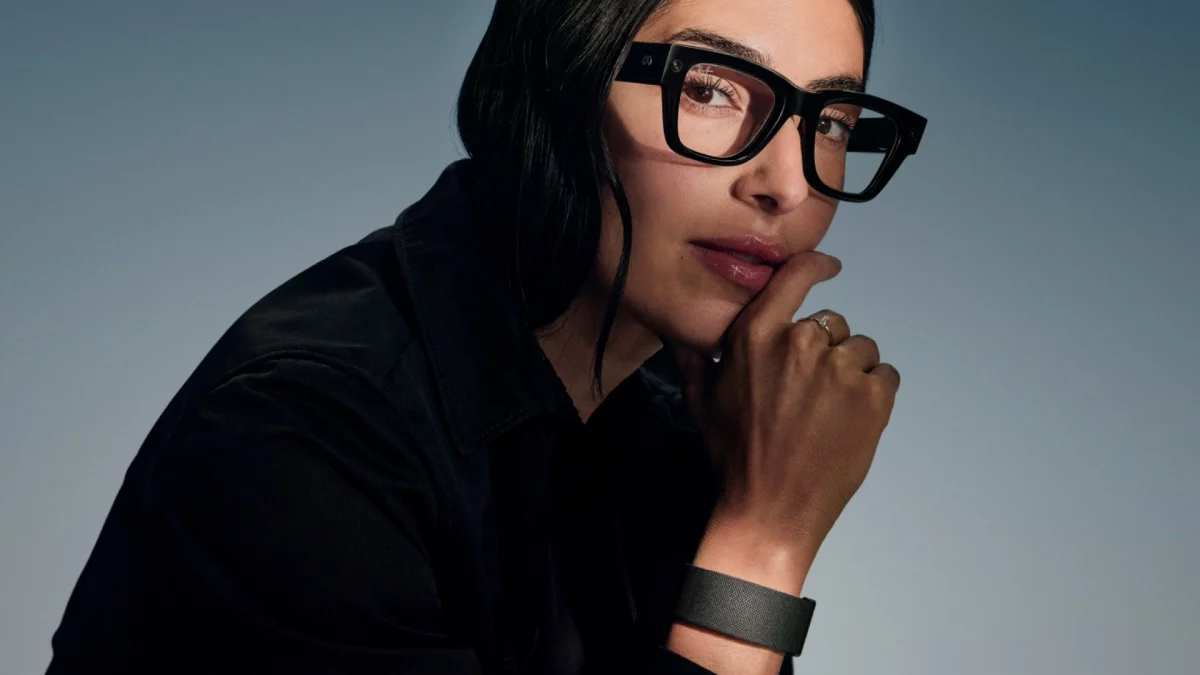
The monumental success of Muse simultaneously injects vital momentum into Meta’s ambitious hardware deployment strategy. Zuckerberg definitively confirmed that Muse will undergo comprehensive, seamless integration into the Ray-Ban Meta smart glasses portfolio. In the imminent future, these glasses will transcend their current limitation as tools solely capable of “single-turn dialogue.” Instead, they will evolve into the primary, frictionless frontend portal for Muse, empowering users to summon their bespoke personal AI utilizing the most natural, intuitive conversational methods imaginable.
This critical technological evolution aligns flawlessly with Zuckerberg’s enduring, grand vision for the Metaverse: the absolute, seamless amalgamation of the physical and digital realms. Within the futuristic paradigms of professional collaboration, fully realized holographic avatars and vividly instantiated AI agents will seamlessly convene alongside physical human participants in immersive meetings; crucially, smart glasses represent the indispensable hardware catalyst required to actualize this profound transformation.
The Agony of Llama 4 and the Brute Force of Raw Compute
While aggressively forecasting the future, Zuckerberg displayed remarkable candor, openly acknowledging the catastrophic setbacks endured during the tumultuous development of Llama 4, vividly describing the agonizing period as the “most terrifying moment.” He engaged in deep retrospection, concluding that attempting to train advanced language models utilizing the massive, highly parallelized, hundreds-strong engineering structures historically employed for developing basic recommendation algorithms was a profound strategic error. He strongly emphasized that successfully training colossal language models absolutely mandates a tightly knit, highly cohesive, elite strike team.
In direct response to this revelation, Meta established the formidable “Meta Super Intelligence Lab” and is currently aggressively deploying an unprecedented, gargantuan computational infrastructure. Zuckerberg bluntly declared that the fundamental recipe required to achieve Artificial General Intelligence (AGI) is now glaringly apparent: possessing a sufficiently massive supercomputer cluster allows engineers to essentially reach the ultimate objective via sheer “brute force.” Currently, Meta’s staggering 1-gigawatt computational cluster situated in Ohio has commenced active operations, while an incomprehensible 5-gigawatt behemoth currently under construction in Louisiana will provide the overwhelming processing power necessary to underwrite their next-generation models.
Analyzing this comprehensive interview clearly illuminates that Zuckerberg’s ultimate ambition violently transcends the mere retail of physical hardware or competing solely within the open-source model arena. The dramatic advent of Muse undeniably signifies Meta’s audacious attempt to permanently install a profoundly customized, fiercely privacy-centric “digital twin” squarely between the human user and the vast digital cosmos.
While other technological leviathans, notably Google and Apple, remain fixated on retrofitting AI into existing smartphones or legacy operating systems, Meta has decisively cast its gaze toward the infinitely more immersive horizons of smart glasses and the Metaverse. By endowing Muse with an impenetrable, dedicated virtual machine alongside profound adaptability, Meta is striving to forge a revolutionary paradigm of trust: the creation of a definitive super-assistant that genuinely belongs to you, serves exclusively you, and remains cryptographically opaque even to the platform creators themselves.
Support Our Threat Intelligence
If you find our technology report and cybersecurity news helpful, consider supporting our work.
 Buy Me a Coffee
PayPal
Buy Me a Coffee
PayPal