Apple affordable augmented reality headset project currently faces a significant roadblock. Furthermore, South Korean media outlet The Elec reports a major development. Samsung Display recently decided to terminate its dedicated display panel project. They will end this initiative for Apple’s budget XR device early this September.
This action confirms persistent market rumors. Apple is drastically altering its wearable technology strategy. Consequently, they are shifting focus away from bulky mixed reality headsets. Instead, the company fully embraces lightweight, AI-driven Apple smart glasses. Hardware development bottlenecks and the sudden rise of generative AI prompted this pivotal change.
Cost-Cutting G-VR Panels Canceled Ahead of September Closure
Supply chain insiders revealed crucial details regarding this situation. Samsung Display finalized its internal decision recently. Therefore, they will officially conclude this XR display development plan by late September.
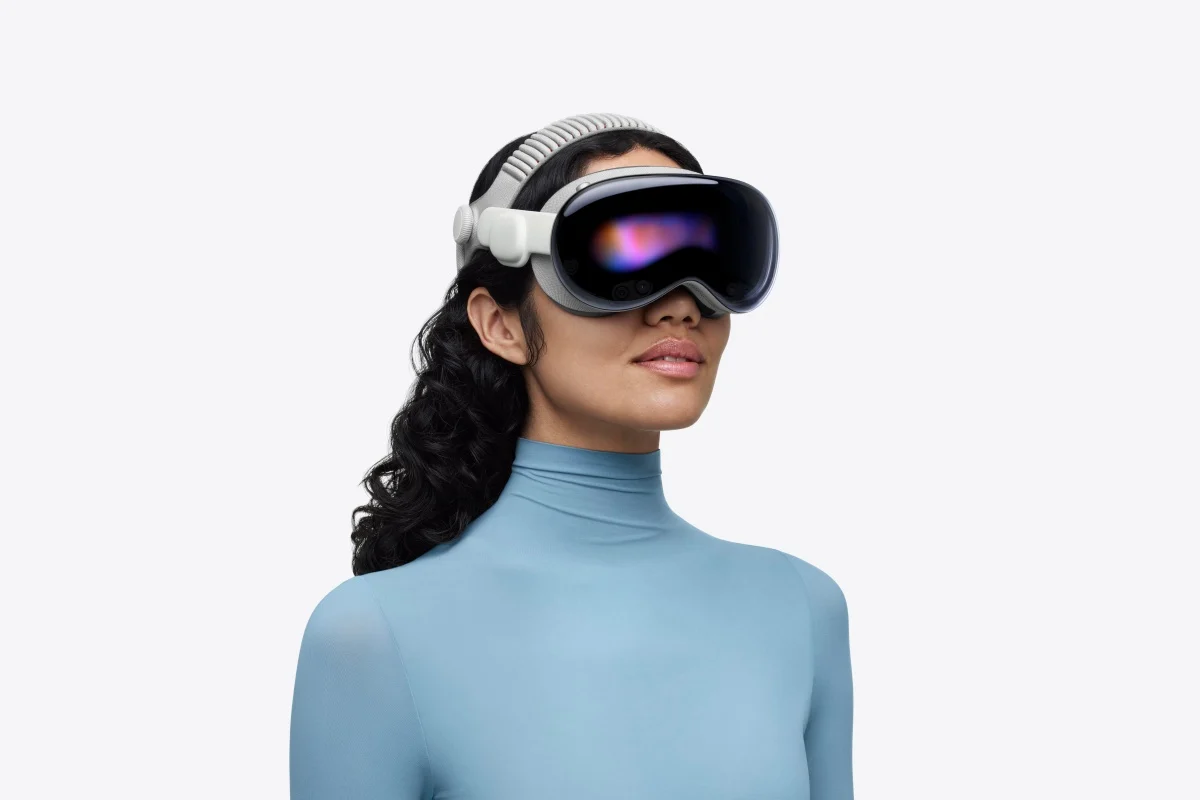
The industry refers to this specialized development project as G-VR. Currently, the Vision Pro uses incredibly expensive OLEDoS micro-displays built on silicon wafers. Alternatively, G-VR utilizes technology that generates OLEDs on traditional glass substrates.
This approach reduces pixel density to approximately 1600 to 1700 PPI. Interestingly, this equals roughly half the resolution of the current Vision Pro. However, it significantly slashes overall manufacturing costs. Thus, experts considered it a crucial component for Apple’s future affordable headset. Enthusiasts often dubbed this theoretical budget device the “Vision Air.”
Original reports suggested mass production would begin after 2028. However, Apple abandoned its affordable XR headset product development. Consequently, Samsung Display lacked essential support from a major client. Therefore, they had no choice but to terminate the entire G-VR project completely.
AI Smart Glasses Replace Fading Virtual Reality Headsets
Recent analyst reports corroborate this sudden strategic shift. Renowned Apple analyst Ming-Chi Kuo highlighted Apple’s original long-term blueprint last month. Initially, Apple planned to launch three Vision headsets and four smart glasses before 2029.
However, the consumer market responded coldly to expensive XR equipment. Consequently, Apple heavily revised this ambitious hardware roadmap. Currently, they are only actively advancing two AI smart glasses products.
Additionally, Bloomberg reporter Mark Gurman shared further insights into the timeline. Apple is still developing a lighter, thinner Vision Pro iteration. Experts expect this release between late 2028 and 2029. However, this clearly represents a standard update for their high-end flagship line. It is definitely not the highly anticipated budget version meant to capture widespread market share.
Meta Ray-Ban Success Prompts Apple’s Strategic Awakening
Samsung Display’s cancellation marks a major pivot in Apple’s spatial computing strategy. The Vision Pro features a hefty $3499 price tag and a cumbersome wearing experience. Consequently, it proves that full-coverage XR headsets struggle to reach mainstream consumers. This reality will persist until battery and display technologies achieve revolutionary breakthroughs.
Conversely, competitor Meta achieved massive market success recently. Their collaborative Ray-Ban Meta smart glasses resonated deeply with buyers. This device boasts a lightweight design, seamless AI voice interaction, and convenient camera features. Consequently, it ignited a huge trend of screenless AI glasses throughout 2025 and 2026.
This triumph made Apple realize a fundamental consumer desire. People do not truly want to watch massive 3D movies in virtual reality right now. Instead, they crave an AI visual agent for everyday use. Consumers want a device to wear constantly and summon Siri for daily tasks effortlessly.
Therefore, abandoning the costly budget XR panel development is a highly precise decision. Diverting hardware resources toward Apple smart glasses for rapid production by 2027 makes perfect sense. Furthermore, it allows Apple to counter Meta and Google much faster. Ultimately, it helps Apple Intelligence transcend mobile screens and effortlessly dominate the next generation of hardware interfaces.
Support Our Threat Intelligence
If you find our technology report and cybersecurity news helpful, consider supporting our work.
 Buy Me a Coffee
PayPal
Buy Me a Coffee
PayPal