On the eve of Google I/O 2026, Google has preemptively unveiled a series of monumental announcements via “The Android Show,” signaling a profound paradigm shift: Android is transcending its origins as a mere mobile operating system to evolve into a Gemini-driven “Intelligence System.”
Historically, the chasm between Google and Apple was defined by the insular nature of AirDrop and the formidable data barriers hindering the transition from iOS to Android. Google is now systematically dismantling these obstacles:
- Bidirectional Compatibility for Quick Share: Google has announced native support for the AirDrop protocol within Quick Share, enabling seamless file “casting” between Android and iPhone. This maneuver effectively breaches one of Apple’s most guarded ecosystem strongholds.
- The Final Frontier of Platform Migration: Through a strategic collaboration with Apple, Google has optimized data migration to include home screen layouts and stored credentials. This reflects a pivot in strategy: rather than compelling a choice, Google is eliminating the “switching cost,” ensuring that “Apple loyalists” can explore the latest Pixel or Galaxy hardware without trepidation.
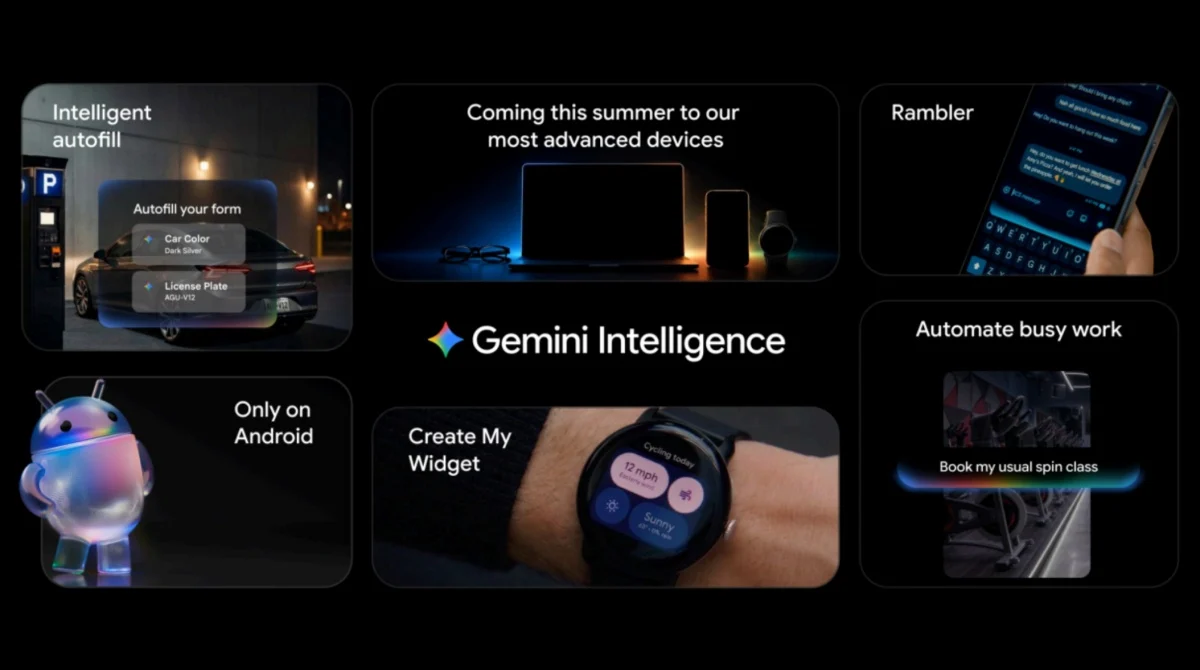
As Apple prepares to unveil its AI-augmented Siri at WWDC 2026, Google has strategically brandished the “Gemini Intelligence” moniker, a direct and deliberate challenge to “Apple Intelligence.”
- From Passive Response to Proactive Agency: Unlike traditional AI that merely responds to inquiries, Gemini Intelligence emphasizes “Agentic AI.” It possesses the capacity to interpret screen content and execute complex, multi-step tasks across diverse applications.
- Technological Hegemony: Following revelations at Cloud NEXT ’26 that Apple’s intelligence suite is partially underpinned by Gemini technology, Google’s latest cross-ecosystem rollout serves as a definitive proclamation: “Even if Apple utilizes our models, the most potent and comprehensive AI experiences remain exclusive to Android.”
The long-dormant Google laptop hardware has resurrected, rebranded not as a Chromebook, but as the Googlebook.
- The Manifestation of “Aluminium”: Powered by the rumored Android-based “Aluminium” architecture, the Googlebook aims to rectify the historical productivity deficits of ChromeOS.
- The Magic Pointer: Perhaps the most avant-garde feature is the Magic Pointer, which reimagines decades of stagnant mouse logic. By imbuing the cursor with Gemini’s cognitive reach, the laptop is transformed from a rudimentary “typewriter” into a true “instrument of thought,” anticipating user needs based on spatial context.
- Frictionless Interconnectivity: By mirroring mobile applications and providing native file access, Google aspires to create an interconnectivity experience even more aggressive than Apple’s Handoff.
- Shattering the Entry-Level Stigma: Collaborating with titans like Acer, ASUS, Dell, HP, and Lenovo, Google seeks to pivot away from the “educational tool” stereotype, striving instead to redefine the very essence of the PC experience.
The vehicular interface has evolved beyond mere navigation and media playback. Through Gemini integration, Google is refining Android Auto into an “Intelligent Co-pilot.”
- Contextual Solutions: From high-definition cinematic experiences while stationary to voice-activated ordering and Magic Cue contextual suggestions while in transit, Google is seamlessly transposing Android’s computational power into the automotive cabin.
- The Bait for Hardware Integration: For manufacturers, the “Built-in Google” solution offers deeper access to vehicle telemetry, serving as a critical lever for dominance within the digital cockpit.
Ultimately, Google’s preemptive disclosure ahead of Google I/O 2026 is a calculated move to seize the definition of a “True AI System.” While the market anticipates Apple’s response, Google has already infused Gemini into phones, laptops, automobiles, and browsers. Leveraging its mastery of foundational models, Google is rapidly executing an omni-device “intelligence” deployment. The victor of this era will not be determined by parameter counts, but by whose AI can most gracefully assume the burden of life’s trivialities, rendering the transition between screens entirely invisible.
Support Our Threat Intelligence
If you find our technology report and cybersecurity news helpful, consider supporting our work.
 Buy Me a Coffee
PayPal
Buy Me a Coffee
PayPal