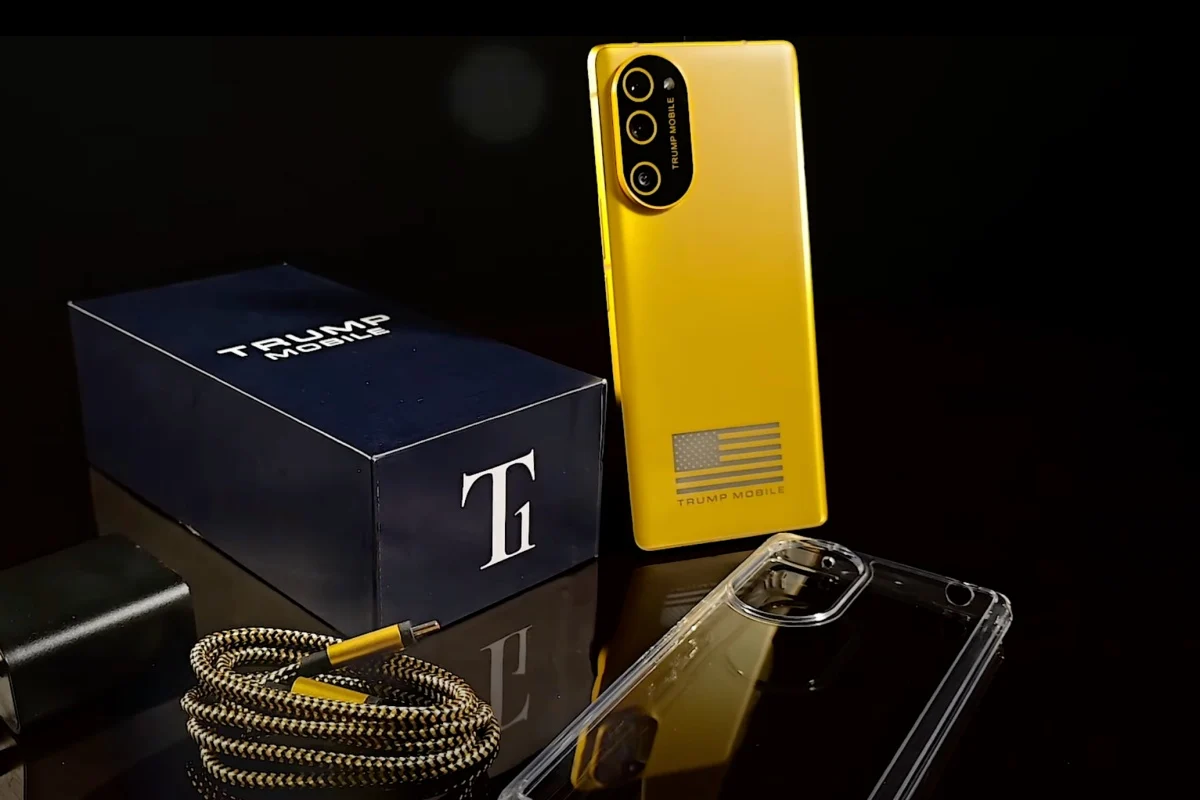
After enduring nearly a year of prolonged delays and strategic evasions, Trump Mobile—the telecommunications venture established by Donald Trump Jr. and Eric Trump—has finally announced that its flagship gilded Android device, the Trump Phone (T1), will commence shipping this week.
Originally slated for distribution in August of last year, the device’s journey has been mired in controversy, facing allegations of fraud following repeated postponements and clandestine revisions to its terms of service, which notably rescinded shipping guarantees. Nevertheless, anchored by the clarion call of “American Values,” this high-priced yet technologically unremarkable handset managed to secure pre-order deposits from approximately 600,000 supporters, amassing nearly $60 million in capital.
Leaked intelligence suggests that the T1 is essentially a pedestrian, mid-range Android smartphone:
- Technical Specifications: It features a Qualcomm Snapdragon processor (the specific iteration remains undisclosed), a 5000mAh battery, and a 50-megapixel primary camera. While these specifications are serviceable, the device’s exorbitant price tag—ranging from $500 to $1000—renders its value proposition negligible when compared to established market leaders.
- Rhetorical Pivot on Provenance: During its nascent stages, the firm touted the device as “Made in America.” However, upon securing funding, the narrative shifted to being “designed with American values,” effectively conceding that production remains outsourced to overseas manufacturers.
- Aesthetic and Branding: The handset boasts a signature “luxury gold” finish, aggressively marketed as an exclusive talisman for the patriotic.
Trump Mobile operates primarily as a Mobile Virtual Network Operator (MVNO). Beyond hardware sales, the firm promotes proprietary 5G data plans priced at a curated $47.45 per month—a symbolic nod to Donald Trump’s tenures as the 45th and 47th President of the United States. Furthermore, the platform offers refurbished iPhones and Samsung devices at rates significantly exceeding market value; for instance, a refurbished iPhone 15 is listed at $630, nearly double the price found on competing exchanges, exemplifying a strategy predicated on a “loyalty tax” levied against a devoted fan base.
From a purely technological vantage point, the T1 lacks any competitive edge in the landscape of 2026, where even entry-level devices frequently outperform it in raw power and display fidelity. However, this is evidently not a contest of hardware, but rather a profound exercise in the “community economy.” For the hundreds of thousands of proponents, the acquisition of this handset serves as a manifesto of political allegiance and identity. While Eric Trump once proclaimed the device would be a “game changer,” the reality of its year-long gestation and lackluster specs suggests a calculated maneuver in e-commerce leveraging political influence.
As the inaugural shipment reaches the hands of consumers, the market will soon discern whether this “premium” apparatus is a legitimate communication tool or merely a rebranded, overpriced piece of political memorabilia. For the patriots who have waited a year, the verdict on this $60 million endeavor is finally at hand.
Support Our Threat Intelligence
If you find our technology report and cybersecurity news helpful, consider supporting our work.
 Buy Me a Coffee
PayPal
Buy Me a Coffee
PayPal