As generative AI becomes increasingly ubiquitous, automotive ecosystems are undergoing a profound leap in intelligence. Google has formally unveiled its latest iteration of the Android Auto operating system, alongside a transformative update for the Google built-in (Android Automotive OS) interface.
This ascension introduces a meticulously reimagined Material 3 design aesthetic and immersive 3D navigation, while pioneering support for Full HD video streaming during vehicle dormancy. Furthermore, Google has inextricably woven Gemini Intelligence into the driving experience, evolving the voice assistant into a context-aware “intelligent co-pilot.”
The next generation of Android Auto heralds the most significant user interface metamorphosis in recent years:
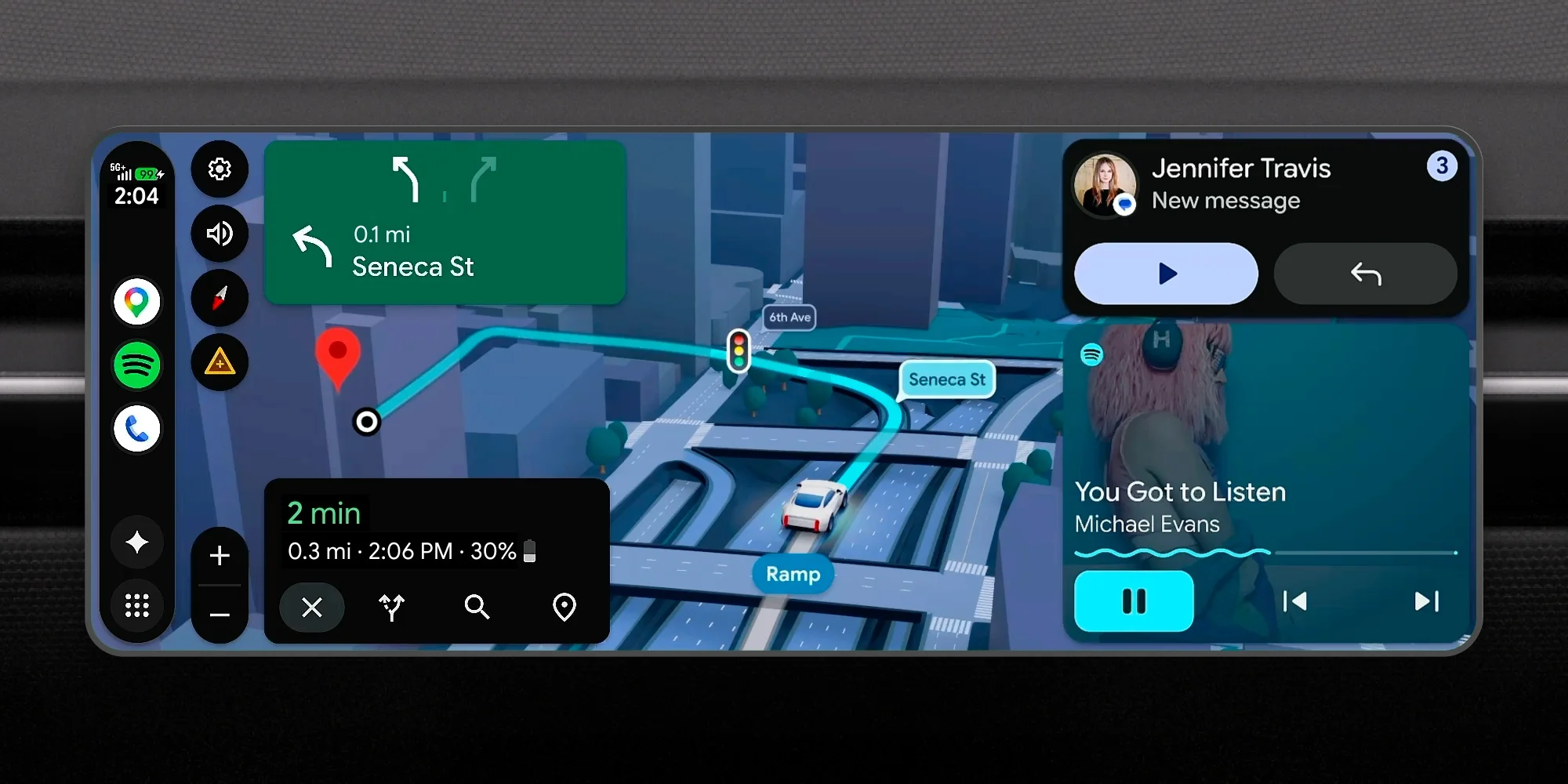
- Personalized Modularity and Widgets: The system adopts the “Material 3 Expressive” design language, characterized by fluid animations, refined typography, and bespoke wallpapers. A novel Widgets feature permits drivers to monitor weather, frequent contacts, or even activate “one-tap garage door opening” alongside the navigation pane. This interface is engineered for universal adaptability, seamlessly conforming to any display geometry—from expansive ultra-wide screens to avant-garde circular panels.
- Immersive Navigation: Hailed as the most consequential update to Google Maps in over a decade, the new interface renders buildings and topography in vivid 3D. Crucial environmental data—including lane demarcations, traffic signals, and stop signs—are dynamically highlighted, empowering drivers to navigate complex intersections with newfound poise.
To address the intervals of waiting inherent in modern travel—particularly during electric vehicle charging—Android Auto introduces an “Advanced Entertainment Suite”:
- High-Definition Cinema: While the vehicle is stationed, users may enjoy 1080p, 60fps video streaming from platforms like YouTube directly on the dashboard.
- Frictionless Safety Transitions: Upon engaging the “Drive” gear, the system eschews abrupt interruptions, opting instead for a “seamless transition” to audio-only mode—an ideal feature for aficionados of video podcasts.
- Dolby Atmos: For vehicles equipped with premium acoustics, Android Auto now supports spatial audio, providing an unparalleled, immersive auditory experience via applications such as Spotify.
The integration of Gemini Intelligence serves as the quintessential soul of this upgrade:
- Magic Cue: Leveraging the on-device AI of the user’s smartphone, the vehicle becomes “context-aware.” Should a contact inquire about dining arrangements via text, Magic Cue autonomously cross-references calendars, emails, and past messages to synthesize an accurate response, offering a “one-tap” reply suggestion on the screen.
- Transit-Based Ordering: Drivers may now issue complex commands such as: “Order my usual fish tacos on DoorDash, but double the portion.” Gemini orchestrates the transaction in the background, ensuring the meal is prepared precisely as the driver arrives.
Beyond the smartphone-tethered Android Auto, Google has deepened its hardware-level integration for the Google built-in ecosystem—now adopted by 16 brands across over 100 models:
- The Vehicular Oracle: Because Android Automotive OS is deeply entwined with the car’s architecture, Gemini can resolve queries exclusive to the specific vehicle. Users may inquire about mysterious dashboard indicators or ask, “I am transporting a large television; will it fit within my trunk?”
- Live Lane Guidance: This premium navigation feature, exclusive to integrated systems, accesses the vehicle’s front-facing camera for real-time environmental analysis. It overlays precise, Augmented Reality (AR)-style instructions onto the display during lane changes or exit maneuvers.
Google’s strategic trajectory reveals a clear dual-track approach. For the vast population of existing motorists, Android Auto delivers a refreshed interface and the convenience of Gemini by leveraging smartphone computational power. Conversely, Google is aggressively marketing the Google built-in solution to manufacturers by showcasing exclusive features—such as direct access to the CAN Bus and forward-facing cameras—that necessitate deep systemic integration.
The pervasive presence of Gemini addresses the historical grievance of “rigid, command-based” automotive assistants. Features like the context-aware replies of Magic Cue and the fluid transition from video to audio illustrate Google’s ambition to strike a harmonious balance between minimizing visual distraction and maximizing technological utility. The automobile of the future is no longer merely a mode of transport; it is the most formidable, wheel-bound manifestation of your personal AI assistant.
Support Our Threat Intelligence
If you find our technology report and cybersecurity news helpful, consider supporting our work.
 Buy Me a Coffee
PayPal
Buy Me a Coffee
PayPal