Following the inaugural exhibition of its conceptual framework at Google I/O 2025, and the subsequent ratification of cross-disciplinary alliances with Samsung, Qualcomm, and premier eyewear trendsetters Gentle Monster and Warby Parker, Google has finally codified its definitive commercialization roadmap on the stage of Google I/O 2026. Shahram Izadi, Vice President of Android XR, officially announced that intelligent eyewear powered by the novel Android XR operating system will make its formal market debut this autumn.
The product architecture bifurcates into two distinct form factors: high-fidelity spectacles featuring integrated display technologies, and specialized audio-centric smart glasses designed exclusively for acoustic feedback. Engineered for multi-platform synergy across both Android and iOS ecosystems, the wearables feature deep-tier integration with Gemini AI, empowering users to seamlessly orchestrate daily objectives with heads-up clarity, liberating them from the constant tyranny of tethered smartphone displays.
Within the consumer eyewear theater, the most sophisticated computational technology remains inherently unviable if its industrial design evokes the cumbersome silhouette of laboratory goggles.
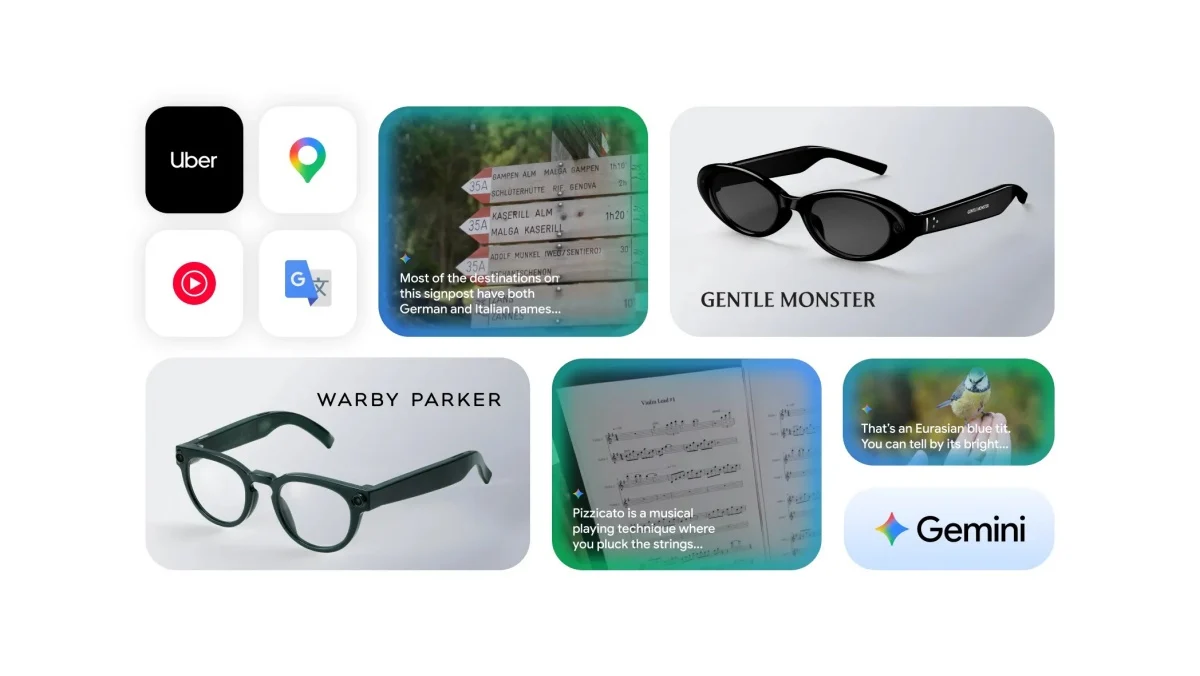
Recognizing this fundamental behavioral barrier, Google surrendered aesthetic design autonomy for its inaugural autumn release—the audio-centric smart glasses—to the vanguard Korean fashion house Gentle Monster and the acclaimed American designer label Warby Parker.
During the Google I/O 2026 proceedings, the tech giant offered an exclusive preview of select frames slated for release later this year. By meticulously concealing micro-sensors and high-density battery arrays within the architectural contours of the temples, these configurations achieve an optimal equilibrium between all-day ergonomic comfort and high-fashion aesthetics.
Beyond this refined exterior, the cognitive core of the platform is the Gemini AI engine, native to the Android XR substrate.
Users can awaken this digital companion via the verbal directive “Hey Google” or a transient touch gesture on the chassis profile. Leveraging integrated optical sensors and low-latency spatial awareness, the intelligence facilitates a multitude of scenarios that echo science fiction narratives:
-
Contextual Environmental Interrogation: Users can dynamically query Gemini regarding any physical asset within their immediate line of sight. For instance, one can parse real-time critiques while passing an unfamiliar culinary establishment, deduce meteorological cloud classifications, or command the model to interpret labyrinthine, ambiguous metropolitan parking restrictions.
-
Frictionless Navigation and Itinerary Orchestration: The system precisely charts the operator’s geographical position and orientation, delivering natural, vocal navigation prompts via discrete, high-fidelity transducers embedded near the ear. Gemini preserves the capability to adaptively integrate intermediate waypoints or source dining options en route based on historical preferences.
-
Real-Time Synchronous Translation: Beyond executing optical character recognition to translate foreign text layouts, the eyewear facilitates real-time, low-latency verbal translation, employing advanced speech synthesis to replicate the authentic cadence, inflection, and emotional timbre of the speaker.
-
Creative Capture via Nano Banana: Harnessing an integrated high-resolution camera, operators can execute compound creative directives such as, “Hey Google, capture a photograph and superimpose whimsical headwear onto everyone.” The system autonomously logs the frame and applies generative modifications leveraging localized image-synthesis models.
To achieve absolute hands-free liberation, Google engineered substantial structural optimizations at the lowest echelons of the operating system:
-
Background Execution via Gemini Intelligence: This framework orchestrates complex, multi-tiered workflows silently in the background. An operator can vocally command the assistant to procure a beverage via DoorDash, leaving the agent to navigate the software pipeline independently, surfacing only to dispatch a final confirmation payload to the host smartphone or request verbal validation.
-
Cross-Platform Interoperability and Third-Party Ecosystems: Crucially, the intelligent eyewear transcends ecosystem silos, maintaining seamless pairing capabilities with both Android and iOS hosts. Users can natively invoke premium third-party applications—such as hailing an Uber transport or initializing linguistic training via Mondly—entirely via vocal delegation.
The manifestation of the Android XR intelligent eyewear portfolio at Google I/O 2026 represents a watershed investment into the future paradigm of spatial computation.
While the initial autumn rollout prioritizes the technically accessible audio-centric configurations—leaving the visually complex, display-integrated iterations to mature progressively over a protracted horizon—the grand strategic blueprint is unmistakable. Google is actively cultivating a formidable, open “Android XR Coalition,” blending Samsung’s manufacturing prowess and Qualcomm’s highly efficient silicon architecture with the design equity of luxury fashion houses to contest legacy, closed hardware ecosystems.
As contemporary smartphones descend into incremental, uninspired hardware iterations, transplanting an environmentally aware artificial intelligence like Gemini into a pair of glasses represents the definitive catalyst to liberate humanity from the posture of looking down at glass screens, effectively ushering in the epoch of Ambient Computing.
Support Our Threat Intelligence
If you find our technology report and cybersecurity news helpful, consider supporting our work.
 Buy Me a Coffee
PayPal
Buy Me a Coffee
PayPal