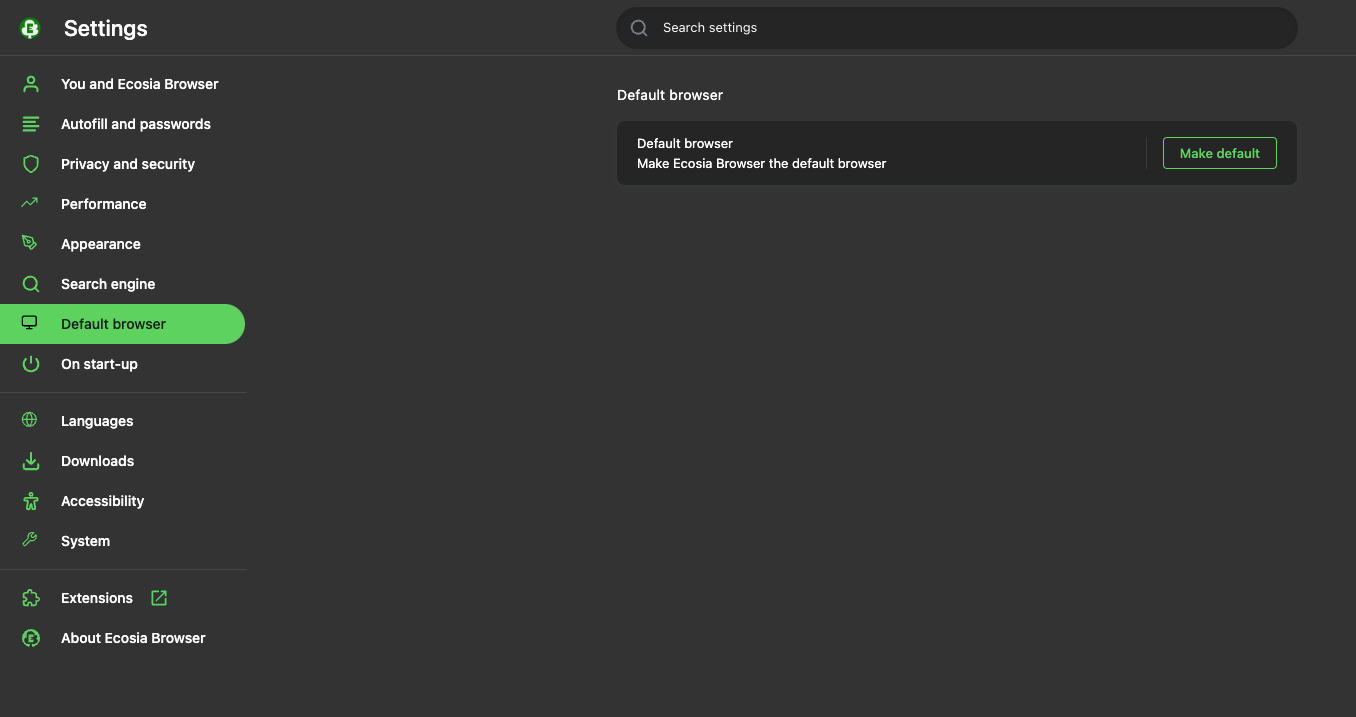
Berlin-based Ecosia has released a Linux version of its browser, tying the launch directly to Europe’s aspiration to lessen its dependence on American technology giants. The company is counting above all on developers and users for whom privacy, open platforms, and Europe’s digital sovereignty carry weight.
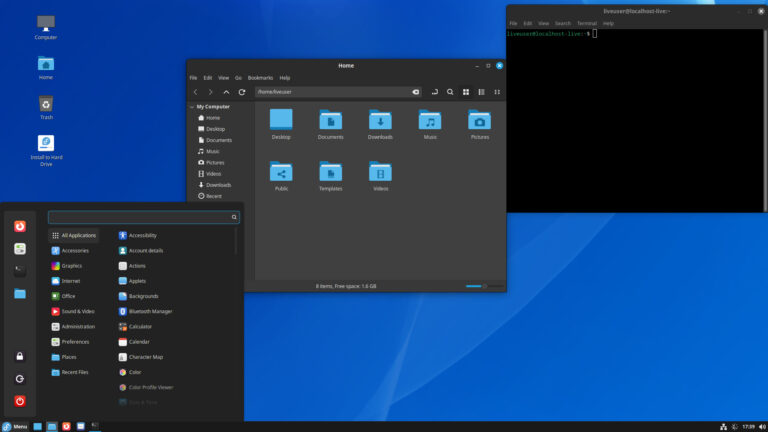
Ecosia explains the timing by the swift growth of Linux on European computers. By the statistics the company cites, Linux’s share in the European Union rose from 2.5% in 2024 to 5.7% in 2025, while Windows’s share over the same span contracted from 80.2% to 74.2%. By September 2026, Linux already occupied roughly 6.4% of the European desktop and console market.
A Browser Aligned with European Values
Ecosia’s founder and chief executive, Christian Kroll, called Linux users a community that has long championed privacy, sustainable technology, and digital independence. The new version, in Kroll’s words, is meant to give them a browser and search engine faithful to such principles and free of the “tech-bro monopolies.”
Technically, however, Ecosia’s independence from the American ecosystem remains limited for now. The browser is built on Chromium, the open-source project underpinning Google Chrome, Microsoft Edge, and a host of others. The Ecosia Browser itself, meanwhile, is distributed under a proprietary license, meaning its developers have not released the full source code.
Independence at a Different Level
The company is wagering above all on a different order of independence. The Ecosia Browser embeds its own search by default, and among its privacy features are ad and tracker blocking, protection against fingerprinting, and the automatic rejection of non-essential cookies. Ecosia maintains that it does not build advertising profiles from search history without the user’s consent, though a portion of queries is still handled by Google and Microsoft Bing.
Gradually, the company is striving to shed even that dependence. In 2024, Ecosia joined with the French firm Qwant to create the European Search Perspective, and in the summer of 2025 the partners launched their own search index. At first the new index’s results appeared for Ecosia users in France, and later the project began expanding to other European markets. Even so, Ecosia itself still continues to blend EUSP results with the output of Google and Bing.
Regulators Press to Narrow Google’s Advantage
European regulators are simultaneously endeavoring to curb Google’s advantage at the level of data. In July 2026, the European Commission adopted binding measures under the Digital Markets Act, requiring Google to furnish suitable competitors with anonymized information on search queries, clicks, views, and result rankings. The Commission hopes that access to such troves of data will help smaller search engines refine their own algorithms and compete with Google Search.
The Linux version of the Ecosia Browser is available through the Ubuntu App Center and the Snap Store. The browser is also released for Windows, macOS, Android, and iOS. The new release, then, expands the European alternative ecosystem rather than wholly severing ties with American technology. Ecosia already commands its own interface, part of its search infrastructure, and its data-handling policy; yet the Chromium engine and its search partners, Google and Microsoft, remain, for the present, part of the product.
Support Our Threat Intelligence
If you find our technology report and cybersecurity news helpful, consider supporting our work.
 Buy Me a Coffee
PayPal
Buy Me a Coffee
PayPal