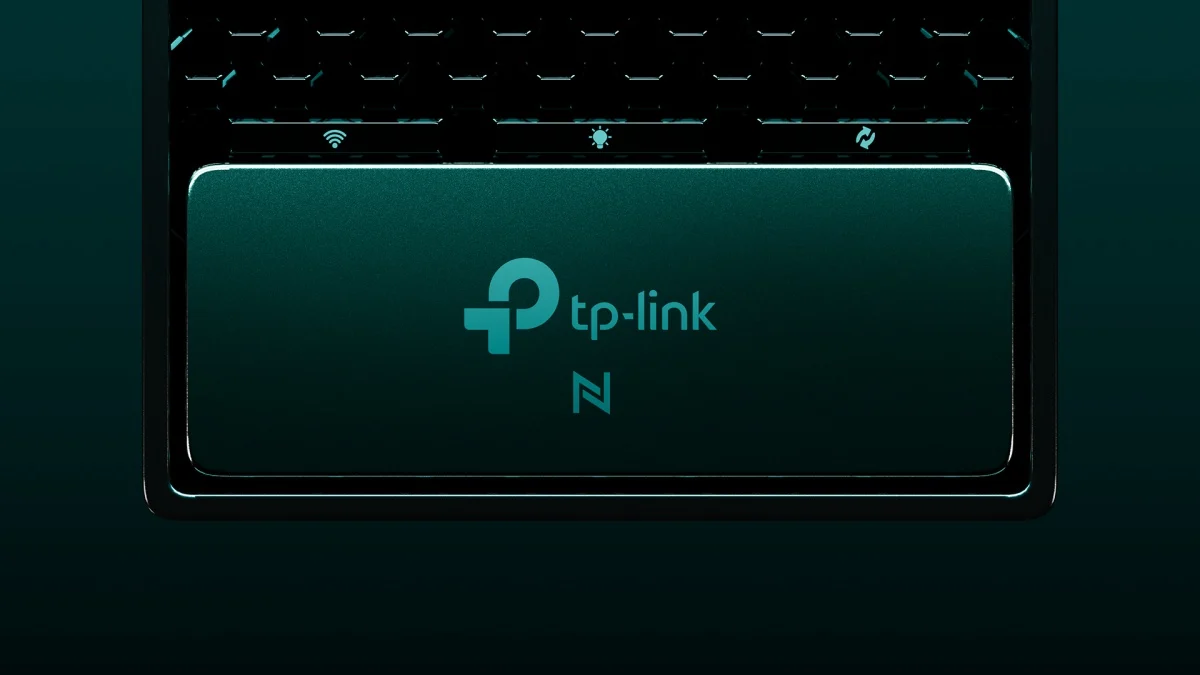
Although the official Wi-Fi 8 standard remains unfinalized, TP-Link has preemptively unveiled its inaugural Wi-Fi 8 router, the Archer 8. Furthermore, the firm plans to introduce this hardware to the market in October of this year. Remarkably, this commercial release precedes the official ratification of the Wi-Fi 8 standard—slated for March 2028—by nearly two years.
Nevertheless, TP-Link clarified that regional rollouts for the Wi-Fi 8-compliant Archer 8 will fluctuate significantly. Most notably, the device faces an imminent embargo in the United States. Because of its inclusion on the FCC blacklist, domestic sales will remain completely frozen for the foreseeable future.
While the global tech sector is still aggressively proliferating Wi-Fi 7 infrastructure, TP-Link has adopted a hyper-proactive posture. By previewing a next-generation router two years ahead of schedule, the enterprise sparks a fascinating debate. Is this a genuine effort to redefine residential networking architectures, or is it merely a calculated marketing maneuver? Time will invariably reveal the truth.
Beyond the October debut of the Archer 8, TP-Link intends to diversify its next-generation portfolio extensively. For example, the enterprise will introduce the mainstream Deco 8 framework during the first quarter of 2027. Subsequently, the travel-optimized Roam 8 mobile hotspot will debut in the second quarter of 2027. Concurrently, complementary Wi-Fi 8 range extenders and auxiliary hardware components will arrive during that same quarter.
Preemptive Standardization Strategy: Wi-Fi 8 Prioritizes Synergy Over Speed
Explaining the rationale behind this accelerated deployment, TP-Link President Jeff Barney noted that the Archer 8 addresses pervasive consumer friction. These issues include volatile throughput speeds and network congestion caused by simultaneous device connections. Additionally, the device targets the troublesome latency that plagues gaming, video teleconferencing, and high-definition streaming.
Barney emphasized that modern consumers fundamentally crave operational consistency. Consequently, the Archer 8 is precisely engineered to deliver reduced latency and superior performance amidst electromagnetic interference. Ultimately, this approach secures a highly stable connection within real-world environments.
Internal empirical trials simulating actual domestic environments reveal that early Wi-Fi 8 implementations outperform existing Wi-Fi 7 frameworks. Specifically, the testing metrics demonstrate several key operational thresholds:
Performance Comparison Matrix
| Operational Benchmark | Performance Improvement Over Wi-Fi 7 |
| Long-Range Data Throughput | 33% Velocity Optimization |
| Multi-Level Structural Penetration | 30% Singular Device Improvement |
| High-Density Multi-Device Load | 10% to 20% Capacity Optimization |
Consequently, TP-Link asserts that Wi-Fi 8 guarantees a more stable, expansive, and low-latency networking experience. This stability persists seamlessly even as users traverse their residences with numerous active devices.
Geopolitical Encroachment: The Shadow of National Security Sanctions
Although originally established in Shenzhen, the corporate entity serving the US market underwent a profound structural divestment in 2022. Today, it possesses entirely distinct ownership, localized leadership, and independent operational models. Headquartered in Irvine, California, the organization currently manufactures its US-designated hardware line exclusively within Vietnam.
Nevertheless, the FCC maintains a highly adversarial stance. The agency asserts that consumer-grade routers manufactured outside domestic borders present systemic national security vulnerabilities. Furthermore, federal regulators harbor deep apprehensions regarding lingering, post-split communications with the original Chinese entity. As a result, the FCC has placed TP-Link upon its restrictive embargo checklist.
Pre-approved legacy routers can still retail within the United States. However, the embargo strictly prohibits the sale of any newly engineered hardware models.
To restore its retail footprint within the United States, TP-Link may need to relocate its manufacturing infrastructure from Vietnam to domestic shores. This complex operational shift would mimic the conditional compliance pathway pioneered by Netgear. However, this transition will inevitably inflate production overhead. Ultimately, the corporation may be forced to pass these Expenditures onto the consumer market.
Support Our Threat Intelligence
If you find our technology report and cybersecurity news helpful, consider supporting our work.
 Buy Me a Coffee
PayPal
Buy Me a Coffee
PayPal