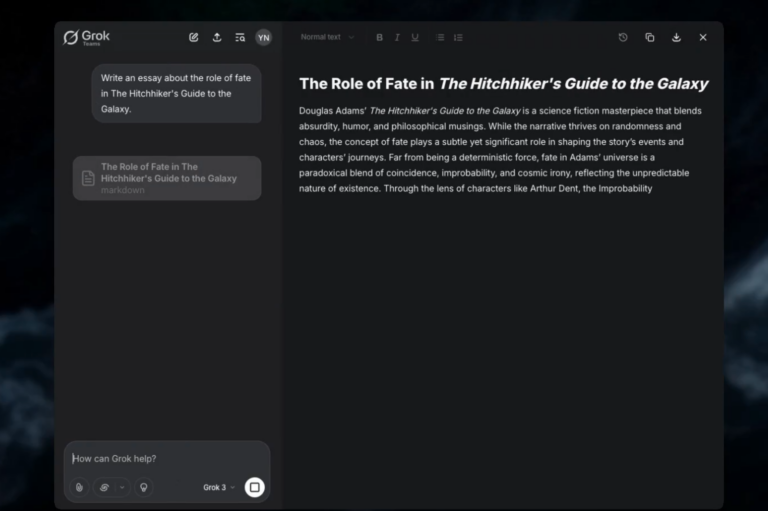
Since the meteoric ascension of generative artificial intelligence, major social media platforms have been profoundly besieged by an inundation of “AI slop,” with LinkedIn—the preeminent bastion of professional networking—emerging as a prime casualty. To salvage its deteriorating content fidelity and user experience, LinkedIn recently announced a definitive suite of counter-measures designed to drastically curtail the algorithmic distribution of low-quality, derivative publications bearing conspicuous signatures of automated generation.
Moving forward, content adjudicated by the system to be “templated prose” will be summarily disenfranchised from the algorithmic recommendation index, restricted exclusively to the feed architectures of the author’s immediate connections and direct followers.
For regular patrons navigating the LinkedIn ecosystem, the presence of vacuous, formulaic AI publications has become an all-too-familiar spectacle. Laura Lorenzetti, LinkedIn’s Vice President of Product, explicitly articulated in a contemporary corporate dispatch that this algorithmic calibration will selectively target content characterized by a pronounced “absence of authenticity and originality.”
The platform’s compliance mechanisms will rigorously scrutinize posts engineered solely as engagement bait, recycled fragments of superficial professionalism, and comments or articles punctuated by rigid AI syntactic hallmarks—such as the frequent employment of boilerplate rhetorical juxtapositions.
LinkedIn conceded that the low-level technical forensics utilized to detect this AI slop remain proprietary and closely guarded. However, the architecture was developed through a cross-functional alliance of internal engineers and editorial curators, who extracted behavioral patterns from user interactions to distinguish between compositions that yield fresh perspectives, rich context, or genuine expertise, and those that merely regurgitate established paradigms without expanding the intellectual horizon.
Once a publication is flagged as low-fidelity AI content, it forfeits eligibility for amplification across the feeds of non-connected users, though the creator’s immediate circle and subscriber base preserve visibility.
Intriguingly, this crusade against automated text is shot through with subtle institutional irony. As a subsidiary of Microsoft, LinkedIn remains a vanguard in the popularization of generative utilities, going so far as to embed a prominent “Rewrite with AI” affordance directly within its native composition interface.
To avoid open philosophical self-contradiction, LinkedIn meticulously modulated its rhetoric. The corporate statement emphasized that the platform continues to welcome “AI-assisted” literature, provided such works harbor foundational, original thoughts or catalyze substantively meaningful professional discourse.
LinkedIn’s offensive against AI slop represents an entirely predictable, mandatory evolution. Even prior to the contemporary AI renaissance, the platform was notoriously saturated with hyper-curated self-aggrandizement and messages bordering on the industrial. The democratisation of language models merely compressed the capital requirements of producing this digital noise to absolute zero.
Earlier this year, the platform’s constituency was embroiled in a farcical linguistic controversy dubbed the “em dash discourse”—a multi-week debate wherein critics weaponized the excessive use of em dashes as an unassailable index of AI authorship, overlooking the historical reality that the human text corpus used to train these models was simply rich with authors fond of that particular punctuation.
LinkedIn’s intervention perfectly encapsulates the existential crisis plaguing content aggregators in the AI epoch: when synthesized text approaches absolute abundance, human experience and singular, idiosyncratic insight become the ultimate scarcity. Relying exclusively on algorithms to churn out soulless corporate aphorisms may yield transient, superficial engagement metrics; over a protracted horizon, however, such vanity will be mercilessly purged by the combined forces of algorithmic refinement and consumer fatigue.
Initial internal evaluations of these new filters are reported to be highly encouraging, with expectations that the visibility of AI slop will degrade precipitously over the forthcoming weeks—a development that offers welcome sanctuary to professionals exhausted by automated monotony.
Support Our Threat Intelligence
If you find our technology report and cybersecurity news helpful, consider supporting our work.
 Buy Me a Coffee
PayPal
Buy Me a Coffee
PayPal