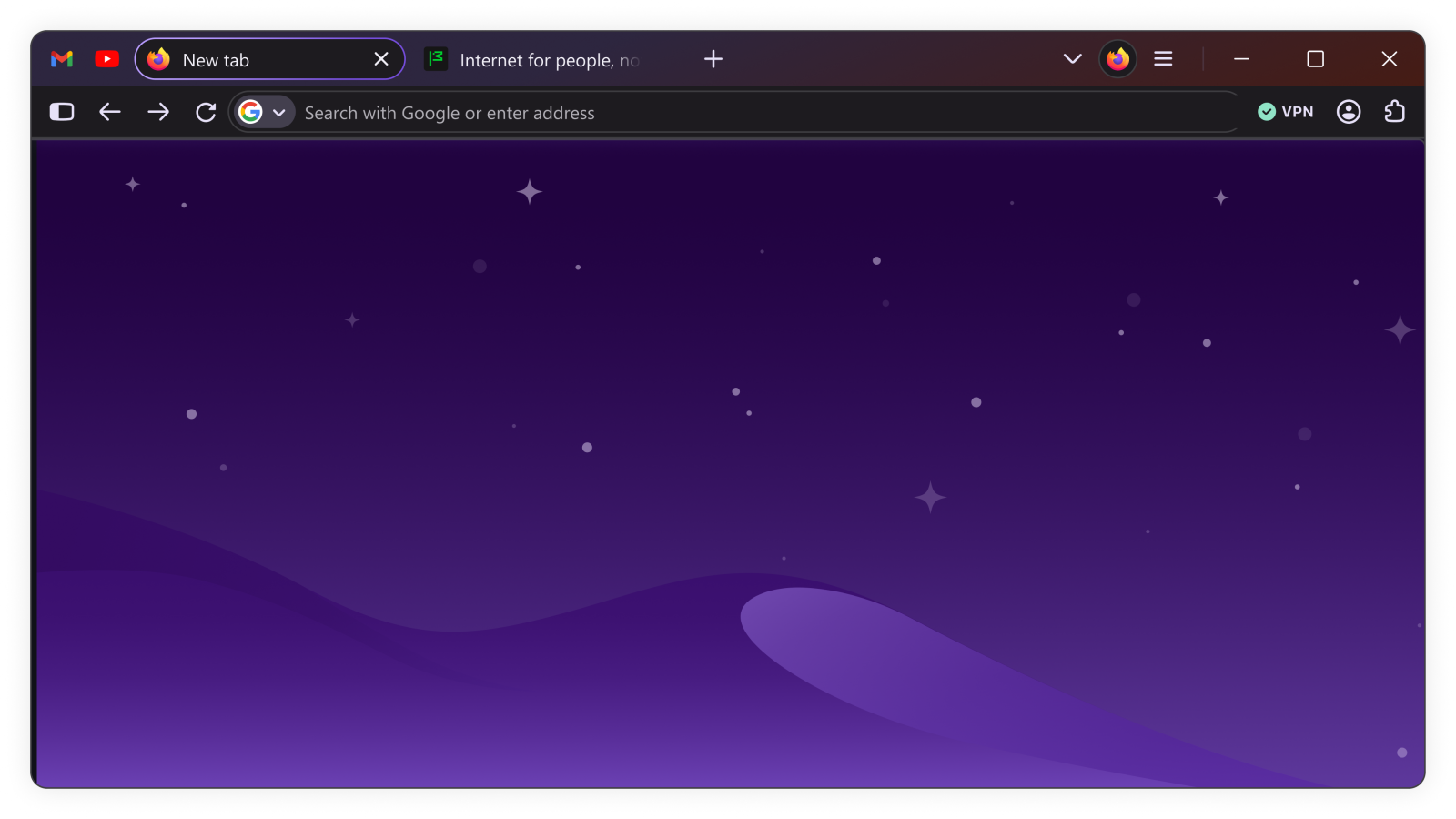
The Mozilla Foundation has initiated active testing of its highly anticipated 2026 architectural redesign, structurally indexed as Project Nova, within the cutting-edge Firefox Nightly build ecosystem. Following the finalization of this comprehensive validation cycle, the organization plans to orchestrate a global production rollout to its entire constituency later this fiscal year. Mozilla characterizes this fundamental aesthetic overhaul as an evolutionary refinement rather than a generic replacement, meticulously engineered to harmonize with the accelerating velocity of the modern web and satisfy contemporary consumer expectations for sophisticated browser environments.
The Reconfigured Visual Interface
Project Nova introduces fluid, rounded tab structures, refined iconography, and a welcoming, warm color palette subtly inspired by combustion dynamics. The driving design philosophy aims to project a modern aesthetic while systematically minimizing cognitive friction and user distraction; consequently, peripheral interface elements—encompassing menus, panels, and interactive control surfaces—are undergoing rigorous standardization to ensure a completely unified visual signature across desktop and mobile form factors.
The configuration environment has been heavily prioritized, specifically transforming privacy control sub-systems into intuitive, easily managed structures. Users can leverage dedicated kill-switches to categorically neutralize all integrated artificial intelligence subroutines, while the Enhanced Tracking Protection (ETP) matrix has been recalibrated to offer a highly transparent, unambiguous choice between absolute data privacy and raw functional accessibility.
Personalization remains a foundational tenant of the Firefox identity. Building upon this heritage, the foundation intends to introduce an expansive registry of creative themes and high-definition canvas backdrops; over an extended horizon, engineering cells will explore advanced, low-level bespoke customization options, empowering users to thoroughly articulate the exact interface layout they desire.
Optimization of the Runtime Architecture
Acknowledging that Firefox has historically encountered performance deficits when benchmarked against Google Chrome, site reliability engineers have prioritized substantial underlying performance optimizations within the Project Nova initiative. The Mozilla Foundation states that users will experience a tangible acceleration in transactional velocity, exemplified by a 9% reduction in initial content rendering latency across high-frequency landing zones. Furthermore, the native, integrated ad-blocking and anti-tracking daemons function synergistically to not only insulate the local environment against privacy erosion but to drastically accelerate network page-load throughput by discarding bloated advertising payloads at the threshold.
Operational Methodology for Initializing Project Nova
The mandatory prerequisite for evaluating these visual innovations requires the installation of the absolute latest iteration of the Firefox Nightly development track. Once installed, the advanced Project Nova parameter must be explicitly activated within the low-level configuration editor; this interface flag remains entirely absent or functionally non-operational within standard production releases of the browser.
Upon initializing the Nightly environment, navigate to the unified resource locator (URL) bar, input the administrative directive about:config, and engage the carriage return. Within the resulting high-privilege configuration console, search for the specific preference string browser.nova.enabled, and toggle its baseline Boolean parameter from its default state of False to True to instantiate the updated browser environment.
Support Our Threat Intelligence
If you find our technology report and cybersecurity news helpful, consider supporting our work.
 Buy Me a Coffee
PayPal
Buy Me a Coffee
PayPal