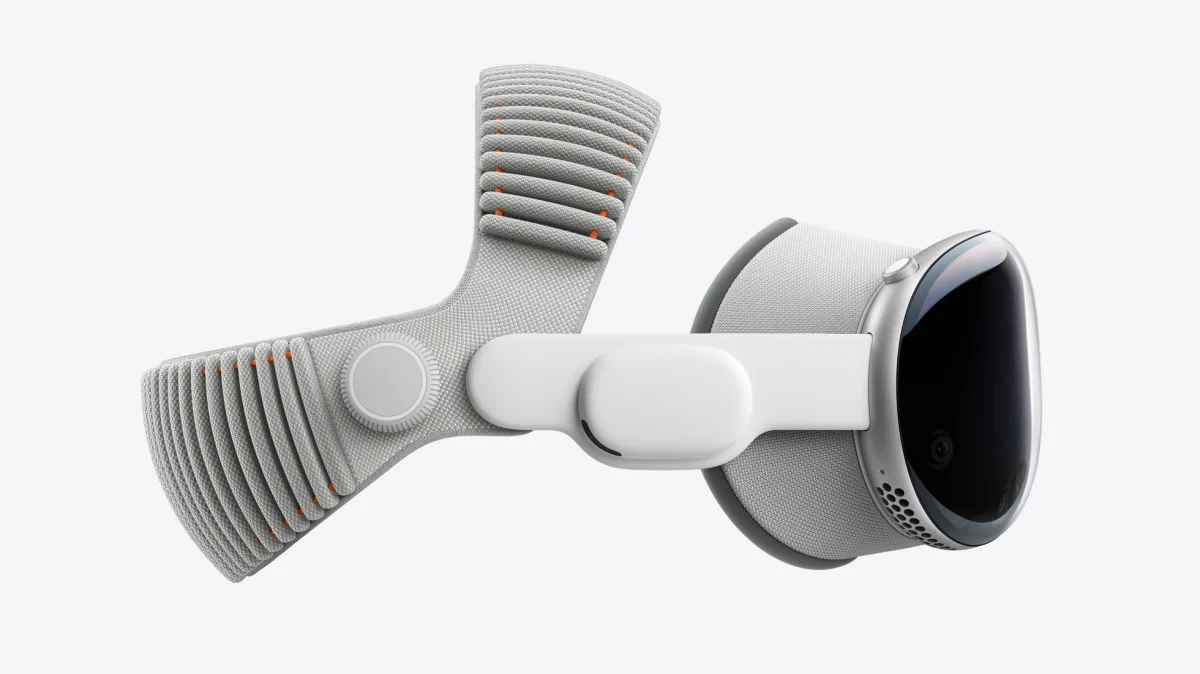
Recently, as Meta spectacularly dominated the Connect 2026 conference with their lightweight, $1300 “Meta VR Glasses,” a massive wave of skepticism resurged regarding Apple’s market performance with the Vision Pro product line. However, an insightful analysis by AppleInsider columnist Wesley Hilliard suggests that interpreting Apple’s multitude of shelved or canceled headset prototypes as evidence of “developmental chaos and failure” represents a fundamental misunderstanding of the company’s core philosophy. Specifically, how Apple Vision Pro’s development graveyard exemplifies Apple’s 1000 no’s to every yes.
The Abandoned Prototypes Within Apple’s Laboratories
The report illuminates three distinct development initiatives widely discussed internally at Apple, which have now ostensibly entered the “prototype graveyard” or suffered significant developmental stagnation:
- Project N107: A design conceptually mirroring XREAL glasses, completely offloading the computational core to an external Mac or iPhone. While this achieved profound portability, it required a catastrophic sacrifice in visual fidelity.
- Project N100 (Vision Air): An endeavor attempting to migrate the computational core into an external battery module, thereby alleviating the physical weight of a closed VR headset.
- Project N109: Initially positioned as an affordable, lightweight iteration equipped with an inferior processing chip. (Curiously, recent code analysis suggests Apple might still be testing a novel LiDAR sensor within this framework).
Numerous analysts interpret the failure to rapidly launch these products as definitive proof of Apple losing its strategic direction in the wearable device sector. Conversely, AppleInsider argues that Apple’s hesitation to release these compromised versions stems directly from their absolute refusal to sacrifice the Vision Pro’s vaunted ultra-high resolution and expansive field-of-view merely to appease the singular metrics of “lightweight” and “low-cost.”
The Genuine Successor Remains in Incubation
Despite rampant market rumors suggesting the Vision Pro team has been “frozen,” insider knowledge indicates that Apple is aggressively pursuing the development of a true successor, internally designated as N224. This paramount project is currently undergoing rigorous testing across multiple form factors. Intriguingly, this even includes evaluating an external computational module design conceptually analogous to the new Meta VR Glasses.
The report emphatically asserts that Apple has not blindly pivoted its strategy. Instead, the corporation has chosen to wait patiently for supply chain technological advancements to genuinely align with their uncompromising vision for the next generation of spatial computing hardware.
Perfectionism Versus Pragmatism: The Lingering Battle
Meta has unequivocally chosen the path of “pragmatic iteration.” While the Meta VR Glasses are demonstrably inferior to the Vision Pro regarding specifications, field of view, and light-blocking efficacy, their $1300 price tag and astonishing 100-gram weight successfully position them as a product the masses can simultaneously afford and comfortably wear for extended periods. In stark contrast, Apple exhibits an extreme brand of “perfectionism.” They would rather condemn prototypes that compromise on existing technology (such as the N107 and N109) to the darkest corners of their laboratories than launch a diluted, half-baked experience.
It is remarkably easy to criticize Apple for reacting too slowly. Yet, a retrospective glance at history reveals that during the nascent developmental stages of the iPhone and the Apple Watch, Apple similarly suffocated countless internal projects deemed insufficiently perfect. The true, existential challenge facing the Vision Pro was never the abandoned prototypes languishing in labs; rather, it is the exorbitant initial retail price and the conspicuously impoverished developer ecosystem.
Meta has undeniably seized the early initiative by delivering affordable and lightweight hardware. However, it remains an undeniable fact that the astronomical standards and intuitive interface logic established by Apple’s Vision Pro continue to serve as the ultimate paradigm the entire industry desperately attempts to emulate. This monumental struggle between pragmatic execution and unyielding perfectionism will not crown a definitive victor until Apple finally unveils its next-generation flagship device.
Support Our Threat Intelligence
If you find our technology report and cybersecurity news helpful, consider supporting our work.
 Buy Me a Coffee
PayPal
Buy Me a Coffee
PayPal