Architectural Evolution of Claude Opus 4.8
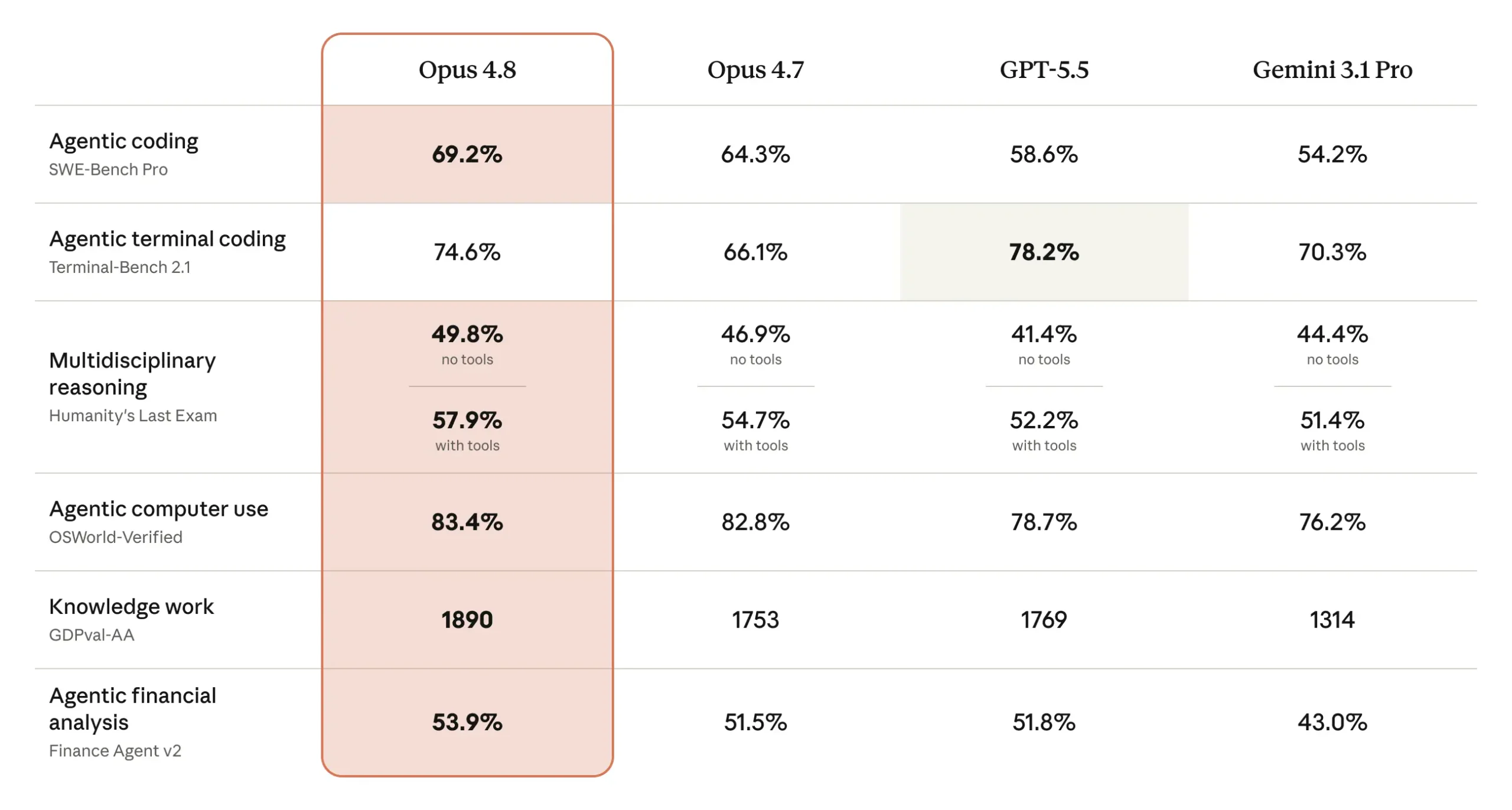
Anthropic recently initialized the deployment of Claude Opus 4.8. Crucially, internal benchmark testing reveals a profound elevation in software engineering accuracy. Specifically, the model overlooks codebase defects four times less frequently than its predecessor. Consequently, this update replaces the legacy Opus 4.7 architecture entirely.
Enhanced Cognitive Verifications
Furthermore, the system demonstrates superior efficacy across prolonged cognitive workflows. The architecture explicitly excels at complex programming sequences and automated tool manipulation. Additionally, early evaluation cohorts noted several key behavioral refinements. For instance, the agent frequently articulates analytical uncertainty. Moreover, the model swiftly isolates malformed parameters within incoming datasets. As a result, it rarely issues unsubstantiated claims regarding completed tasks.
Adaptive Compute Allocation Matrix
Concurrently, the organization introduced advanced response depth controls within the web ecosystem. Through this framework, operators can meticulously govern computational resource consumption. Predictably, lower energy configurations accelerate output velocity while preserving operational quotas. Conversely, elevated computing tiers optimize the environment for deep analytical workflows.
Tiered Execution Modes
By default, Opus 4.8 utilizes the high-effort computing matrix. Additionally, Anthropic provisions specialized “extra” and “max” execution modes for exceptionally labyrinthine problems. Therefore, technical cells can seamlessly tailor raw processing power to project complexity.
Dynamic Workflows and Parallel Agent Orchestration
Simultaneously, the developer ecosystem welcomes the inclusion of Dynamic Workflows inside Claude Code. This capability currently operates within a restricted research preview window. Fundamentally, the mechanism empowers the core engine to deconstruct macro objectives into granular micro-tasks. Subsequently, the system instantiates hundreds of parallel sub-agents within a singular session. Finally, the main orchestrator meticulously audits the aggregated output.
Enterprise Infrastructure Scalability
To illustrate, Anthropic highlights the migration of massive enterprise code repositories. In this scenario, Claude Code seamlessly refactors hundreds of thousands of lines of syntax. Moreover, the platform continuously references existing test suites prior to delivering final code. Currently, this feature remains restricted to Enterprise, Team, and Max subscription tiers.
Developer API Enhancements and Cost Efficiencies
In-Stream System Instructions
Additionally, software engineers gain access to a critical structural modification within the Messages API. Specifically, the interface now ingests system instructions directly inside the primary messages array. Consequently, administrators can dynamically alter runtime permissions and token limits. Furthermore, technicians modify environment telemetry without triggering cache resets or spoofing user inputs.
Pricing Parameters and Throughput Velocity
Presently, developers can access the architecture via the specialized claude-opus-4-8 identifier. Readily, baseline computational costs remain identical to legacy models. The tier demands five dollars per million input tokens and twenty-five dollars per million output tokens.
Alternatively, an accelerated high-throughput mode operates two and a half times faster. This premier matrix costs ten dollars for input and fifty dollars for output. Importantly, Anthropic asserts this premium velocity reflects a threefold cost reduction compared to ancestral equivalents.
The Mythos Frontier and Project Glasswing
Looking forward, Anthropic disclosed strategic plans for its impending Mythos model class. Currently, a restricted circle of sovereign institutions is auditing Claude Mythos Preview. Specifically, these entities leverage the system for defensive cybersecurity operations under Project Glasswing.
Evidently, the enterprise maintains tight restrictions on this model due to systemic digital hazards. Readily, Anthropic expects to distribute the Mythos architecture universally in the coming weeks. This deployment will execute immediately upon the finalization of hardened safety perimeters.
Support Our Threat Intelligence
If you find our technology report and cybersecurity news helpful, consider supporting our work.
 Buy Me a Coffee
PayPal
Buy Me a Coffee
PayPal