Microsoft recently transformed its Surface hardware stage in New York into a grand showcase for autonomous intelligence. During the gathering, leaders proclaimed that Windows will serve as the premier home for autonomous AI agents. To realize this grand ambition, Microsoft introduced the concept of Hybrid Intelligence. This paradigm pairs immense cloud resources directly with potent on-device processing. In addition, the company unveiled Microsoft Execution Containers to safeguard these autonomous workflows.
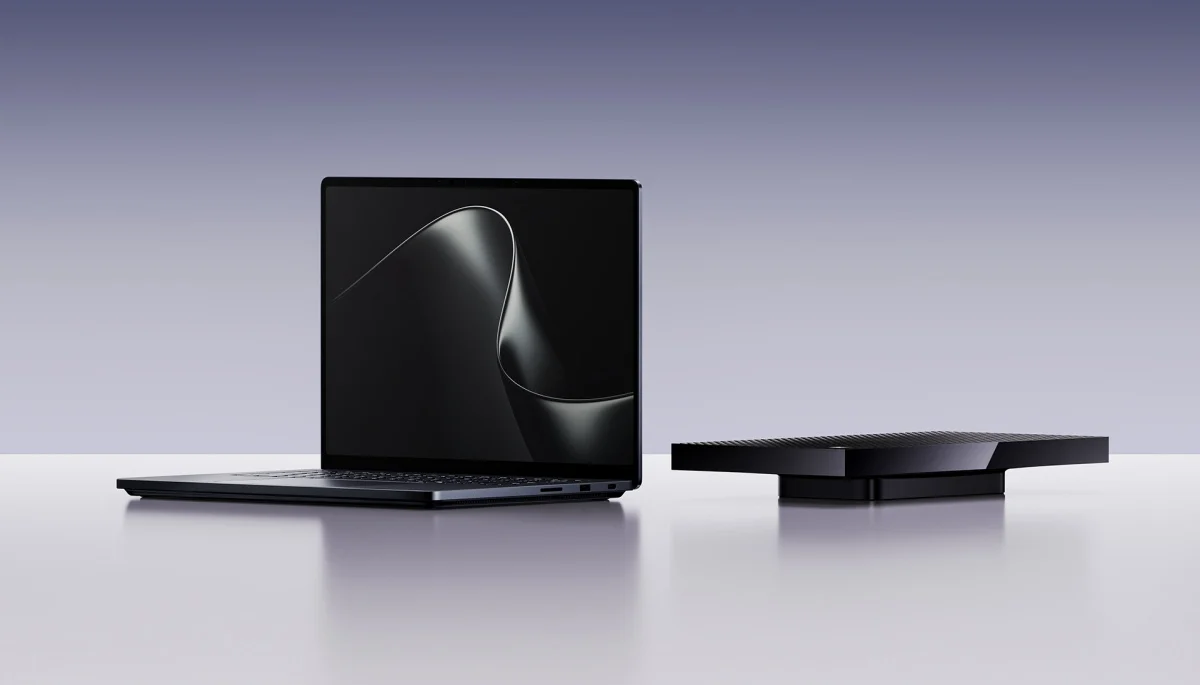
The pinnacle of the assembly arrived with Microsoft’s first builder-class hardware for researchers and developers. Specifically, the engineering team revealed the Surface Laptop Ultra alongside the desktop Surface RTX Spark Dev Box. Both flagship systems utilize the formidable NVIDIA RTX Spark computing platform.
Architecting Hybrid Intelligence for Autonomous Agents
Modern artificial intelligence often stumbles against the steep latencies and escalating costs of pure cloud infrastructure. Therefore, the Hybrid Intelligence framework brings frontier local models and sandboxed tools directly into Windows. This architectural shift grants creators swift responsiveness without constant reliance on remote servers.
However, background autonomous agents can present distinct security concerns for corporate networks. To resolve this challenge, Microsoft introduced Microsoft Execution Containers, abbreviated as MXC. This novel container technology allows system administrators to define strict boundaries for agent actions. Consequently, an autonomous agent operates securely inside an isolated sandbox without endangering system integrity.
Furthermore, Microsoft revealed MAI-Code-1.1-Flash, a compact model optimized for rapid local programming assistance. This model employs sophisticated 3-bit quantization to shrink its memory footprint dramatically. Nevertheless, it preserves a wide 256K context window alongside outstanding algorithmic precision. The model boosts computational efficiency by 25% while slashing execution expenses to a quarter of prior baselines. As a result, tools like GitHub Copilot execute smoothly on client PCs with zero inference fees.
Additionally, Microsoft emphasized that frontier models thrive within this modernized Windows environment. Frameworks such as NVIDIA Nemotron, DeepSeek V4 Flash, and Windows ML run natively without friction. Developers can thus deploy diverse open-source architectures with absolute confidence.
Surface Laptop Ultra: The Zenith of Mobile AI Power
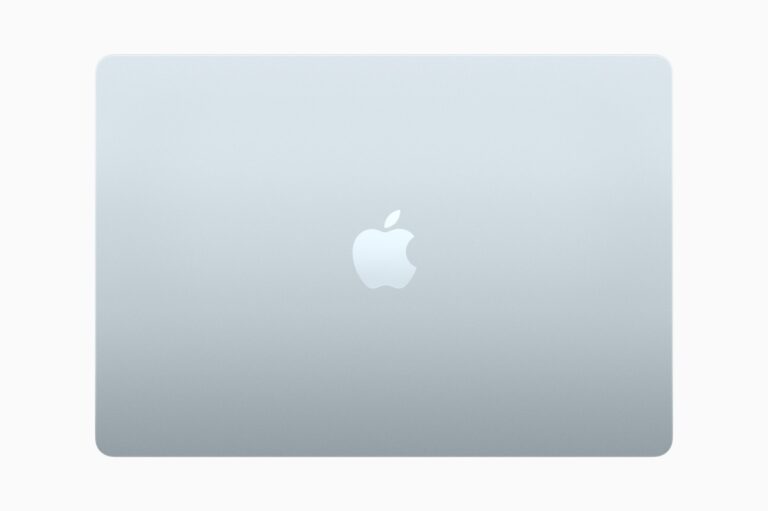
To anchor these demanding computational workloads, Microsoft presented the magnificent Surface Laptop Ultra. Executives heralded the machine as the most capable instrument in the history of the Surface line. Instead of relying on legacy mobile chips, it incorporates the custom NVIDIA RTX Spark processor. This platform blends high-throughput Blackwell graphics silicon with efficient Grace processor cores.
Moreover, the laptop supports up to 128GB of unified memory and delivers one Petaflop of AI throughput. Because of this massive bandwidth, developers can run large models exceeding 120 billion parameters locally. Users command staggering computational velocity right from their desks or travel bags.
Brilliant Display and Advanced Thermal Architecture
Visual brilliance matches this internal potency across every dimension. The machine features a striking 15-inch Mini-LED PixelSense Ultra touchscreen with a 3:2 aspect ratio. Furthermore, the panel achieves an extraordinary peak brightness of 2000 nits. Such luminosity delivers vivid fidelity for intricate visual workflows and creative production.
To manage intense internal thermal output, Microsoft crafted an entirely new cooling assembly. Consequently, heat dissipation improves by 2.5 times compared to earlier Surface notebooks. The system maintains 99% of its maximum processing throughput even while running on battery power.
Refined Chassis and Seamless Magnetic Connect
The exterior chassis features premium aluminum with a slender profile of only 18 millimeters. Despite its immense capability, the notebook weighs a manageable 4.5 pounds. In addition, an accessible bay enables users to replace the internal solid-state drive effortlessly. Physical connectivity is equally generous, providing USB-C, USB-A, HDMI, a 3.5mm audio port, and an SD card reader.
Most notably, Microsoft debuted an interface termed Magnetic Connect. This versatile connector unites effortless breakaway magnetic charging with ultra-fast data transfer. The Surface Laptop Ultra arrives in Platinum and Nightfall finishes. Pre-orders are currently open starting at $2,599, with retail availability slated for October 16.
Surface RTX Spark Dev Box and an Expanding Ecosystem
For dedicated technical teams seeking desktop stability, Microsoft unveiled the Surface RTX Spark Dev Box. This compact desktop unit also features the NVIDIA RTX Spark compute platform. It delivers one Petaflop of AI capability paired with up to 128GB of unified memory. Thus, developers obtain a personal AI supercomputer without burdening remote cloud budgets. The Dev Box retails at $5,999 in the United States, with shipments commencing in November.
Meanwhile, Microsoft is actively broadening the wider RTX Spark hardware landscape. The company announced strategic alliances with ASUS, MSI, Dell, HP, and Lenovo to manufacture high-end laptops. In addition, Acer confirmed at IFA 2026 that it will release an RTX Spark set-top device. Finally, the DGX Station for Windows will soon arrive on retail shelves, providing immense on-device power for native Windows creators.
Support Our Threat Intelligence
If you find our technology report and cybersecurity news helpful, consider supporting our work.
 Buy Me a Coffee
PayPal
Buy Me a Coffee
PayPal