The fervor surrounding meme-stock phenomena and atypical commercial maneuvers has seemingly permeated the corporate theater of Wall Street’s mergers and acquisitions. Following a staggering $56 billion “David and Goliath” bid to acquire the e-commerce titan eBay, GameStop CEO Ryan Cohen responded to skepticism regarding his capital reserves with a theatrical display of absurdity: he inaugurated a storefront on eBay itself, operating under the preposterous slogan, “Selling items on eBay to finance the acquisition of eBay.” This public relations spectacle, which featured the auctioning of premium second-hand hosiery and physical storefront signage, culminated in eBay permanently suspending the “prospective suitor’s” account, citing a “risk to the community’s safety.”
The genesis of this confrontation lies in the profound skepticism voiced by observers regarding GameStop’s recent announcement to acquire eBay. In a defiant—or perhaps derisive—retort, Ryan Cohen declared on the X platform that he was auctioning thirty-six items on eBay to “marshal” the necessary acquisition capital. These offerings included vintage video games, collectible trading cards, life-sized character statues, authentic GameStop storefront signs, and, most controversially, a pair of seemingly well-worn Adidas socks. Driven by the zealous support of retail investors, the bidding for the socks and the signage precipitously eclipsed $14,000 by Thursday morning. To further enhance the allure, Cohen pledged that each artifact would be accompanied by a hand-signed “eBay Acquisition Proposal.”
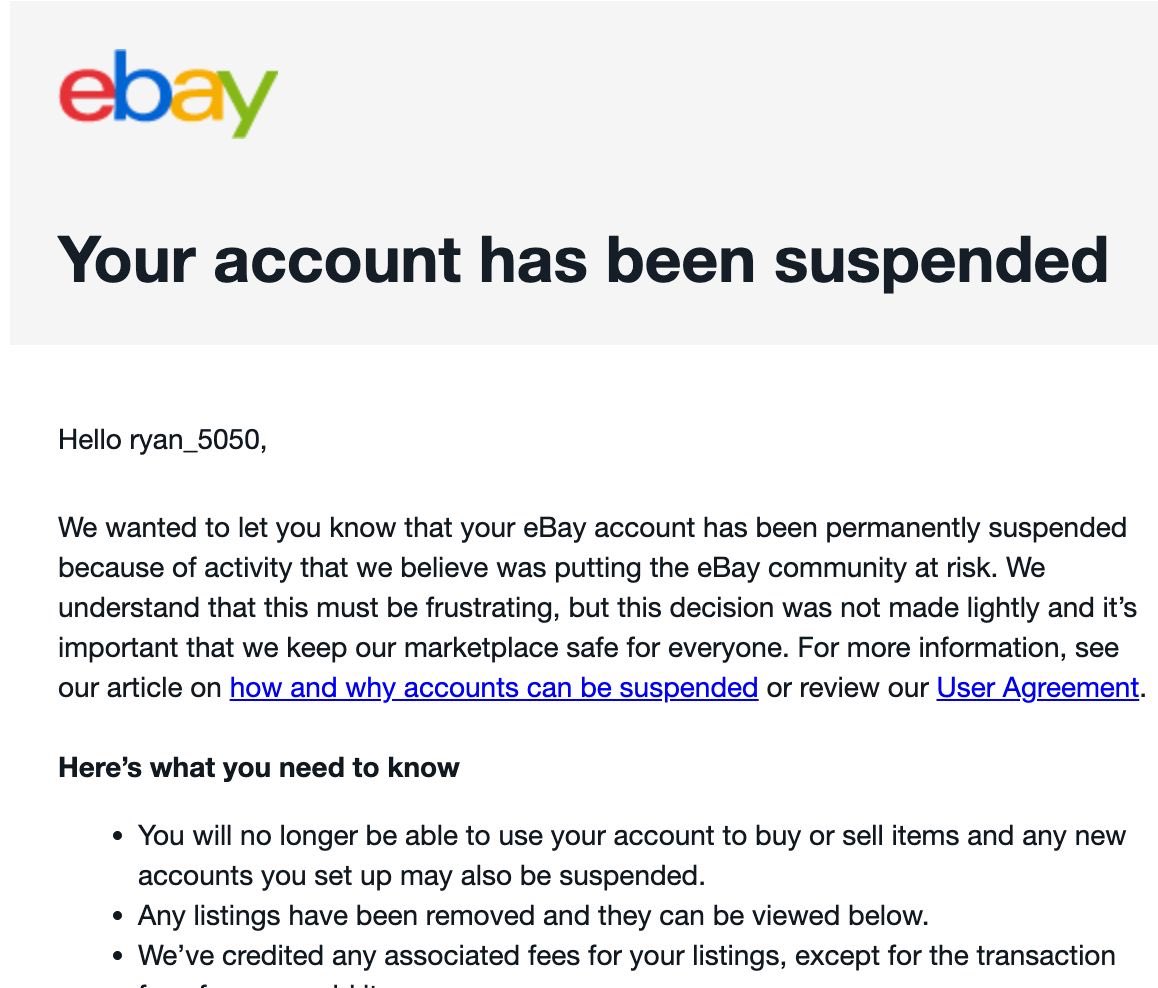
However, eBay’s leadership remained unimpressed by this provocative display of viral marketing. Cohen subsequently shared documentation revealing that his account had been “permanently suspended” within ten hours of his announcement, with eBay asserting that his activities “placed the eBay community at risk.” Paradoxically, despite the suspension, the listings remained visible on the platform through Thursday morning, continuing to solicit bids from the public.
Beyond the performative theatrics, GameStop’s unsolicited proposal possesses a distinct strategic ambition. The firm proposed to acquire eBay at a valuation of $125 per share—a synthesis of cash and equity—totaling approximately $56 billion. Cohen articulated a vision to The Wall Street Journal of merging the two entities to forge a “legitimate competitor capable of truly challenging Amazon.” His blueprint involves repurposing GameStop’s 1,600 physical locations across the United States into specialized centers for eBay’s product authentication and logistics fulfillment. Even more subversive is his proposal to transform these storefronts into “live commerce” studios, enabling sellers to broadcast demonstrations and conduct sales directly from the premises—a hybridization of traditional home shopping with the modern sensibilities of TikTok and Twitch.
Despite the revolutionary nature of Cohen’s vision, Wall Street remains guarded in the face of stark financial realities. GameStop, with a current market capitalization hovering between $11 billion and $12 billion, is attempting to absorb an e-commerce giant valued near $48 billion. Although GameStop claims to have secured a $20 billion debt financing commitment from TD Bank, the substantial capital deficit and the risks associated with extreme leverage continue to alienate professional investors.
The most indicative vote of no confidence came from Michael Burry, the legendary investor immortalized in The Big Short. Once a proponent of GameStop, Burry revealed this week that he had liquidated his entire position in the company, issuing a somber caveat on Substack: “Never confuse debt for creativity.”
Cohen’s latest gambit reaffirms his reputation as a CEO uniquely adept at manipulating the “retail psychological” landscape. Confronted with a financial “mission impossible,” he eschewed traditional numerical defenses in favor of auctioning second-hand socks on his opponent’s own platform. This maneuver effectively diverted scrutiny from GameStop’s fiscal scarcity, recontextualizing a grave corporate merger as an online “meme crusade” against Wall Street elites and the traditional e-commerce establishment. Nevertheless, eBay’s decisive exclusion of Cohen sends a clear signal: established corporations do not intend to indulge in this digital farce. Regardless of how evocative the live-commerce blueprint may be, a $56 billion acquisition ultimately demands tangible cash flow and a resilient financial architecture. With even erstwhile supporters like Michael Burry withdrawing, Cohen must demonstrate that his hand holds more than the faith of millions of netizens and a pair of $14,000 socks.
Support Our Threat Intelligence
If you find our technology report and cybersecurity news helpful, consider supporting our work.
 Buy Me a Coffee
PayPal
Buy Me a Coffee
PayPal