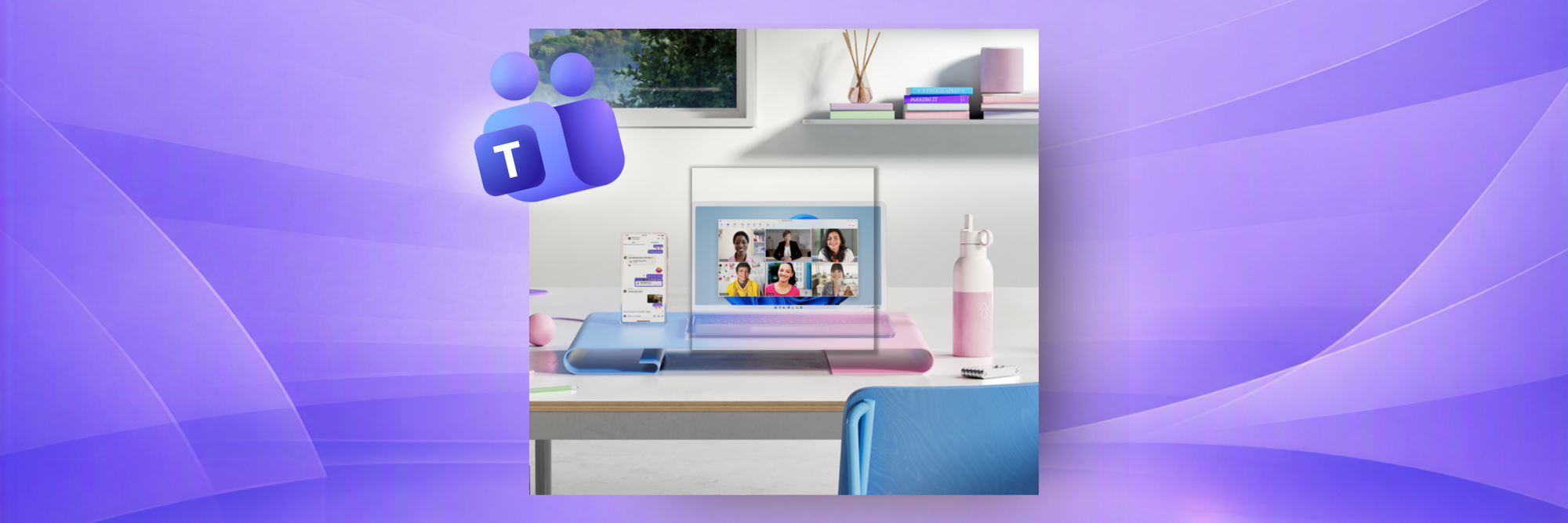
The “Together Mode” feature in Microsoft Teams—conceived during the pandemic to alleviate the isolation of remote work—is formally approaching its twilight. Microsoft has announced plans to progressively deprecate this once-celebrated (and occasionally awkward) virtual amphitheater functionality in forthcoming updates.
Although the AI-driven premise of extracting participants from their backgrounds and superimposing them into a shared virtual environment to “simulate proximity” effectively reduced visual clutter and injected novelty, the normalization of remote work has prompted Microsoft to recalibrate its focus. Development resources will now be redirected toward enhancing video fidelity, fortifying performance stability, and streamlining the user interface.
Microsoft inaugurated “Together Mode” at the zenith of the pandemic in 2020 as an antidote to pervasive video fatigue:
- The Illusion of Spatial Proximity: This utility leveraged artificial intelligence to segment users’ heads and shoulders, arraying them side-by-side within shared virtual architectures, such as auditoriums or cafés. Thus, even if a participant was clad in pajama bottoms at home, the interface projected the illusion of a unified, professional congregation.
- The Tension Between Novelty and Utility: Within this virtual expanse, attendees could engage in whimsical interactions, such as pantomiming a pat on a colleague’s shoulder or executing a virtual high-five, which undeniably mitigated background distractions. Nevertheless, as the initial intrigue waned, many enterprise users increasingly perceived the design as superfluous, ostentatious, and occasionally cringe-inducing.
According to Microsoft’s official schedule, the deprecation sequence will commence in early June and reach global culmination across all versions by the end of the month:
- Simultaneous Retirement of Associated Utilities: Upon deployment of the update, the “Together Mode” toggle will be permanently excised from the Teams view menu. Concurrently, ancillary features such as custom Scenes and Seat Assignments will also be abolished.
- The Ascendancy of Gallery View: Moving forward, Teams will enshrine the traditional, ubiquitously utilized “Gallery View” as the default layout for multi-participant conventions. Furthermore, Microsoft will omit any backend administrative configurations that would permit the retention or reactivation of Together Mode.
- Refocusing on the Core Experience: Microsoft articulated that the deprecation of this feature not only curtails experiential fragmentation across various platforms but also serves to deliver a simplified interface characterized by fewer options, reduced click paths, and minimal obfuscation. By jettisoning these peripheral functions, Microsoft reclaims engineering capital to invest aggressively in augmenting video clarity, connection stability, and overarching systemic performance.
Support Our Threat Intelligence
If you find our technology report and cybersecurity news helpful, consider supporting our work.
 Buy Me a Coffee
PayPal
Buy Me a Coffee
PayPal