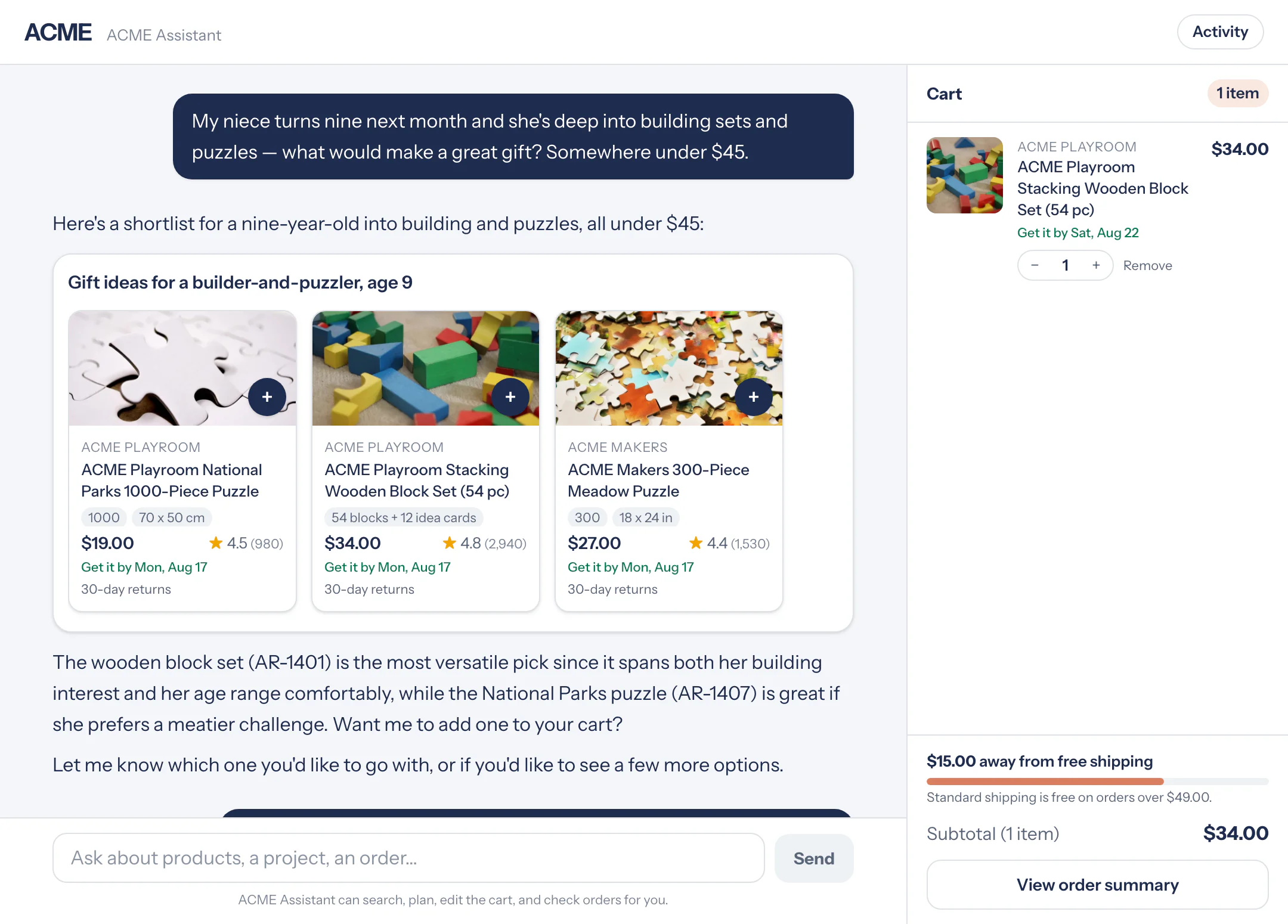
Anthropic has taken another monumental step toward a new digital landscape. In this space, the primary consumer is no longer human, but an artificial intelligence agent. The corporation recently unveiled a comprehensive suite of components for commerce agents powered by Claude. These sophisticated entities seamlessly search for merchandise. They compare available options and analyze the proprietor’s nuanced preferences. Finally, they curate a shopping cart and transmit the finalized order for payment processing. At present, Claude does not directly receive credit card credentials nor autonomously deduct funds. Nevertheless, Anthropic is diligently architecting the infrastructure to facilitate agent-driven transactions through eminent providers such as Visa and Mastercard.
Christened as Claude Commerce Agents, this novel innovation marks a pivotal shift. Anthropic has disseminated the foundational source code and ready-made blueprints tailored for retail, travel, telecommunications, and ticketing sectors. Supplanting the conventional chatbot, merchants can now embed an intelligent operative. A prospective buyer might state a simple requirement. They could request a tent, sleeping bags, and a stove for a weekend excursion with two children. Claude autonomously navigates the expansive catalog, curates a highly compatible ensemble, evaluates alternatives, and assembles the cart with consummate precision.
Navigating the Constraints of Merchant Integration
A profound limitation resides inherently within the term “merchant.” Anthropic does not yet proffer a ubiquitous Claude capable of commandeering a patron’s card and wandering autonomously across disparate websites. The commerce agent operates strictly within the confines of a specific vendor’s application or domain. It integrates intimately with the proprietor’s catalog, shopping cart, historical ledgers, preference databases, and checkout infrastructure.
The architects deliberately sequestered the payment phase entirely outside the model’s purview. Within the published iteration, Claude remains utterly devoid of any function capable of debiting funds or formally placing an order. The agent meticulously orchestrates the cart’s formation. Subsequently, the system presents the consumer with a traditional checkout prompt. Alternatively, it delegates the transaction to an external agentic payment gateway. Anthropic explicitly cautions that the demonstrative code executes no purchases and extracts no capital from any financial instrument.
Fortifying Security and Preventing Fraud
This deliberate bifurcation stems from more than mere prudence. A standard chatbot’s blunder culminates in a spurious response. Conversely, a commerce agent’s error could precipitate unsolicited expenditures amounting to thousands of dollars. Consequently, Anthropic transposes financial safeguards from textual model directives directly into immutable software code. Pricing and merchandise must originate exclusively from the authentic catalog, while server-side constraints govern item quantities. Therefore, the system summarily rejects any identifiers not explicitly granted to the agent during the active session.
A distinct bastion of defense guards against prompt injection vulnerabilities. A seemingly innocuous product description, customer review, or merchant communique could harbor a clandestine command intended for the model. Prior to transmission to Claude, all external text undergoes rigorous purification. The system eradicates control characters, invisible symbols, forged system prompts, and syntactical constructs mimicking tool invocations. Anthropic concedes that a rudimentary directive to ignore extraneous text proves woefully inadequate. Indeed, the fiscal ramifications of a misstep could be irreversible.
Empowering Merchants and Financial Infrastructures
The latter half of the architecture caters not to consumers, but to the mercantile proprietors themselves. A dedicated Merchant Agent scrutinizes sales trajectories, monitors inventory levels, proposes judicious discounts, dynamically adjusts pricing, and orchestrates promotional campaigns. It might astutely discern that a coveted commodity will deplete entirely prior to an impending sale. However, the unveiled framework rigorously demands human corroboration before executing price alterations, replenishing stock, or launching marketing initiatives.
The ensuing logical progression entails eliminating human intervention from the final payment interface altogether. Financial conglomerates are already forging the requisite infrastructure. Visa, for instance, is actively engineering agentic tokens. These instruments empower the AI with discrete, narrowly authorized payment credentials, rather than exposing the raw credit card number. Patrons will possess the capability to restrict the agent’s purchasing power to specified vendors. They can impose rigid monetary ceilings and mandate supplementary authorization for extraordinary transactions.
This paradigm diverges fundamentally from giving Claude a photograph of a debit card. It also eschews relying on a stored number replete with its CVV. The agent merely receives a circumscribed token irrevocably tethered to a specific operational scenario. Concurrently, the overarching payment network meticulously verifies the transaction details. It checks if the merchant and the requested sum align with explicitly granted permissions. Mastercard is cultivating an analogous framework designated as Agent Pay. Anthropic heralds both financial titans as strategic partners in this avant-garde endeavor. However, tangible payment integration remains absent from the current open-source template.
The Psychological Barrier to Autonomous Shopping
The prevailing challenge confronting the entire industry has morphed from a technological hurdle into a psychological barrier. A recent survey conducted by Gartner among American consumers illuminated a stark reality. A mere eleven percent of respondents are prepared to entrust an AI with autonomous product selection. A vastly larger demographic desires to harness neural networks solely for exploratory searches. They want price comparison and assistance whittling down viable options. Crucially, they intend to zealously retain the ultimate purchasing authority.
Anthropic anticipates a profound shift in this sentiment. This will occur as robust constraints, multifactor confirmations, and transparent refund protocols become deeply ingrained. The enterprise already proclaims a significant operational advantage. Vendors deploying Claude commerce agents witnessed cart sizes swell by up to thirty-five percent. Concurrently, the probability of finalizing a purchase escalated dramatically, reaching up to sixty percent. Anthropic has not yet divulged the underlying methodology nor the granular data substantiating these metrics. Consequently, these figures must be construed as corporate assertions rather than the conclusions of independent, rigorous academic scrutiny.
The most complex challenge will inevitably materialize when agents finally secure the unimpeded authorization to transact without recurrent, individualized confirmations. Merchants will face the arduous task of delineating a genuine model hallucination from malicious fraud. They must unequivocally establish liability for purchases that a human patron subsequently decries as unauthorized. Payment networks will be compelled to substantiate the user’s original intent. Meanwhile, agent developers must meticulously archive an exhaustive ledger of permissions and actions. This ensures any contentious transaction can be definitively audited ex post facto.
In essence, Anthropic is forging the foundational architecture to revolutionize the very paradigm of digital commerce. Presently, a website labors to persuade a human to click the “Purchase” button. In the imminent agentic internet, the vendor must instead captivate a software program. This algorithmic entity intimately knows its owner’s budgetary constraints. It flawlessly recalls historical acquisitions and evaluates dozens of competing offers in milliseconds. Furthermore, it never fatigues while parsing complex contractual stipulations. Claude has not yet been issued a physical bank card. Nevertheless, the intricate technological framework empowering AI with the circumscribed authority to disburse a user’s capital is already rapidly coalescing.
Support Our Threat Intelligence
If you find our technology report and cybersecurity news helpful, consider supporting our work.
 Buy Me a Coffee
PayPal
Buy Me a Coffee
PayPal