The monumental alliance of the century between Apple and OpenAI—once envisioned as a synergistic consolidation of titans—appears on the verge of degenerating into an ignominious courtroom confrontation. According to recent dispatches from Bloomberg, the partnership inaugurated in 2024 is approaching a catastrophic fracture, with OpenAI going so far as to retain external legal counsel in preparation for a breach-of-contract lawsuit against the Cupertino-based tech monolith.
As Apple orchestrates a major strategic pivot toward Google, coupled with intensifying rumors of OpenAI’s aggressive incursions into the consumer hardware sector, the geopolitical chess match among artificial intelligence sovereigns is entering a volatile new epoch.
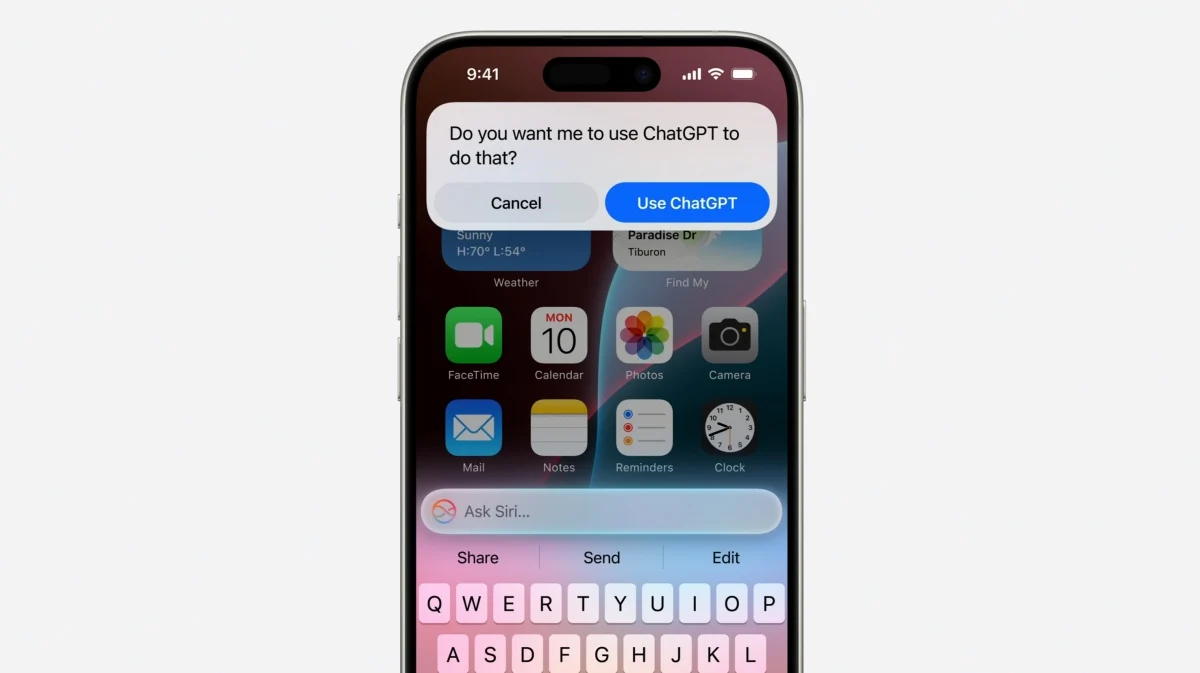
Reflecting upon the WWDC 2024 developer conference, the two entities flamboyantly heralded the deep integration of ChatGPT into the architectures of iOS, iPadOS, and macOS. This comprehensive roadmap encompassed Siri delegations, system-wide text synthesis, and the Image Playground ecosystem, while concurrently enabling iPhone users to purchase ChatGPT premium subscriptions natively within the interface, thus yielding lucrative revenue-sharing dividends for Apple.
At that historical juncture, Apple desperately required a sophisticated AI portfolio to counter the “AI Phone” marketing offensives deployed by Samsung and peripheral adversaries. Concurrently, OpenAI sought to leverage Apple’s installed base of one billion active devices and unparalleled brand equity to diminish its singular, vulnerable dependency on Microsoft’s Azure cloud infrastructure.
Nevertheless, this corporate honeymoon proved exceptionally ephemeral. Following the deployment of these integrated functionalities in the third quarter of 2024, OpenAI discerned that the systemic cohesion fell profoundly short of initial projections. Users were compelled to explicitly invoke ChatGPT within Siri to transition services, while the chatbot window itself was deliberately minimized and its feature set heavily circumscribed—a design choice that drove the vast majority of iPhone owners back to the standalone ChatGPT application.
Consequently, OpenAI alleges that Apple failed to conscientiously propagate Apple Intelligence, thereby denying ChatGPT the exponential usage metrics anticipated from the iPhone’s massive hardware footprint. This perceived failure to deliver on the promised “native system synthesis” has emerged as the definitive catalyst fueling OpenAI’s impending breach-of-contract litigation.
When confronted with OpenAI’s proposal in early 2025 for a “tight integration” that would effectively transform Siri into a ChatGPT proxy, Apple delivered a resounding refusal. The iPhone maker maintained that the two enterprises harbored irreconcilable standards regarding user telemetry privacy and data sovereignty. Furthermore, Apple was deeply averse to contracting an institutional dependence on OpenAI, perceiving the alliance as a mere pawn weaponized by OpenAI to extract superior negotiating leverage from Microsoft.
To break this unilateral dependency, Apple initiated concurrent dialogues with Google and Anthropic in the final quarter of 2025, ultimately cementing a deep-tier harmonization with Google’s Gemini AI models. Presently, Apple has drastically expanded its alliance with Mountain View, configuring the reimagined Siri to operate directly atop the Gemini framework—a maneuver that effectively pronounces the de facto demise of the Apple-OpenAI coalition.
Apple’s unyielding posture has coerced OpenAI into accelerating its mastery over physical hardware gateways. In the third quarter of 2025, OpenAI acquired io, the clandestine hardware start-up orchestrated by Apple’s legendary former Chief Design Officer, Jony Ive. In the subsequent months, the AI vanguard successfully poached multiple core executives from Apple’s hardware engineering division.
The latest market rumors suggest that OpenAI intends to architect its own bespoke, branded smartphone hardware, enabling the enterprise to deliver unconstrained, full-stack AI experiences liberated from the regulatory caprices of platform gatekeepers. This evolution from a pure-play software model architect to an onshored hardware manufacturer is not an isolated phenomenon; throughout 2025 and 2026, a constellation of Silicon Valley AI boutiques alongside Chinese conglomerates like Alibaba and ByteDance have aggressively positioned themselves across the physical spectrum, leveraging venture capital and internal incubation to develop proprietary smartphones, smart rings, and augmented-reality spectacles.
The regression of Apple and OpenAI from a highly publicized alliance to impending litigation perfectly exemplifies the classical maxim: “There are no permanent allies, only permanent interests.” This schism illuminates a brutal reality within the contemporary tech ecosystem: in the AI epoch, possessing the most sophisticated foundation model is of hollow utility if one lacks sovereignty over the physical device gateway, remaining perpetually subservient to the whims of platform proprietors.
Apple’s calculated embrace of Google Gemini represents an inevitable manifestation of its imperative to preserve absolute domain over the iOS ecosystem and its sacrosanct privacy paradigms. Conversely, OpenAI’s clandestine smartphone roadmap signifies an awakening—a realization that relying on external hosts will forever stymie the ultimate manifestation of its artificial intelligence vision. The future battlefield of AI has officially transcended the ethereal realm of cloud computation and algorithmic benchmarks, descending definitively into a visceral struggle for the physical devices resting in the palms of humanity.
Support Our Threat Intelligence
If you find our technology report and cybersecurity news helpful, consider supporting our work.
 Buy Me a Coffee
PayPal
Buy Me a Coffee
PayPal