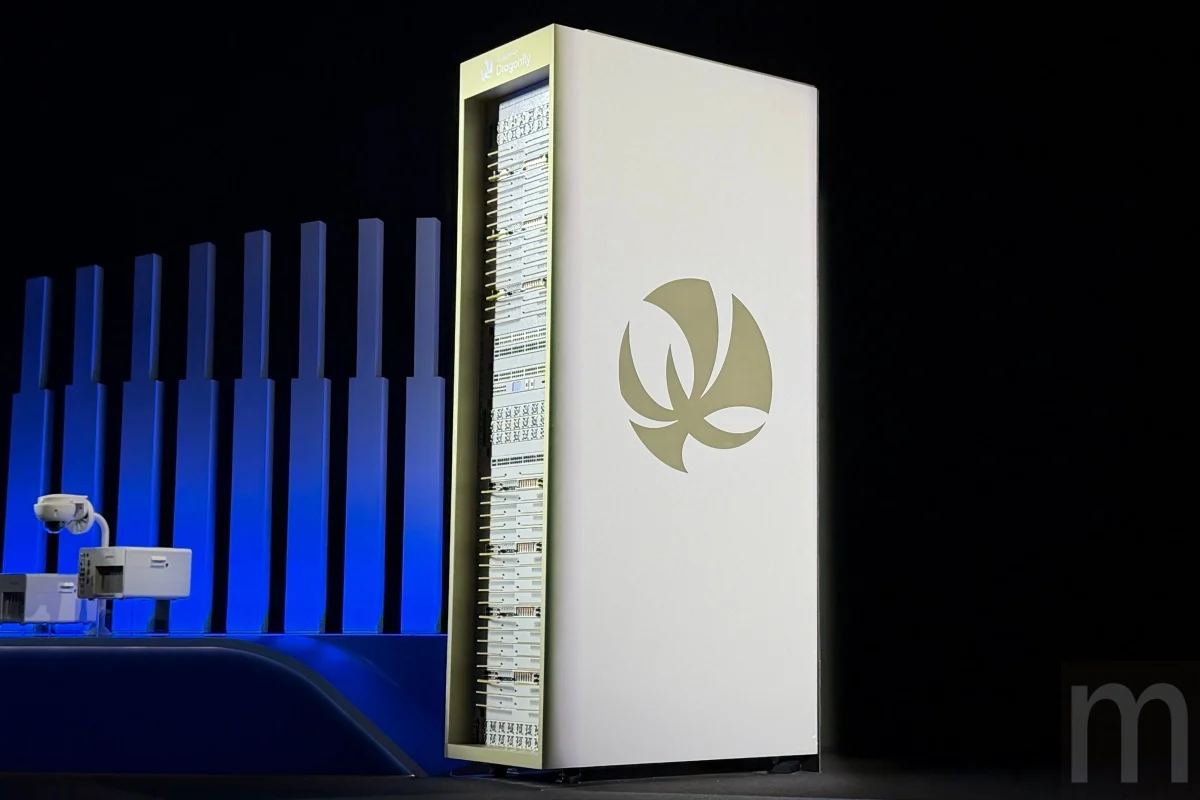
Saudi Arabia’s national AI infrastructure company, HUMAIN, recently announced a significant partnership. Adobe will officially become the first massive global software enterprise to migrate its AI workloads directly onto the HUMAIN computing platform. This strategic deployment primarily involves transitioning Adobe’s localized AI workloads. This specifically includes vital tasks like regional “Data Captioning.” Crucially, these complex operations will now execute entirely upon robust infrastructure physically located within Saudi Arabia. Furthermore, Qualcomm’s advanced Dragonfly AI accelerators provide the underlying computational power supporting this massive endeavor.
Fulfilling Strategic Investment Commitments
This collaboration represents a monumental milestone. It marks the very first time the HUMAIN platform will actively host a true, global-scale enterprise deployment. More importantly, it symbolizes Saudi Arabia taking a definitive, substantial step forward. The nation is aggressively advancing its ambitious goals regarding “Sovereign AI” development and rigorous localized data storage.
Compliance and Infrastructure Readiness
This deployment directly executes the strategic partnership established during the US-Saudi Investment Forum last November. Adobe is officially migrating data annotation and regional AI workloads onto the locally hosted HUMAIN platform. Consequently, this move guarantees that sensitive enterprise data and critical computing operations remain strictly within Saudi borders. This approach perfectly aligns with the increasingly stringent data localization and compliance requirements sweeping across the Gulf region.
Furthermore, this deployment publicly validates the HUMAIN platform’s capabilities. It firmly proves the platform’s readiness and massive scalability for handling demanding, enterprise-grade AI workloads. Industry analysts anticipate Adobe’s pioneering move will quickly attract other global software and cloud service providers. This cascading effect will rapidly expand the localized AI ecosystem thriving within Saudi Arabia.
Qualcomm Accelerators Challenge GPU Dominance
Regarding the underlying hardware architecture, this deployment made a deliberate, strategic choice. The infrastructure utilizes Qualcomm’s powerful Dragonfly AI acceleration solutions instead of relying entirely upon traditional GPU manufacturing giants. Wassim Chourbaji, Qualcomm’s Senior Vice President and President of EMEA, highlighted this specific advantage. He emphasized that Qualcomm specifically designed its inferencing capabilities for massive, enterprise-scale deployments within modern AI data centers. Therefore, Adobe’s practical adoption significantly solidifies Qualcomm’s strategic positioning within the fiercely competitive AI infrastructure arena.
Connecting Compute to Practical Business
Tareq Amin, CEO of HUMAIN, emphasized the practical goals of this project. He stated that constructing raw AI infrastructure represents merely the starting point. The true value lies in exactly what enterprises can achieve using that infrastructure. Adobe’s participation validates HUMAIN’s core model. They are directly connecting advanced infrastructure with the practical applications and intelligent services enterprises utilize daily. Through this collaboration with Adobe and Qualcomm, HUMAIN is actively translating raw computing power into tangible business deployments.
Luc Dammann, President of Adobe EMEA, echoed this sentiment. He stated that migrating regional AI workloads onto a sovereign AI computing platform accelerated by Qualcomm is highly significant. It clearly highlights Saudi Arabia’s powerful momentum in establishing a formidable, next-generation AI innovation hub.
Shifting Sands in Middle Eastern Computing
This tripartite alliance between HUMAIN, Adobe, and Qualcomm reveals two critical transformations occurring within Saudi Arabia’s strategic AI development.
First, Saudi Arabia is actively evolving its international role. The nation is shifting away from acting purely as a wealthy capital investor funding overseas projects through its Public Investment Fund (PIF). Instead, Saudi Arabia is rapidly transforming into a hands-on “infrastructure operator” wielding massive computational resources. By leveraging strict data localization regulations alongside highly competitive local infrastructure, the kingdom is successfully attracting global software giants like Adobe. These companies require localized processing for specific cultural characteristics, thereby shifting significant inferencing and fine-tuning computational demands directly into the Middle East.
The Rise of Alternative Inferencing Solutions
Second, the successful commercial implementation of Qualcomm’s Dragonfly accelerators upon the HUMAIN platform is highly revealing. It forcefully demonstrates that during the crucial “inferencing” phase of generative AI, the market actively seeks viable alternatives beyond NVIDIA.
Training colossal models absolutely requires flagship chips utilizing high-bandwidth memory and complex NVLink interconnect architectures. However, lightweight inferencing tasks operating within cloud and regional data centers prioritize different metrics. These operations heavily emphasize reducing Total Cost of Ownership (TCO) and maximizing power efficiency. By successfully penetrating enterprise-level applications within Saudi Arabia’s sovereign cloud, Qualcomm achieved a major victory. They successfully established a strategic beachhead within the highly lucrative AI infrastructure market. Consequently, this provides a highly significant reference case encouraging further diversification throughout the global AI computing supply chain.
Support Our Threat Intelligence
If you find our technology report and cybersecurity news helpful, consider supporting our work.
 Buy Me a Coffee
PayPal
Buy Me a Coffee
PayPal