The Trump Mobile T1, a smartphone engineered to monetize the rhetoric of traditional “American values,” has descended into a severe crisis of institutional trust, self-inflicted by compounded logistics delays and a catastrophic security posture. Per an investigative exposé published by TechCrunch, corporate executives have reluctantly ratified that internal system architectures exposed granular customer Personally Identifiable Information (PII)—including telephone registries, physical residential addresses, and electronic mail coordinates—directly to the public internet.
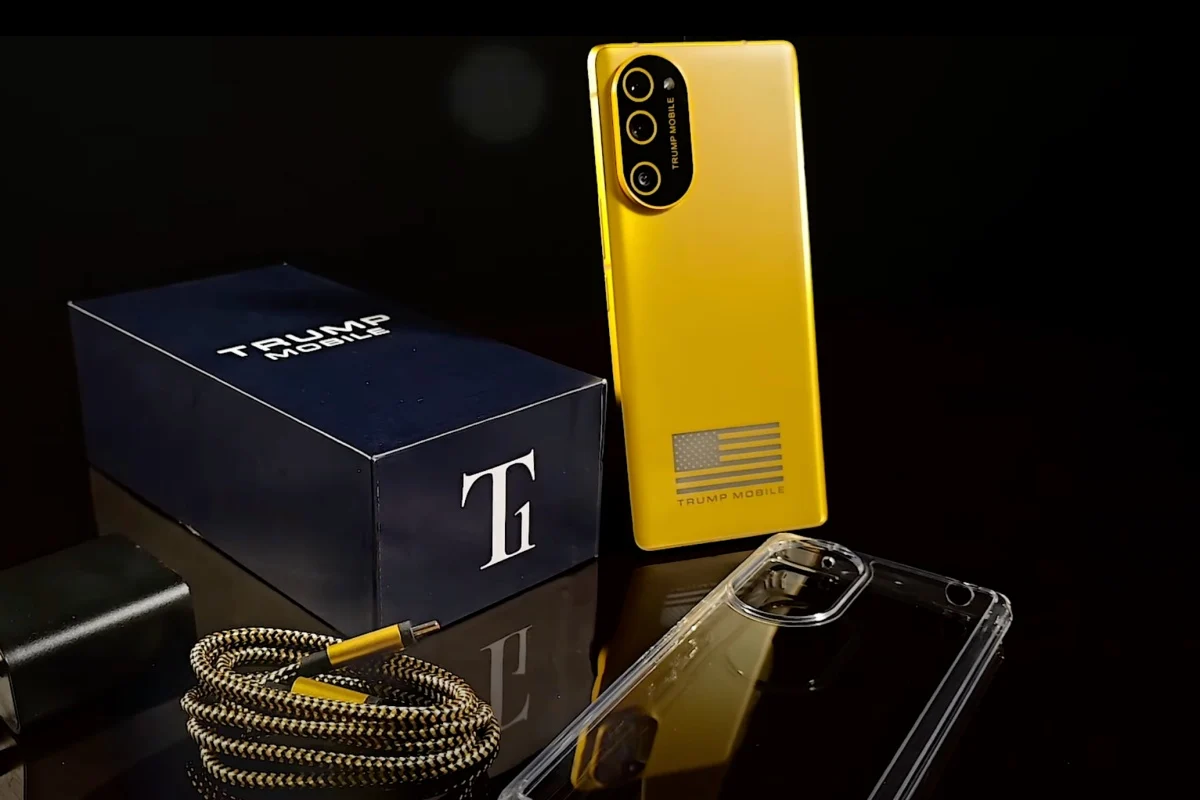
Compounding public astonishment, this egregious perimeter exposure was actively isolated by the consumer base prior to any formal corporate acknowledgment. Furthermore, forensic hardware inspections indicate that this “patriotic flagship”—commanding a premium retail price of $500—is in reality an optimized exercise in badge-engineering, functioning as an un-embellished middle-tier handset manufactured by contract suppliers in mainland China or Taiwan. In a culminating design anomaly, the gilded chassis even bears a rendering of the American flag featuring an inaccurate allocation of stripes.
The operational response to this data exposure underscores a profound structural immaturity within Trump Mobile’s administrative hierarchy. While corporate spokesperson Chris Walker emphasized that financial ledger details remained uncompromised, he systematically deflected accountability, attributing the failure to an un-delineated, unnamed third-party infrastructure vendor tasking with subsidizing Trump Mobile’s logistical back-end. More disconcertingly, despite substantiating the breach to journalistic entities, executive leadership is merely “deliberating” whether to manifest formal data-compromise notifications to the victimized consumer base. Consequently, an extensive cohort of individuals remains entirely insulated from the reality that their primary addresses and contact parameters are currently transitioning the dark web without structural defense.
Beyond the weight of the security failure, the physical hardware and marketing ethos of the T1 present a deeply ironic tapestry of ideological contradictions:
- Provenance and Badge-Engineering Ambiguities: The ancestral marketing copy promising a device “Manufactured within the United States” has been quietly sanitized, replaced with the nebulous ethos of being “Designed with American values in mind.” Multilateral documentation confirms that the terminal constitutes a superficial cosmetic rebranding of an existing middle-tier Android hardware platform. Technical benchmarks suggest the underlying architecture corresponds either to the Taiwanese-manufactured HTC U24 Pro or a white-label variant derived from the Revvl 7 Pro 5G—a hardware platform compiled by China’s Wingtech Technology that commands a modest open-market valuation of approximately $125.
- Elementary Design Deficiencies: Seeking to evoke intense nationalist sentiment, the device sports a gold-anodized chassis embellished with the American flag. Satirically, while the sovereign standard historically commands precisely thirteen alternating stripes, the T1 execution features a truncated field of eleven, exposing a complete abdication of rudimentary quality control and design oversight.
- Persistent Distribution Paralysis: Originally slated for a commercial debut in August 2025, the release window was successively deferred to October before entering a state of perpetual delay. Telemetry indicates that initial customer fulfillment arrays are only tentatively activating within the current weekly cycle.
The forensic deconstruction of the exposed back-end infrastructure simultaneously fractured the corporate narrative surrounding the device’s commercial adoption. Historically, Truth Social—the symbiotic social networking platform with which the smartphone is structurally intertwined and upon which the application comes natively pre-loaded—proudly proclaimed that pre-registration metrics had scaled near the 600,000 threshold. Conversely, audited transactional database records retrieved from the exposed server reveal that this massive speculative interest translated into a mere 30,000 materialized, revenue-generating acquisitions.
Within the consumer technology macrocosm, leveraging original design manufacturers (ODMs) to deploy white-label hardware is a thoroughly normalized commercial stratagem, frequently utilized by telecommunications carriers to populate budget device portfolios. Trump Mobile’s ethical departure, however, resides in its execution: it has harvested a low-tier hardware package valued at barely one hundred dollars, enveloped it within a crude gilded veneer featuring corrupted national symbolism, and artificially escalated the retail nomenclature to $500, weaponizing ideological affinity and a pre-installed software suite to rationalize the predatory premium.
This enterprise manifests fundamentally as a transactional monetization campaign targeting an ideologically insular demographic—a commercial harvesting of political fealty. Ultimately, when an organization demonstrates an absolute incapacity to execute the foundational tenants of data sovereignty or accurately render the very iconography it commercializes, the systemic collapse of its hardware ambitions becomes mathematically inevitable. For the contemporary consumer, this narrative reaffirms the timeless thesis that smartphone acquisition must remain resolutely anchored to empirical silicon specifications, the stability of the native software ecosystem, and the institutional integrity of post-sale technical support, lest they be reduced to passive economic casualties within an architecture of cynical political marketing.
Support Our Threat Intelligence
If you find our technology report and cybersecurity news helpful, consider supporting our work.
 Buy Me a Coffee
PayPal
Buy Me a Coffee
PayPal