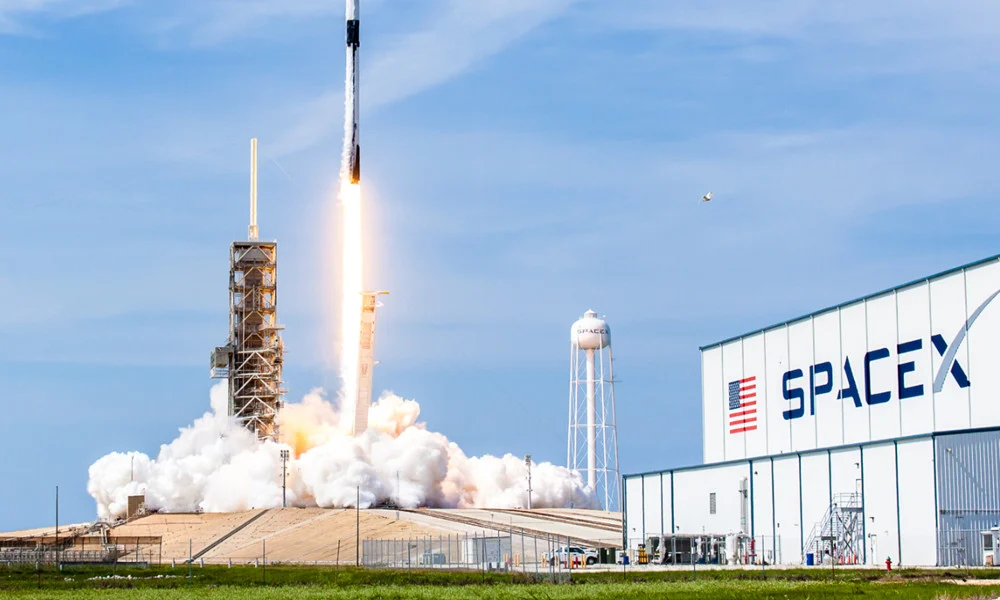
Per reports from Reuters, recent military engagements have exposed a glaring vulnerability. Specifically, conflicts involving Iraq and Iran highlight the military’s struggling cost management. Seizing this moment, Elon Musk’s SpaceX is aggressively leveraging its low-Earth orbit monopoly. Consequently, the enterprise is pressuring the Department of Defense to pay higher subscription fees for military Starlink network access. Because the market completely lacks viable competitive alternatives, SpaceX ultimately secured an absolute victory in these high-stakes negotiations.
Tariff Disputes in Mid-Conflict: Inside the Pentagon Negotiations
This confrontation erupted mere weeks after American military operations against Iran commenced. During a tense summit, SpaceX executives confronted defense officials directly. Currently, the armed forces remit a standard baseline fee of approximately $5,000 monthly per active Starlink terminal. However, actual operational metrics tell a far more expensive story. The military’s heavy data ingestion matches the parameters of the elite, $25,000 monthly “aviation” tier. Therefore, SpaceX insists that the government must immediately upgrade its subscription matrix.
The primary point of contention involves the deployment of the military’s novel LUCAS kamikaze drones. Pentagon officials argued that premium aviation services are designed for traditional aircraft. These manned platforms require sustained, bidirectional communication pathways over long periods. Conversely, disposable, one-way suicide drones merely require brief connectivity lasting minutes or hours.
Nevertheless, the Department of Defense succumbed to SpaceX’s unyielding negotiating posture. As a result, the communication overhead for each LUCAS asset essentially doubled. Significantly, this geopolitical friction coincides with SpaceX’s clandestine preparations for its initial public offering (IPO) this June. Analysts anticipate this impending public debut will shatter historical records as the largest financial listing ever seen.
Monopolizing the Cosmos: The Pentagon’s Futile Search for Rivals
An official Pentagon spokesperson conceded to Reuters that they are actively scouting for alternative vendors. However, contemporary industrial realities remain unyielding.
Low-Earth Orbit Competitive Landscape
| Enterprise Matrix | Operational Scale and Global Stature |
| SpaceX (Starlink / Starshield) | Maintains absolute planetary hegemony. The fleet commands over 10,000 active satellites, representing more than 60% of global orbital assets. Crucially, it remains the solitary framework capable of sustaining defense-grade telemetry globally. |
| Amazon LEO (Project Kuiper) | Positioned as a theoretical future adversary. Unfortunately, its deployment velocity and commercial scale cannot currently rival the SpaceX architecture. |
| Eutelsat OneWeb | Manages a functional satellite constellation. Yet, its holistic technical specifications and global coverage boundaries occupy a vastly inferior competitive tier. |
Commercial low-Earth orbit networks have evolved into an indispensable strategic instrument. For example, Ukrainian forces heavily rely on the military-grade Starshield variant to secure critical battlefield superiority. Similarly, the United States relies on this infrastructure to power its global drone deployments. Because no genuine alternative exists, the federal government must capitulate to Elon Musk’s terms. Even a massive national defense budget provides no insulation against this singular monopoly.
The Privatization of Sovereignty: A New Paradigm for National Security
This calculated fee escalation serves as a striking testament to how the rules of modern warfare are changing. Historically, legacy defense titans like Lockheed Martin or Boeing extracted immense capital from defense outlays. However, their operational lifecycles remained entirely subservient to sovereign procurement mandates and strict state regulations.
Conversely, SpaceX’s Starlink operates as a highly commercialized, globally distributed piece of infrastructure. On multiple occasions, Musk has demonstrated his geopolitical weight by selectively severing connectivity during active international conflicts. Now, during a critical operational window, he can cite a misalignment between contractual usage parameters and actual deployment. This aggressive maneuver subjects the Pentagon to unprecedented administrative strain.
Undeniably, augmenting military revenues immediately prior to a historic public offering will yield stunning financial statements. This maneuver will successfully maximize the company’s valuation metrics. However, for the American executive branch, this dynamic introduces a profound security paradox. Because SpaceX commands over sixty percent of active global satellites, it transcends the designation of a simple private vendor. Instead, the corporation now wields the structural leverage to negotiate with the Department of Defense as an equal sovereign peer.
Support Our Threat Intelligence
If you find our technology report and cybersecurity news helpful, consider supporting our work.
 Buy Me a Coffee
PayPal
Buy Me a Coffee
PayPal